A "surf lesson" and a "surf school" sound like the same thing. They're not. Understanding the difference helps you pick the option that actually fits your situation.
The quick answer
- Individual instructor — one person teaches you, rents or owns the gear, works alone. Great for focused attention, flexible scheduling, often cheaper.
- Surf school — a company with multiple instructors, fixed gear inventory, a physical location, and a set schedule. Great for progression over multiple days, consistency, and broader logistics (transport, food, camps).
Both can teach you to surf well. They're just different products.
Going with an independent instructor
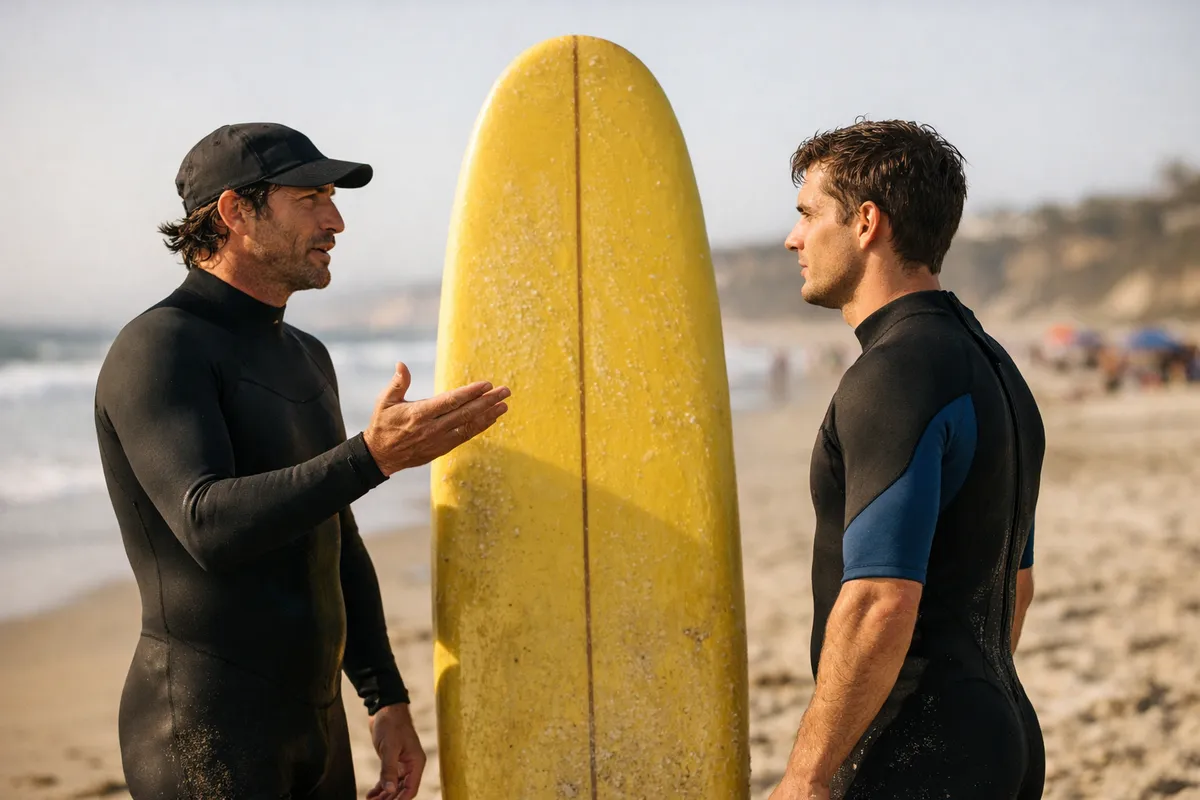
Independent instructors are often surfers who've been surfing a long time, got their certification, and decided to teach on the side or full-time. Their whole business model is personal attention.
What you get:
- One-on-one or small-group attention
- Flexible scheduling — you can usually book for any hour they're free
- Personal investment in your progress — they'll remember your quirks session to session
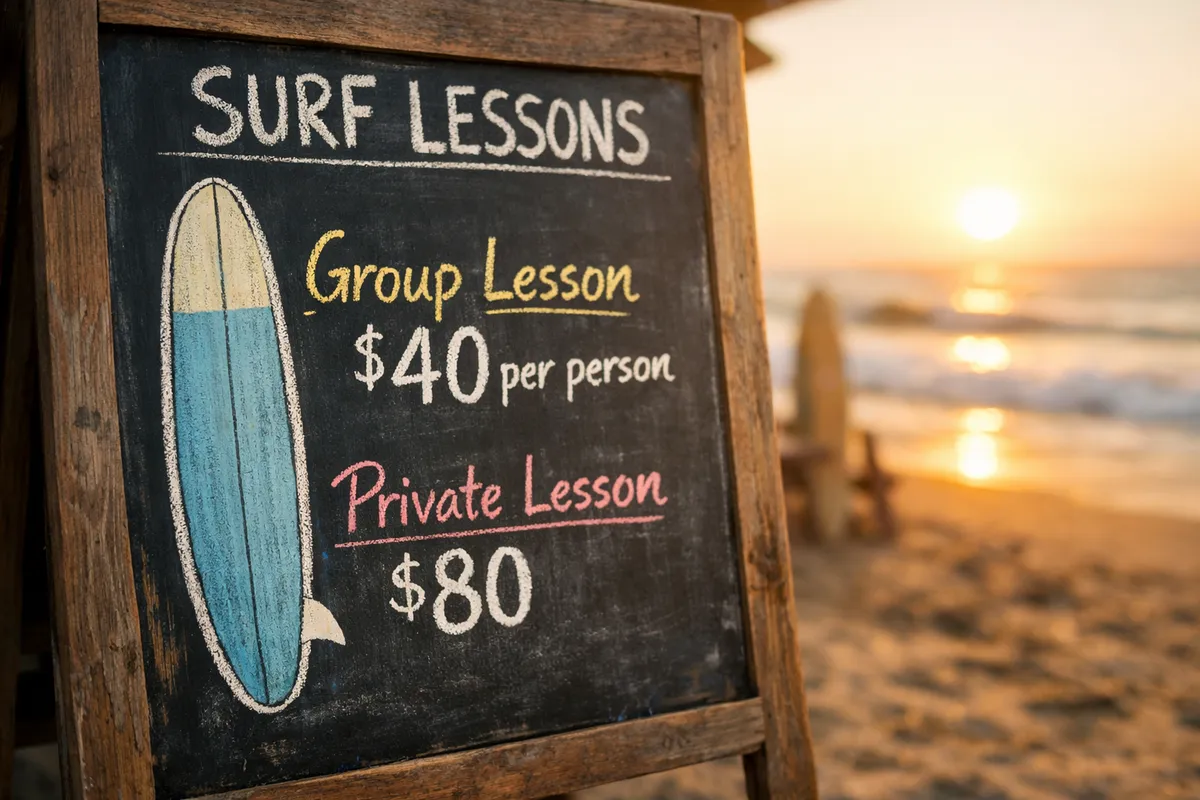
- Often cheaper for privates, because they have no overhead to split with a brand
- The instructor is usually local and knows all the subtle conditions at the spot
What you don't get:
- A fixed physical base — you might meet them in a parking lot
- Package deals or multi-day progression programs, usually
- Backup if they're sick — if your instructor can't make it, your lesson is gone
- A shop with gear if you want to try different boards mid-session
- Insurance or corporate protections (some freelance instructors have their own, many don't — ask)
Best for: individual lessons, focused one-off sessions, locals who want regular coaching, traveling surfers who want a quick tune-up.
Going with a surf school
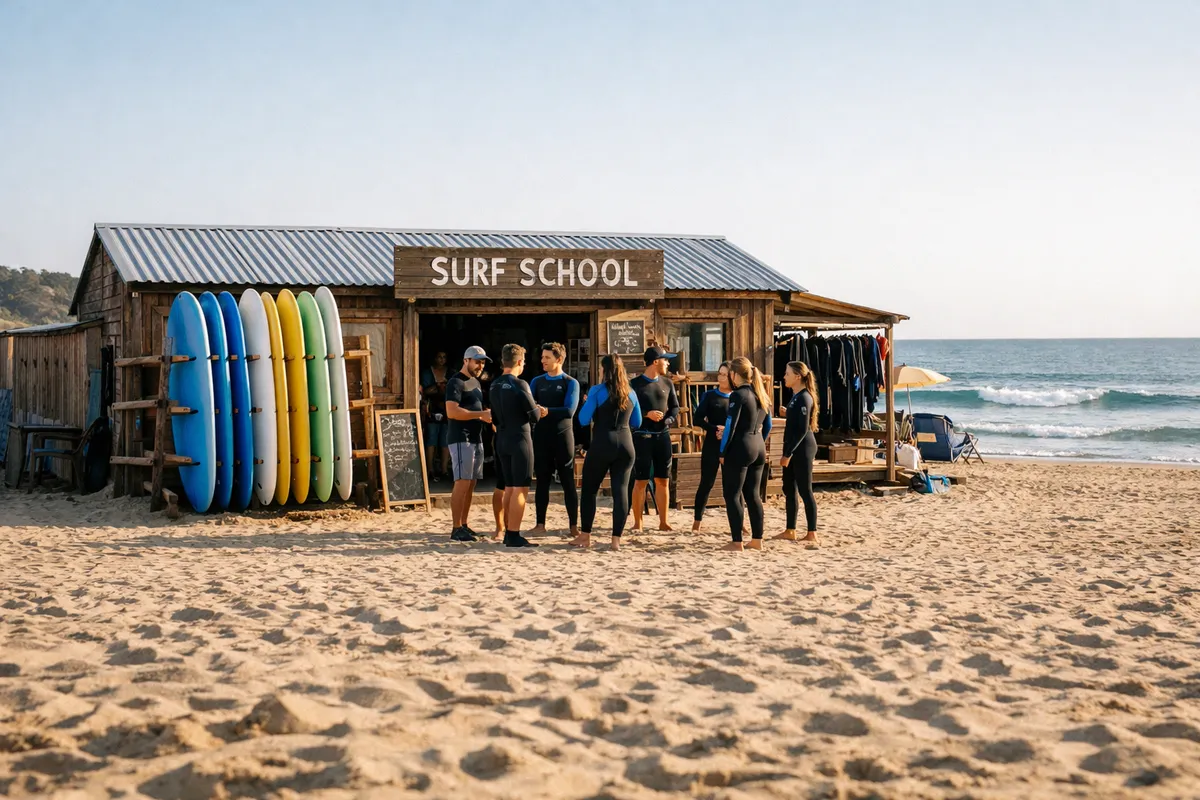
A surf school is a proper business with staff, a shop, a schedule, and usually a branding strategy. You book online, show up at the shop, rent their gear, and go out with whichever instructor is assigned to your session.
What you get:
- Multi-day packages and weeklong courses
- Consistent gear (all students on the same rental boards, maintained properly)
- Backup instructors if one is sick
- A real physical location with changing rooms, showers, lockers
- Often a wider range of ancillary services — photos, videos, yoga, rental-and-stay deals
- Real insurance and business protection
- Sometimes on-site accommodation ("surf camps")
What you don't get:
- The same instructor every time — you might get a different one each day
- The cheapest price — schools have overhead to cover
- The personal investment of one person in your progress across sessions
Best for: multi-day learning, surf holidays, groups of friends or families, people who want everything organized in one place.
How to decide
Ask yourself three questions:
1. How many sessions are you planning?
- 1–3 sessions, single trip: either works. Independent instructor is usually the better value.
- 4+ sessions, single trip: surf school is probably cheaper and more organized. Most schools offer 3-day and 5-day packages at significant discounts.
- Ongoing, local lessons: independent instructor. Build a real coach relationship.
2. Are you learning alone or with others?
- Solo: either works.
- Partner / family / friend group: surf school — easier logistics, everyone on the same level of gear, semi-private rates usually available.
- Small group of friends on different levels: a school handles this better; they split you into level-appropriate groups.
3. Is the learning the goal, or is the experience the goal?
If you want to maximize actual surfing ability per dollar spent, go independent for privates. If you're there for the full experience — morning yoga, lunch on the terrace, evening board repair workshop, Instagrammable setup — you want a surf school or a surf camp.
Neither is wrong. But be honest with yourself about which you're buying.
Red flags to avoid (both types)
Whether you go independent or school, watch for:
- No visible certification. ISA or national equivalent. Ask. If they can't show you, walk away.
- No safety briefing. Every lesson, independent or school, should start with a short theory and safety talk.
- Unmaintained gear. Check the board for big dings. Check the wetsuit for tears. Bad gear is a bad lesson.
- Too many students per instructor. 8:1 is too many. 4:1 is the acceptable maximum for beginners.
- Lesson that's really a rental. Five minutes of demo followed by "have fun" is not a lesson at any price.
Finding good ones
On Surfyx you can filter instructors and lessons by location, format, and rating. Both independent instructors and full surf schools list on Surfyx — the listing makes clear which is which.
For the full first-month plan, see how to learn to surf. For a deeper breakdown on the private/group question, see group vs private surf lessons.