Ask ten surf schools in ten different countries what a lesson costs and you'll get ten very different answers. Not because one is ripping you off — but because "a surf lesson" means wildly different things depending on where you are.
This post breaks down real 2026 pricing by region, what you're actually paying for, and how to tell a fair price from a rip-off.
Quick reference: global averages
These are representative group-lesson prices for a 1.5–2 hour beginner session, board and wetsuit included, in local currency and approximate USD.
- Bali, Indonesia: IDR 350,000–500,000 (~$22–32)
- Morocco (Taghazout, Tamraght): MAD 250–400 (~$25–40)
- Portugal (Ericeira, Peniche, Algarve): €35–55
- Spain (Cantabria, Basque Country): €40–60
- France (Hossegor, Biarritz): €50–80
- UK (Cornwall, Devon, Wales): £35–60
- Costa Rica: $50–80
- Australia (Byron Bay, Noosa, Torquay): AUD 80–130 (~$55–90)
- California (Huntington, Pacifica, Santa Cruz): $90–150
- New York (Long Beach, Rockaways): $100–170
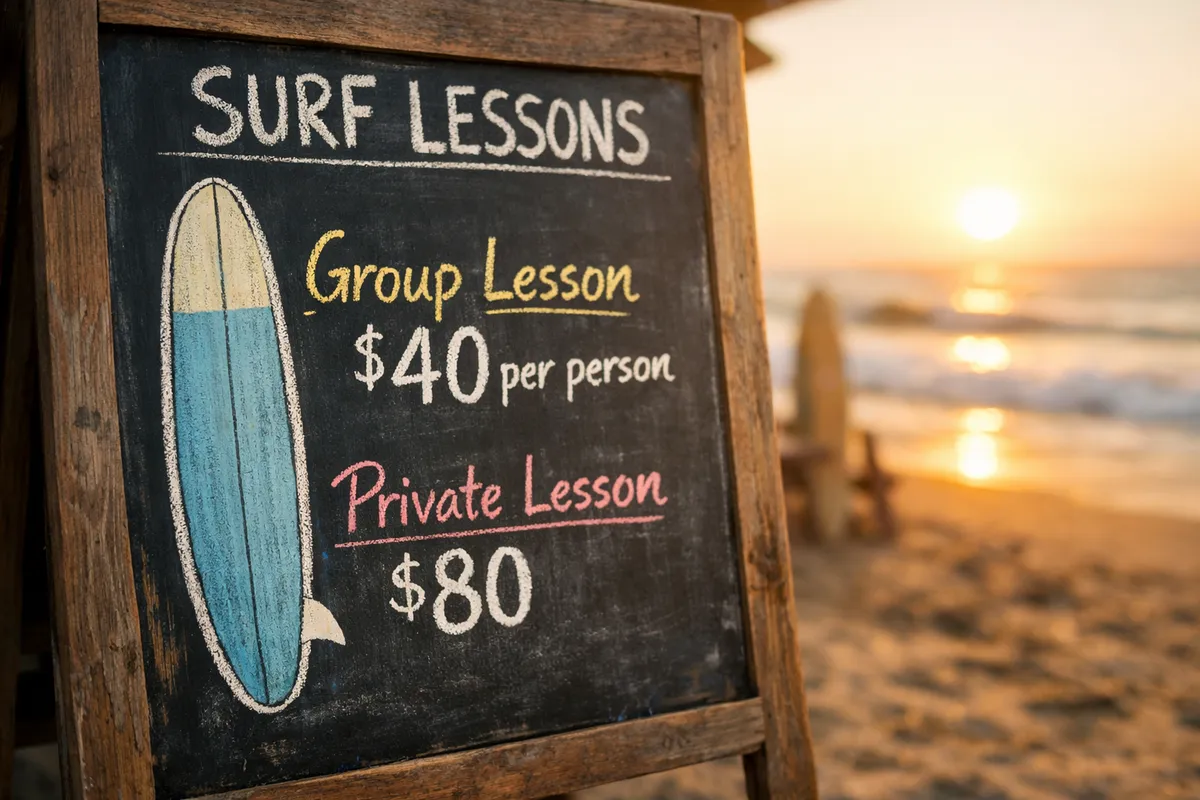
Private lessons typically cost 2–3× the group rate. Private in Bali is still cheaper than group in California — that's just how global surf pricing works.
What you're paying for
The sticker price hides four different things. When comparing two schools, make sure you're comparing the same bundle.
1. Instruction time
The actual in-water time with an instructor. Cheaper schools often advertise a "2-hour lesson" but spend 30 minutes on theory and breaks, so you're only in the water for 60–90 minutes. Premium schools advertise honestly — if the listing says "90 min in water," that's the real number.
2. Gear
Board, wetsuit, leash. Quality matters more than you'd think. A cheap school with beat-up 10-year-old wetsuits on a cold day is not a good deal at any price. Ask (or check reviews).
3. Student-to-instructor ratio
This is the biggest hidden variable. A $30 group lesson with 8 students per instructor is not the same product as a $30 group lesson with 3 students per instructor. You get roughly 3× the attention, 3× the pushes into waves, 3× the learning.
A good target ratio is no more than 4:1 for beginners. Ask before booking.
4. Location and overhead
A school operating out of a van on a Moroccan beach has almost zero overhead. A school with a storefront in downtown Santa Monica pays rent, insurance, employees, and California business taxes. Some of the price difference is genuine cost of doing business.
The six-dollar hourly myth
If you travel to Bali or Morocco, you can do a week of daily surf lessons for under $200 total. People sometimes come back and think anyone charging more is a scam. That's wrong.
The Bali school can charge $25 because the instructor is paid $6 an hour (which is a good wage locally), the board was bought for $100 on a Facebook group, and they rent a shack for $40 a month. The Santa Monica school is paying the instructor $40 an hour, the board cost $450 new, and rent is $4,000. These are different economies, not different quality levels. Don't port one country's expectations to another.
Private vs group
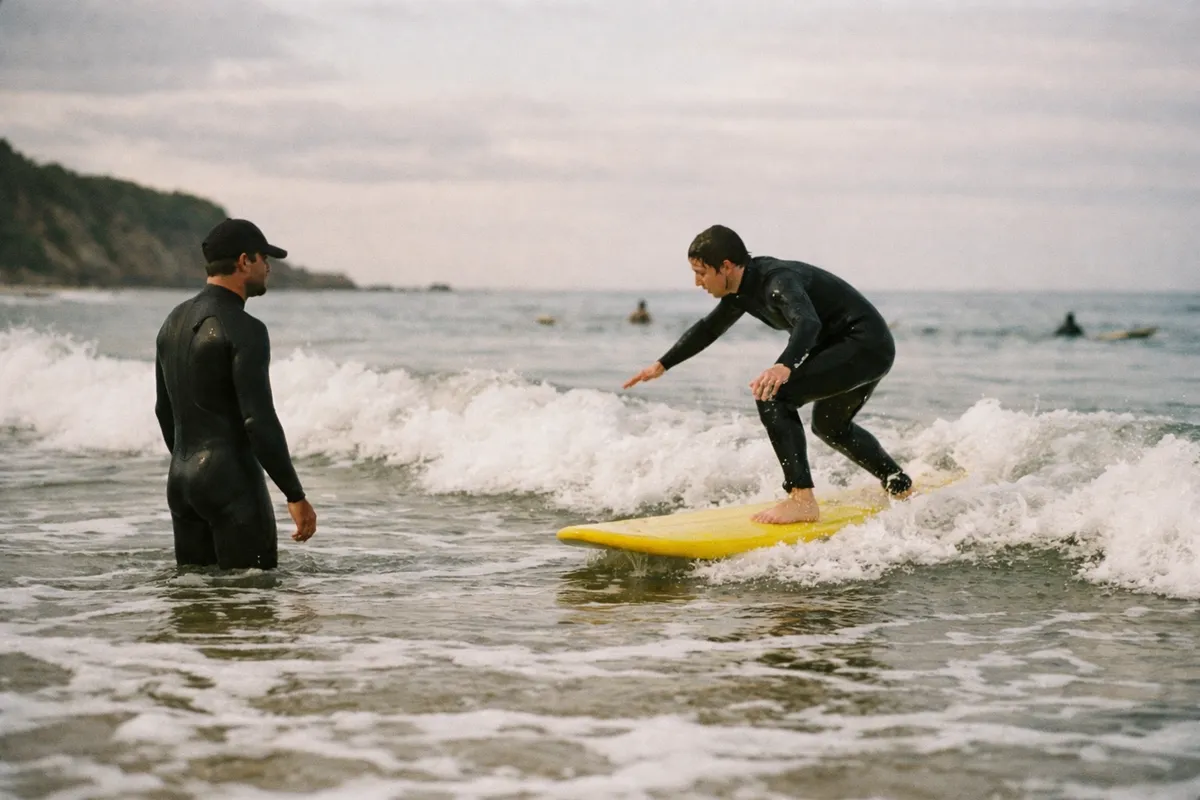
Private lessons are 2–3× more expensive but give you roughly 5× the attention. For a genuine first lesson, one private session usually beats three group sessions. We break this down in detail in our group vs private guide.
When a lesson is too cheap
Warning signs, especially in tourist-heavy beginner zones:
- No waiver or safety briefing. Legit schools require a form. Always.
- No visible instructor certification. Ask. If they can't produce one, walk away.
- 8+ students per instructor. You'll get pushed into one wave, wait twenty minutes, and get pushed into another.
- "Lessons" that are really just rentals with a five-minute demo. That's not a lesson.
- Significantly cheaper than every other school at the same beach. Usually for one of the reasons above.
When a lesson is too expensive
Also a thing. Signs you're overpaying:
- More than 2× the average for your region without obvious extras (tiny group, premium gear, on-site coaching video)
- "Performance coaching" branding on a literal first-timer session
- "Celebrity instructor" markups that don't come with actually more teaching time
How to find fair pricing
If you're on Surfyx, every listed surf school and instructor shows their price upfront — no inquiry forms, no hidden fees. Reviews from past students mention ratio, instructor quality, and whether the listed price includes gear. Filter by region, sort by rating, and compare.
Outside Surfyx, your best bet is to check Google reviews that specifically mention teaching quality and ratio, then cross-reference with the school's own pricing page.
Budget planning for a first month
If you're starting from zero, a reasonable beginner budget is:
- 1 private lesson: $60–150 depending on region
- 3 group lessons: $90–180
- 4 self-practice sessions with board rental: $60–120
- Total first-month cost: roughly $210–450 depending on where you are
At the end of the month you'll know whether you want to keep surfing. If yes, buy your first board then. If no, you've spent less than a decent winter jacket to figure it out.
Start here
Browse surf lessons near you on Surfyx, with upfront pricing and real reviews. Or read our complete beginner's guide to plan your whole first month.