Learning to surf looks simple. Paddle, pop up, ride. In reality, every one of those steps has its own learning curve, and the ocean is a moving target that doesn't care about your weekend plan.
Here's the honest truth: most people can be riding broken waves on a soft-top in a few hours with a good instructor. But surfing well — reading waves, catching unbroken shoulders, making turns — takes months of consistent practice, a board that suits your body, and a lot of hours you can't fake.
This guide walks you through everything you actually need to start. What to wear, what to rent, what lessons to book, what to expect week by week, and what mistakes to skip. By the end you should know exactly what your first month in the water looks like.
The three things beginners get wrong
Before the how-to, the three mistakes we see over and over:
- Buying gear before you know what you need. A $600 shortboard will not help a beginner catch waves. Rent for the first month, minimum.
- Skipping lessons because "I can figure it out." You can, and it'll take you three times longer, with worse habits. Book at least one lesson.
- Picking the wrong spot. The beach where your friend surfs well is probably wrong for you. Pick by skill level, not by vibe.
Avoid those three and you're already ahead of most people starting out.
Step 1: Find your spot
A beginner surf spot has four properties:
- Sandy bottom, not reef. You will fall. A lot. You want sand under you, not coral.
- Small, mellow waves. Two to three feet, not six. Broken waves — the white foamy stuff after a wave has already broken — are what you learn on.
- Gentle slope. You want to be able to stand and touch the bottom in most of the takeoff zone.
- A designated beginner area. Some spots have signs or local convention that say "this end is for learners." Respect it.
If you're on Surfyx, browse the global spot map and filter by "beginner" difficulty. Every spot profile shows wave type, skill level, local tips, and session data from the community. Your first spot should be one with lots of beginner sessions logged on it.
Local knowledge beats Google
Once you've picked a candidate, ask a local. The clerk at the nearest surf shop, a lifeguard, an instructor at a school nearby — all three will happily tell you if today's conditions are right for you. Twenty seconds of conversation saves two hours of a bad session.
Step 2: Get the right gear (rent first)
For your first month, don't buy. Rent. You'll learn what you actually need by using it.
The board
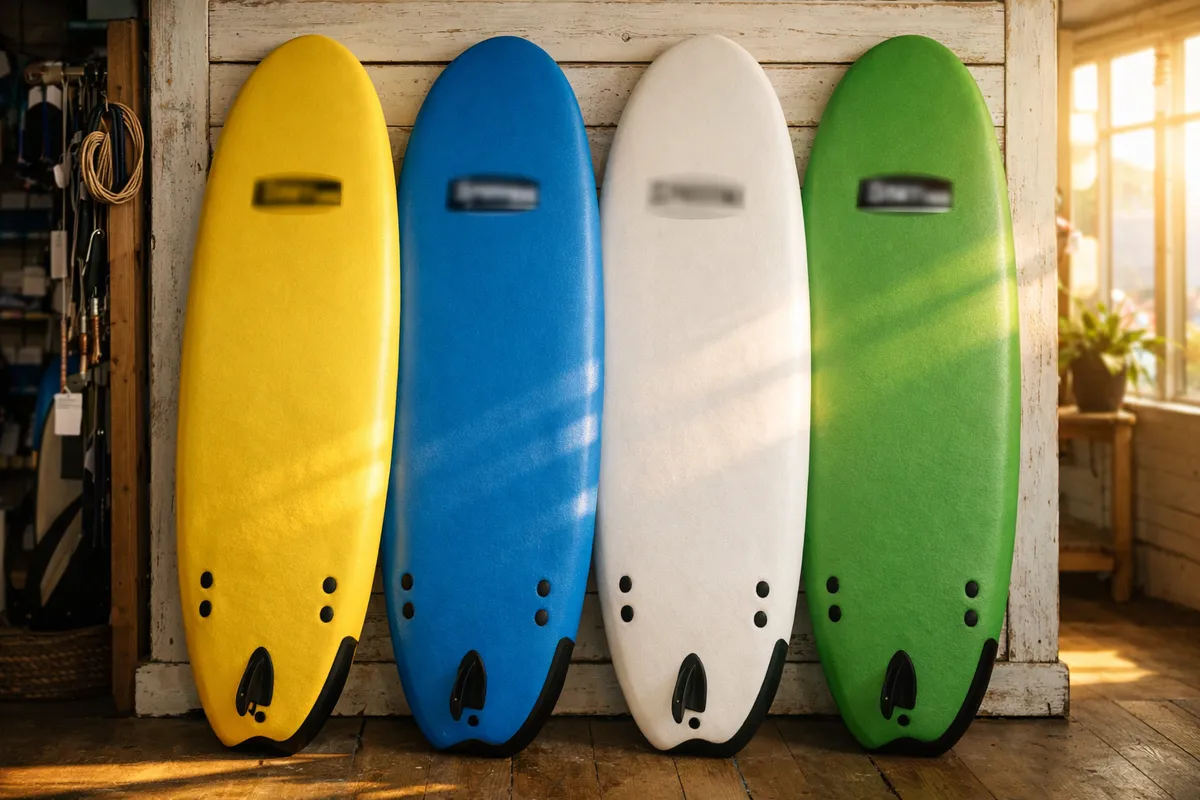
Your first board should be a soft-top — a foam-covered longboard, usually 8 to 9 feet long. Soft-tops catch waves easily, are stable when you're standing up, and don't hurt as much when the board hits you. Every beginner rides one. Every surf school starts students on one. Do not skip this and go straight to a hard board because your friend said you'd progress faster — you won't.
Rent a soft-top from a local shop for $15 to $30 a day. Most schools include it in the lesson price.
The wetsuit
Unless you're in tropical water, you need a wetsuit. The right thickness depends on water temperature:
- 20°C / 68°F and warmer: a 2 mm shorty or rash guard
- 15–20°C / 59–68°F: a 3/2 mm fullsuit
- 10–15°C / 50–59°F: a 4/3 mm fullsuit plus booties
- Colder than 10°C: 5/4 mm plus hood, booties, gloves, and a warm coffee on the way home
Rent one until you know you'll stick with surfing. See our beginner gear guide for more detail on wetsuits, leashes, and wax.
Everything else
A leash (comes with rented boards), wax (the school or shop will rub some on for you), a towel, a change of clothes, and water. That's it. Ignore anything else for now.
Step 3: Book a lesson
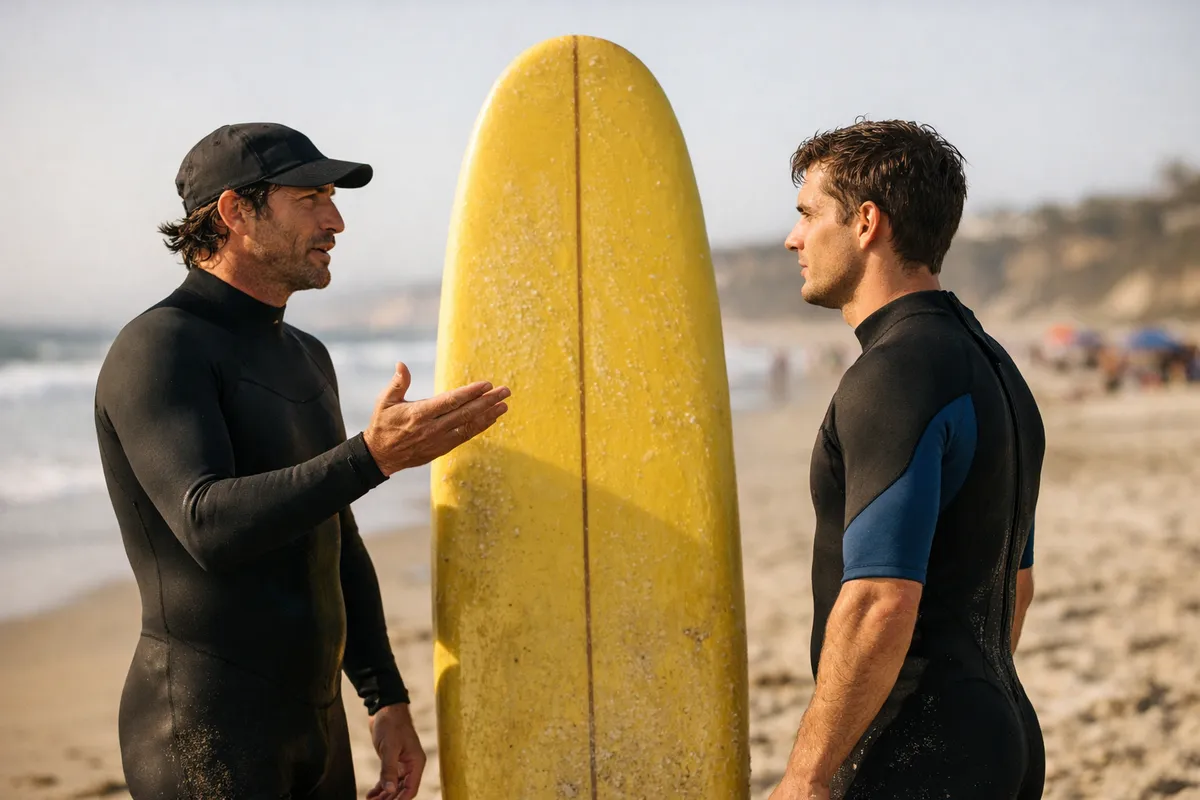
We cannot overstate this: book at least one real lesson before you spend a month self-teaching. A good instructor gives you more in an hour than YouTube gives you in a month, because they're watching you specifically and correcting what you are doing wrong.
What to look for in a lesson:
- Certified instructor (ISA or national equivalent)
- Small student-to-instructor ratio (no more than 4:1 ideally)
- Starts with 15–20 minutes of on-sand theory and pop-up practice
- Spends most of the time in the water pushing you into waves and correcting technique
- Ends with feedback and a suggestion of what to practice next
We have detailed guides on what a first lesson actually looks like, what a lesson should cost, and when to go private versus group. The short version: one private lesson plus a handful of group follow-ups is the best combination for most people.
Browse surf lessons near you on Surfyx — all listed instructors are verified and reviewed.
Step 4: Your first week in the water
Here's what your first 2–3 sessions should look like, whether you're with an instructor or on your own after one.
On the sand (10 minutes)
Lay the board on the sand. Practice the pop-up:
- Lie flat, chest up, toes pointing back
- Hands flat on the board under your chest
- Push up, bring your front foot forward in one motion
- Land in a low, knees-bent stance with feet about shoulder-width apart
Do this 10 times on the sand before you go in. Most beginners try to pop up by getting to their knees first — don't. That habit is hard to break later.
In the water (first hour)
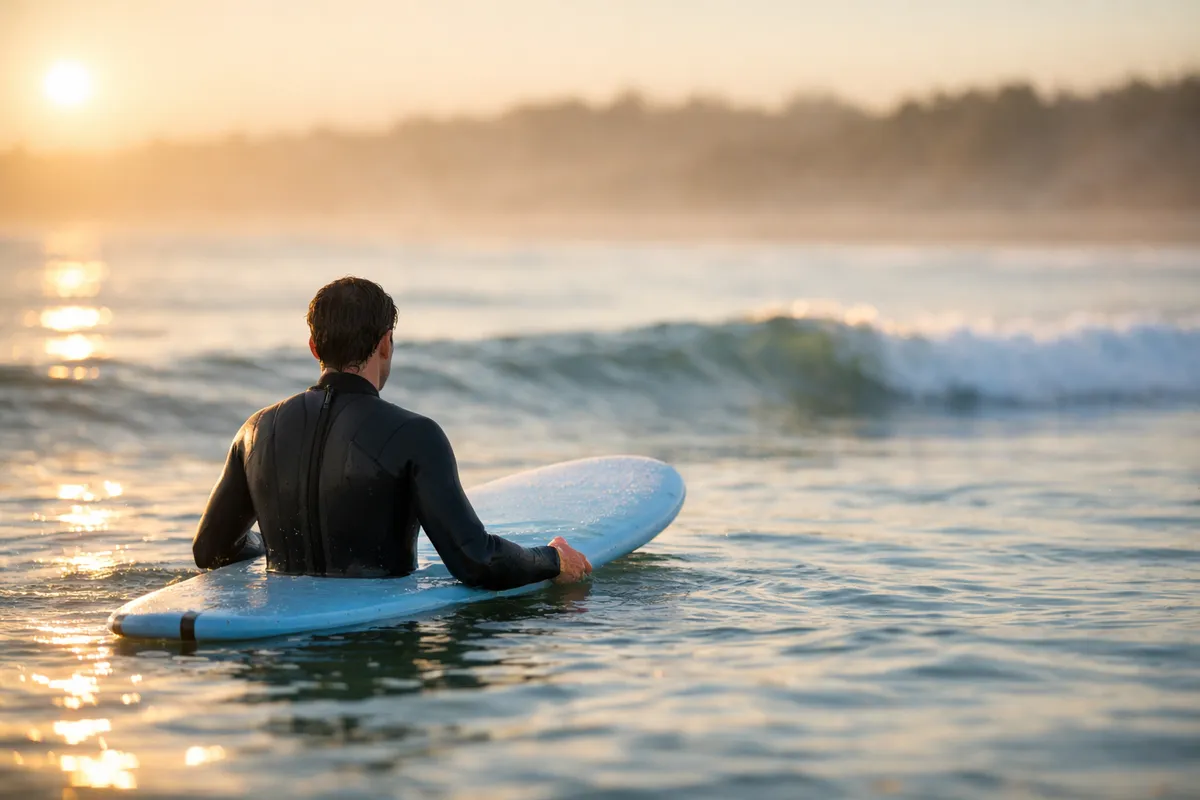
Walk the board out to waist-deep water. Turn it toward the beach. Wait for a broken wave (the white foam). When it's about 2 meters behind you, push the board forward, lie down on it, and paddle with the wave. When the wave catches the board and you feel it surge, try your pop-up.
You will fall. A lot. That's fine. The goal of the first hour is feeling the wave catch the board, not standing up cleanly. Standing up comes later.
Weeks 2 and 3
Keep riding whitewater until you can consistently pop up and ride the foam all the way to the beach. This takes most people 3–8 sessions. Don't rush to "the green wave" (unbroken waves) until whitewater feels boring.
Step 5: Learn lineup etiquette before you need it
Before you ever paddle out to the unbroken waves, you need to know the rules of the lineup. This is non-negotiable. Breaking these rules unintentionally is how beginners get hated at their local spot.
The one rule that covers 80% of conflicts: the surfer closest to the peak (where the wave is breaking first) has right of way. Don't drop in on them. Don't paddle across in front of them. Wait your turn.
We have a full lineup etiquette guide. Read it before your first unbroken-wave session.
Step 6: Track your progress
This is where Surfyx actually helps. Log every session — wave count, duration, conditions, what you worked on. After a month you'll see a clear pattern of what spots work for you, what conditions you handle, and where you get stuck.
We also recommend adding a simple note at the end of each session: "went well because X" or "struggled with Y". In two weeks you'll notice the same Y keeps coming up. That's your next thing to fix.
Create a free Surfyx account to start logging.
How long does it actually take?
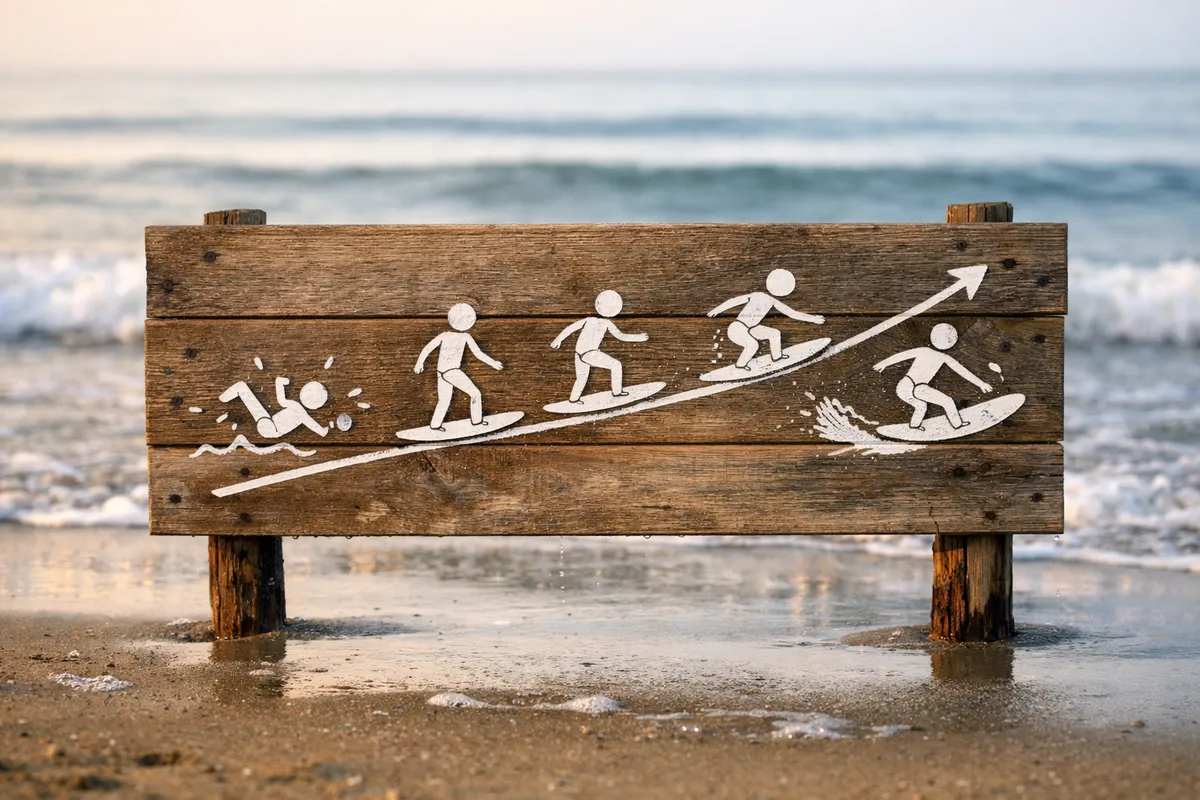
Realistic timeline:
- First session: standing briefly on broken waves, 2–5 rides all the way to the beach
- Month 1 (8–12 sessions): consistently riding whitewater, first attempts at paddling for unbroken waves
- Month 3 (30 sessions): catching unbroken waves at beginner spots, starting to angle left or right
- Month 6 (60 sessions): surfing most small beach breaks without embarrassment, starting to think about a smaller board
- Year 1 (100+ sessions): you can show up at a new beach, read the conditions, and get some waves without help
None of this happens if you don't show up. Consistency matters more than talent. Two sessions a week for six months will take you further than ten sessions in one week.
What to do next
- Pick your first beginner spot on the Surfyx spot map
- Book a first lesson with a verified instructor
- Create a Surfyx account and log your first session
- Read our guides on first lessons, first boards, and lineup etiquette
See you in the water.