You've booked your first surf lesson. Good. This is the single highest-leverage hour of your entire surfing journey — a good instructor will save you months of self-taught bad habits.
But first lessons also get a lot of bad press. Too often people pay for what's really a "push" session — the instructor shoves you into waves, you fall, they shove you into another, and you leave with wet hair and no new skills. That's not a lesson. That's a water park.
Here's what a genuinely good first lesson looks like, so you know what to book and how to tell the difference.
Before you get there
The night before:
- Eat a real meal. Surfing is harder work than it looks — paddling alone will burn through breakfast.
- Sleep. Fatigue is the #1 reason beginners get frustrated in the water.
- Pack a towel, a change of clothes, water, a small snack, and reef-safe sunscreen. Most schools provide the board and wetsuit.
Arrive 15 minutes early. Schools often have a short waiver to sign and you want your instructor's full attention, not the administrative scramble.
The first 15 minutes — on the sand
This is the part beginners want to skip, and it's the most important part of the whole lesson. On-sand theory looks like this:
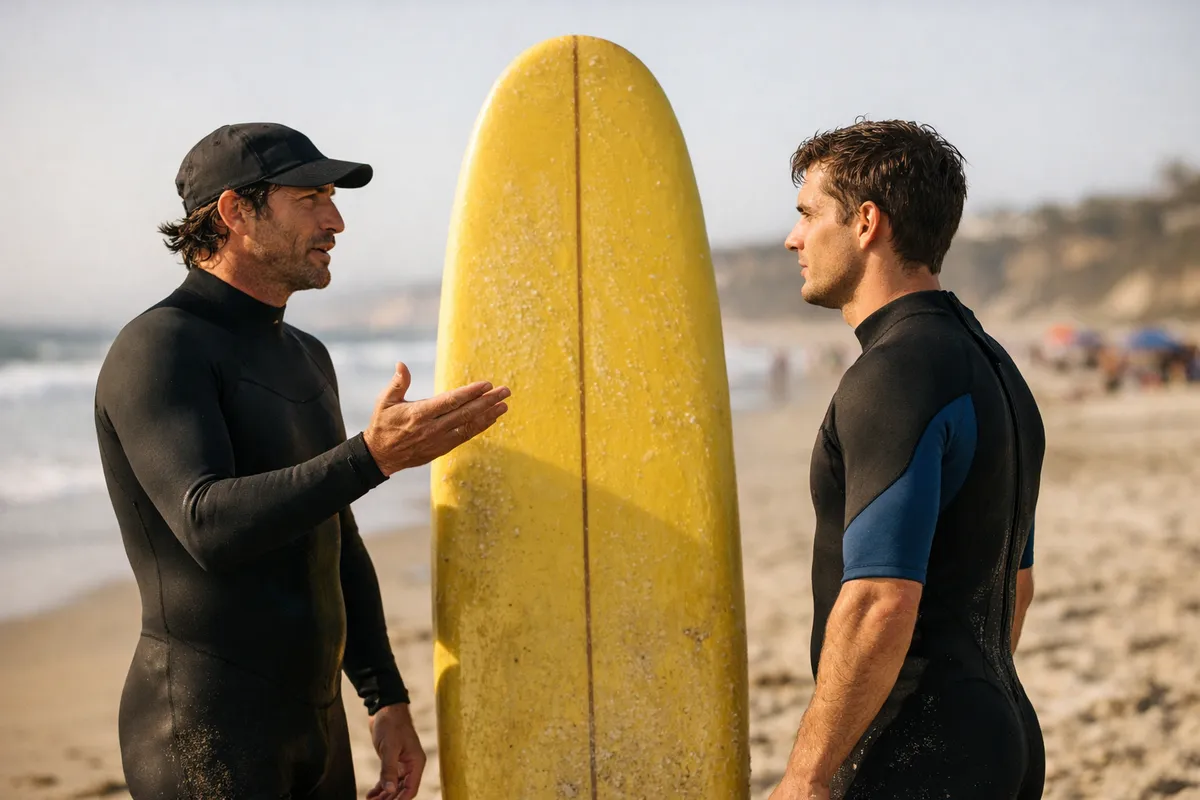
- Introduction. The instructor asks about your fitness, swim ability, any injuries, and your goal for the session.
- Ocean safety. Rip currents — how to spot them, how to get out. Waves — how to fall safely, how to protect your head, what to do if you lose your board.
- The board. Parts of the board, how to carry it, how to lay on it, where your body should be.
- The pop-up on the sand. You practice the pop-up motion 5–10 times on the beach before touching the water.
If your instructor skips straight from "hi" to "let's get in the water," that's a bad sign. The theory is what makes the water portion actually productive.
The next 45 minutes — in the water
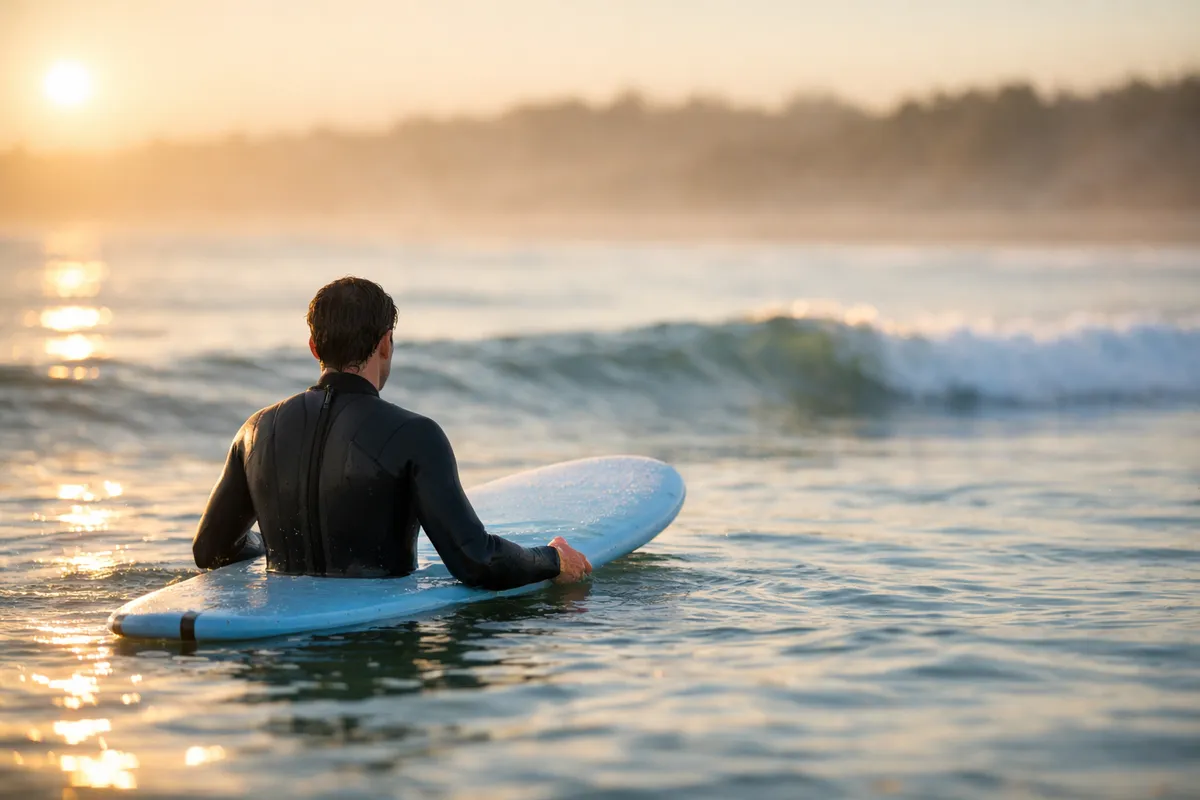
You wade out to waist-deep water. The instructor stays beside you. You turn the board toward shore and wait.
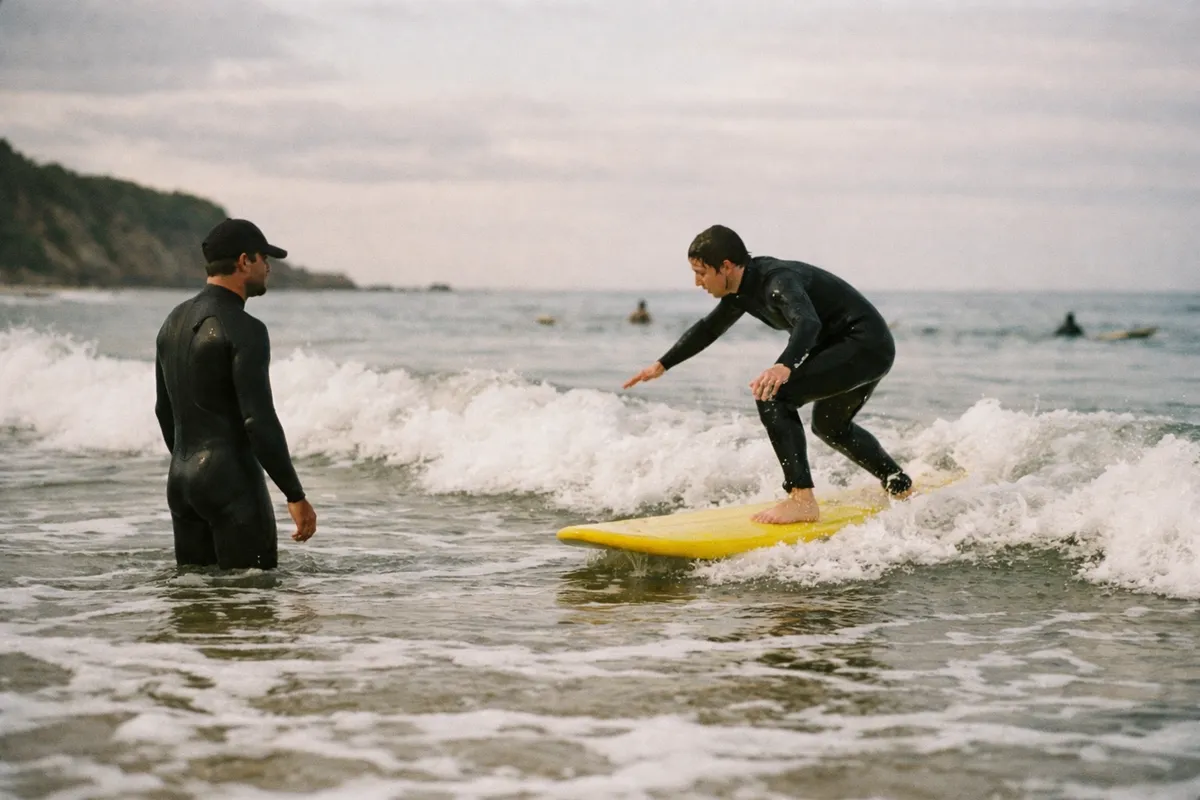
For the first 10 or 15 rides, the instructor will push you into waves. This is not lazy teaching — it lets you focus on the pop-up without also having to figure out timing and paddling. Beginners who try to do everything at once usually don't succeed at anything.
What should actually be happening:
- Instructor picks the right wave for your level (small, already broken, not too fast)
- They tell you when to push up, loud and clear
- You attempt the pop-up
- Whether you make it or not, they give you one short, specific correction ("next time bring your front foot further forward" or "keep your chest up before you push")
- You try again
A great first lesson gets you to a confident stand on a broken wave before the hour is up. A good first lesson gets you close and explains exactly what to work on next. A bad lesson leaves you with no feedback and no idea whether you're improving.
The last 15 minutes — feedback and next steps
On the beach afterward, a good instructor should give you:
- One or two specific things you did well
- One or two specific things to work on next session
- A recommendation on what to book next (another lesson? self-practice? different conditions?)
- A spot recommendation for your level
If your instructor says "great job, see you next time" and walks off — they're not bad, but they're not great either.
What you'll actually feel
Expect to be more tired than you expected. Paddling uses small muscles in your shoulders and lower back that you rarely use. After 45 minutes in the water you'll be exhausted, and that's normal.
Expect to drink some saltwater. Everyone does. You're not doing it wrong.
Expect to stand up on a wave and feel genuinely euphoric. That first successful ride is the reason millions of people surf. It really does feel that good.
How to tell a good instructor from a bad one
Before the lesson, look for:
- Certification — ISA (International Surfing Association) or a national equivalent
- Reviews that mention teaching quality, not just "had fun"
- Small student-to-instructor ratio — ideally no more than 4:1
- Stated safety protocols — first aid kit on site, CPR-trained staff
During the lesson, watch for:
- They're looking at you, not their phone
- They're correcting specific things, not just saying "good, good"
- They're adjusting the difficulty as you progress
- They're enjoying themselves — surf instructors who love their job make better students
On Surfyx, every listed instructor has verified reviews and credentials. Browse lessons near you.
What to do after the lesson
One lesson gets you started. It doesn't finish the job. The best plan for most beginners:
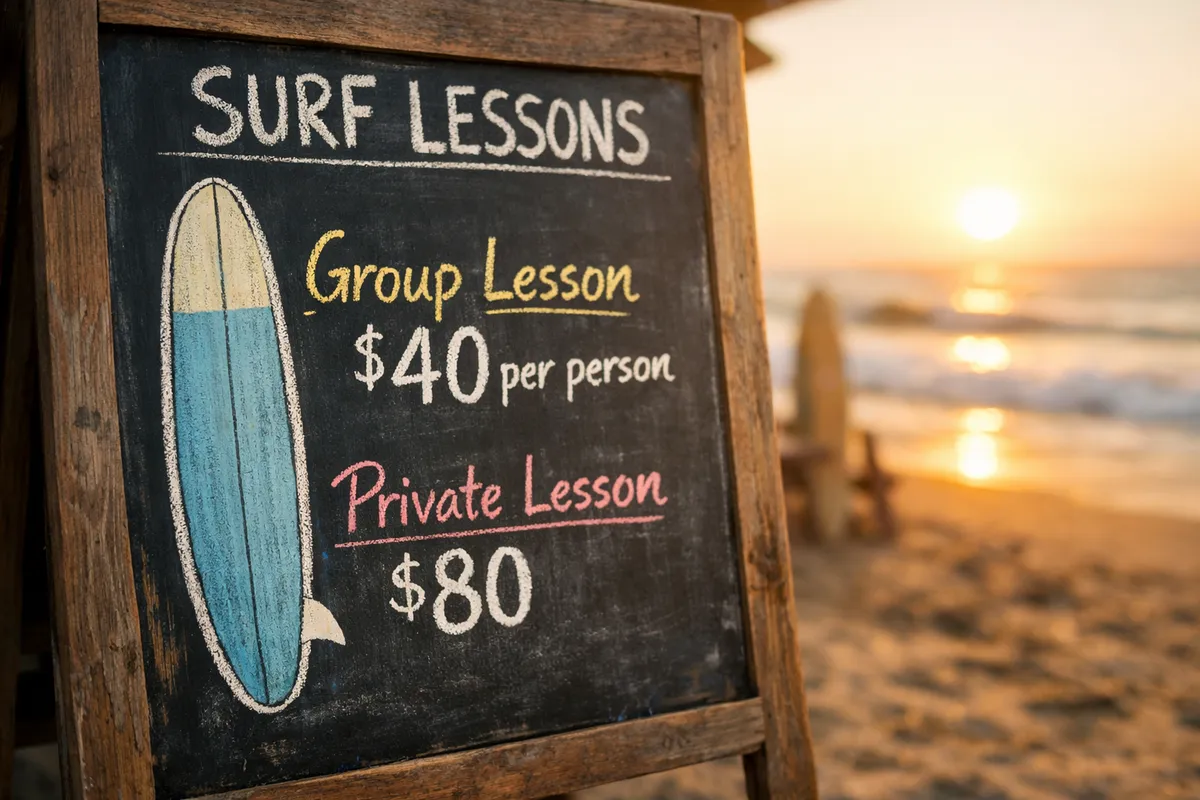
- One private lesson (this one)
- 2–3 group lessons over the next few weeks
- Self-practice in between, with a soft-top rental
- Book a follow-up private lesson after 8–10 sessions for a technique check-in
See our full post on how to learn to surf for the complete first-month plan.
And don't forget to log your first session on Surfyx — your future self will thank you for the progress data.