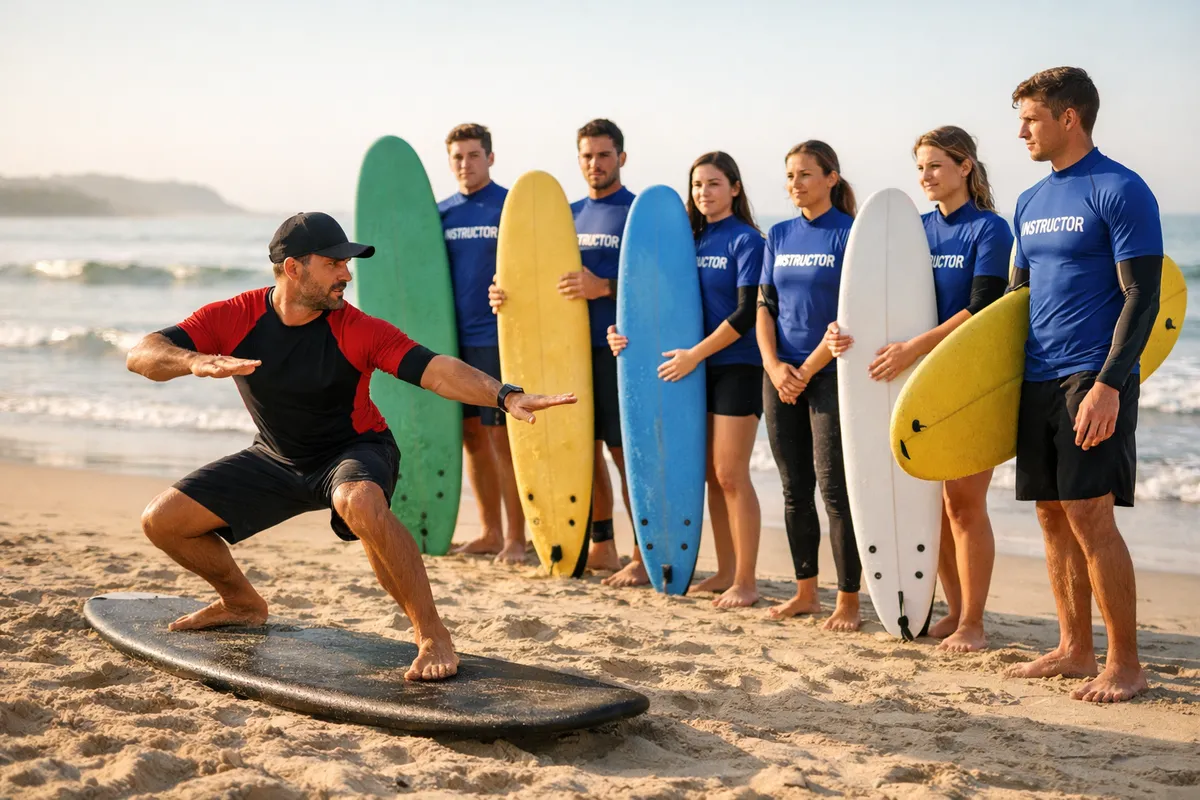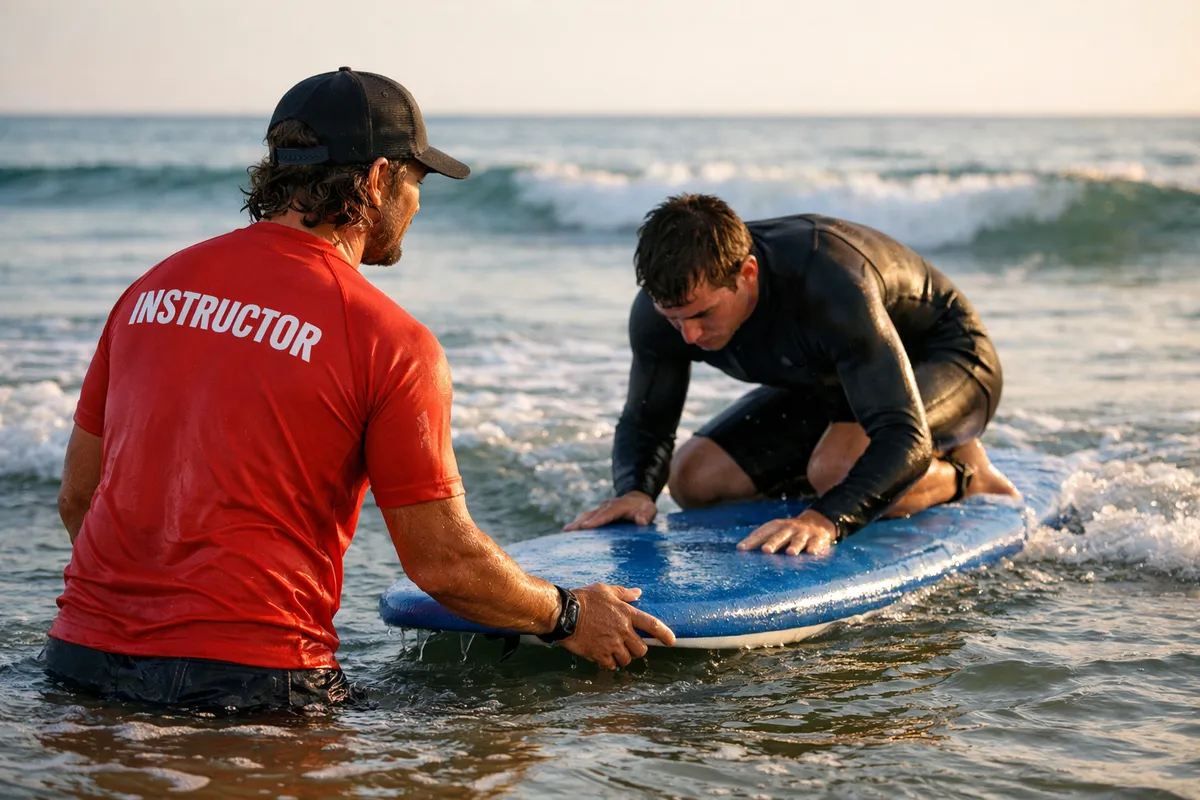
Every surf instructor has a story about how they ended up here — standing in waist-deep water, pushing a nervous beginner into a wave, watching them pop up for the first time and scream with joy. Nobody plans to be a surf instructor at age 10. But something happens — a moment, a season, a trip — and the ocean wins.
These are composite stories drawn from instructors across the Surfyx community. Different countries, different paths, same love for the water.
"I was a teacher who surfed, then a surfer who taught"
— Ana, 34, Ericeira, Portugal
I was a primary school teacher in Lisbon for seven years. I surfed weekends, drove an hour each way. Every Sunday night I'd think: why am I doing this backward?
I got my ISA certification during a summer break. Taught a few lessons at a friend's school in Ericeira. Quit my teaching job in September. That was five years ago.
The pay is less. The lifestyle is incomparable. I wake up, check the forecast, drink coffee on the cliff, and decide where to teach today. My students are happy — they're on vacation, they're trying something new, they're excited. Teaching children to read was meaningful. Teaching adults to catch their first wave is joyful.
The hardest part is winter. Fewer tourists, fewer lessons, tighter budget. I bartend two nights a week in the off-season. It's not glamorous. But March comes, the schools fill up, and I'm back in the water full-time.
"I came for a surf camp and never went home"
— Mick, 28, Taghazout, Morocco
I was working in recruitment in London. Hated it. Booked a two-week surf camp in Morocco as a "reset." That was three years ago. I'm still here.
The camp owner saw me surfing on my free afternoons — I'd surfed growing up in Devon — and asked if I wanted to help with lessons. I said yes. Then he offered me a job for the season. I got my ISA cert at the next available course in Agadir.
The money is modest — about €800–1000/month in season, less in summer when Morocco gets quiet. But rent here is €200/month and I eat tagine for €3. I live better on less money than I ever did in London.
What keeps me here: the first-timers. There's a woman from Germany who came to my lesson last December — terrified of the ocean, couldn't swim well, nearly quit on the beach. I spent 20 minutes with her in ankle-deep water just getting comfortable. By day three she was catching whitewater and crying with happiness. That's the job. That's the whole thing.
"I retired at 55 and started a second career"
— Dave, 58, Byron Bay, Australia
I was a mining engineer in Perth for 30 years. Surfed my whole life — Margaret River, Rottnest, Indo trips. When I took early retirement, my wife said: "You're going to be insufferable if you don't have something to do."
I got my Surfing Australia Level 2 at 56. Oldest person in the course by 20 years. Didn't matter — I could surf better than most of them, and I'd spent 30 years managing teams, so the teaching and communication parts came naturally.
Now I teach private lessons at The Pass in Byron. Mostly middle-aged beginners who remind me of myself — people who always wanted to try surfing and finally have the time. I charge more than the schools because my lessons are private and my experience is genuine. I work three hours a day, four days a week. The rest of the time I free surf.
It's the best job I've ever had. And I've had some good ones.
"Surfing saved me, so now I give it back"
— Kai, 31, Nosara, Costa Rica
I struggled with anxiety and depression through my twenties. Medication helped. Therapy helped more. But the thing that actually changed my relationship with my own head was surfing.
When you're in the ocean, you can't ruminate. You can't spiral. The wave demands your full attention — paddle, position, commit. It's the most present I've ever felt. After every session, the noise in my head was quiet. Not gone, but quiet. That was enough.
I moved to Nosara three years ago because the waves are consistent and the community is welcoming. Got certified, started teaching. I don't talk to every student about mental health — most are on vacation and just want to have fun. But when someone tells me they're stressed, or anxious, or going through something, I know exactly what surfing can do for them. And I adjust the lesson accordingly. Less technique, more presence. Less performance, more play.
The healing isn't in standing up. It's in being in the water. The standing up is just a bonus.
"I wanted to build something, not just teach"
— Priya, 36, Weligama, Sri Lanka
I'm from Colombo originally. Studied business in the UK, worked in consulting, came home and started looking for something meaningful. Sri Lanka's south coast was developing fast — surf camps everywhere, but all owned by foreigners. I wanted to build a Sri Lankan-owned surf school.
I got my ISA certification, hired two local surfers and certified them, and opened a school on Weligama beach. Three years later we have five instructors, all Sri Lankan, all certified. We teach 20–30 students a week in season.
The business side is harder than the teaching. Permits, insurance, marketing, managing staff, dealing with online reviews. But when I see one of my instructors — a kid who grew up fishing on this beach — teaching a tourist to surf and earning a real wage from it, that's the vision coming to life.
Surfing is an economic engine. In a beach town with few other options, a surf school creates jobs, brings tourists, and keeps money local. That's why I do this.
What they all have in common
Different ages, different countries, different life paths. But every instructor we talked to shared three things:
- They love the moment. The first wave, the student's face, the scream of joy. It doesn't get old.
- They accepted the tradeoff. Less money, less stability, more meaning. None of them would trade back.
- They keep learning. Every instructor still takes lessons — from the ocean, from other instructors, from their own students. The best teachers are permanent students.
Become an instructor
If these stories resonate, read our guide on how to become a surf instructor. On Surfyx, create an instructor profile to start building your reputation and connecting with students.