If you're picking your first surf destination, one of the biggest variables is which ocean you'll be surfing in. The Atlantic and Pacific produce different waves, different water temperatures, and different experiences at the beach. Neither is "better" — but understanding the differences helps you choose the right trip.
Wave character
Atlantic
The Atlantic is a smaller ocean with shorter fetch (the distance wind blows over open water to create swell). This produces:
- Shorter-period swells (8–12 seconds typical). The waves arrive more frequently and have less power behind them.
- Choppier conditions. Atlantic wind patterns change quickly. Clean, glassy days exist but aren't as reliable as in the tropics.
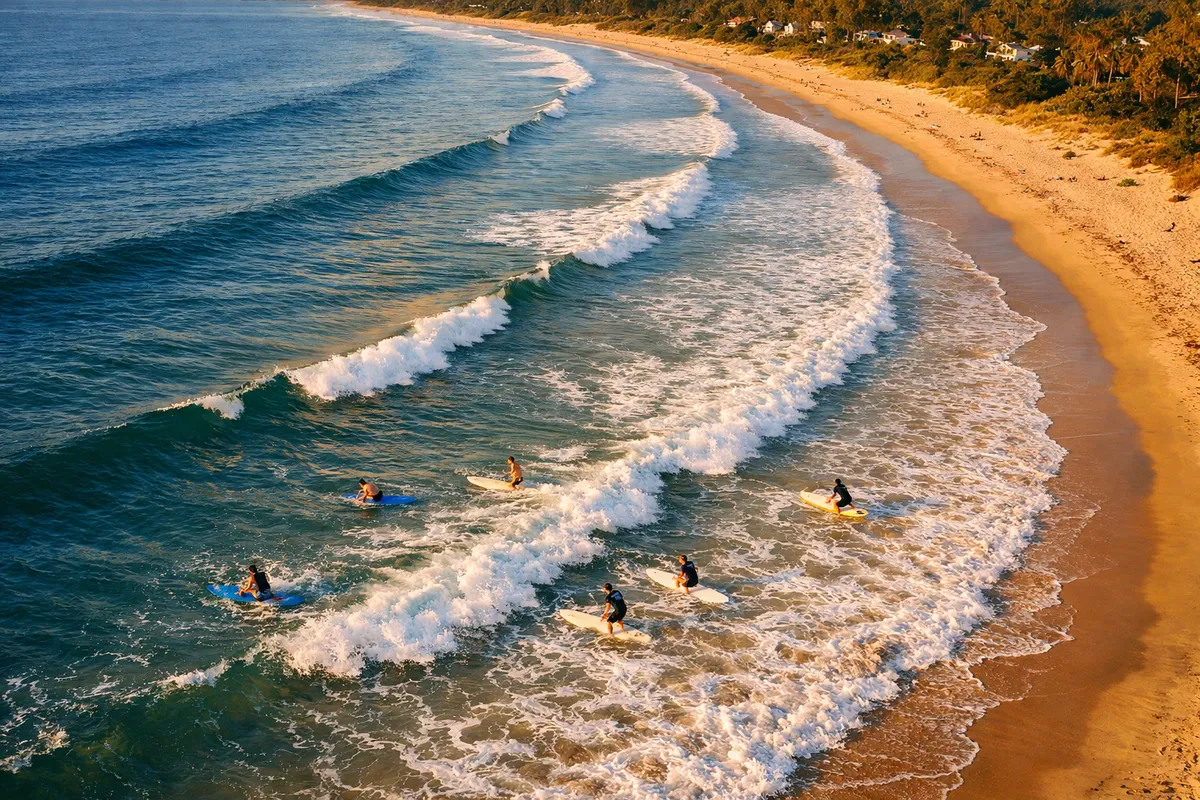
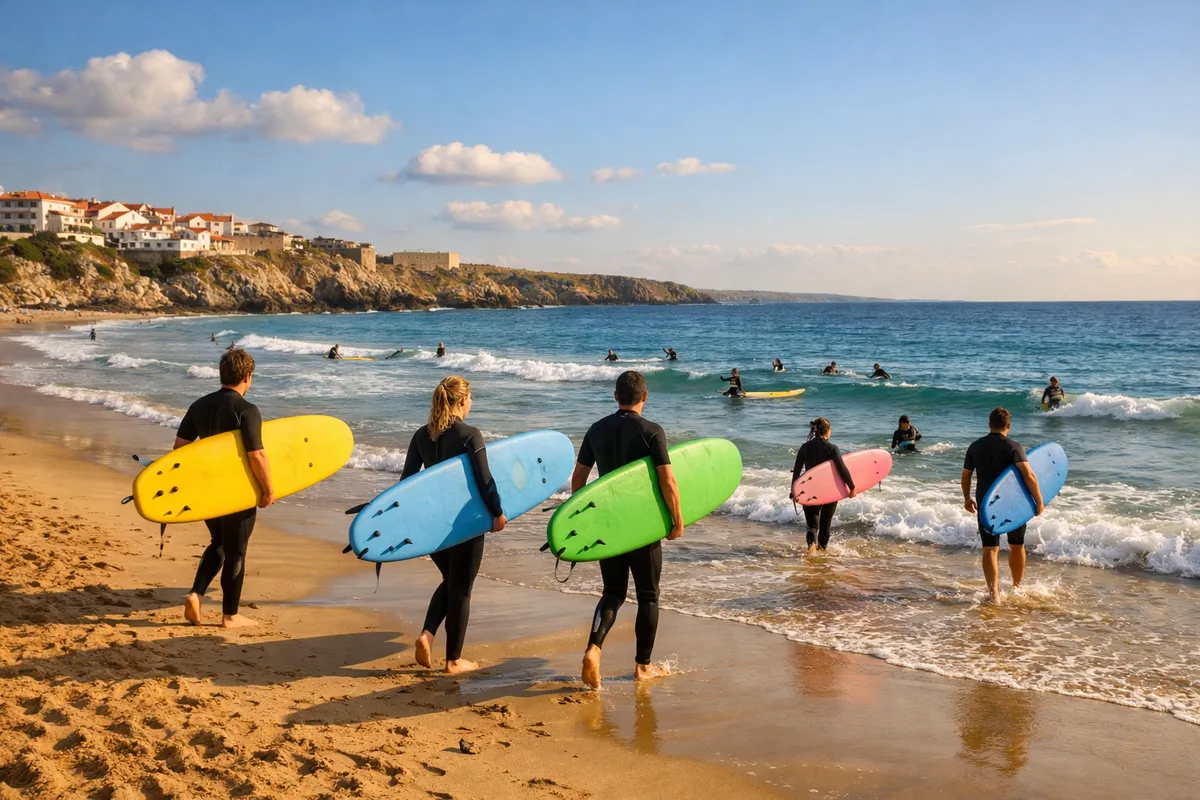
- More beach breaks. The European and African Atlantic coasts are dominated by sand-bottom beach breaks — exactly what beginners want.
For beginners, the Atlantic's shorter-period swells and prevalence of beach breaks are actually an advantage. The waves are less powerful and break over sand, making falls safer and the learning curve gentler.
Pacific
The Pacific is the largest ocean on earth. Storms in the Southern Ocean and North Pacific send powerful swells that travel thousands of kilometers:
- Longer-period swells (12–18+ seconds). These carry more energy and produce more powerful waves when they hit the coast.
- Cleaner conditions. Trade winds in tropical Pacific zones create reliable offshore conditions. Indonesia, Hawaii, Central America — glassy mornings are the norm.
- More reef breaks. Pacific islands and coasts have significant reef — coral, rock, or lava. Some beginner spots exist on sand (Costa Rica, parts of California), but many famous Pacific spots break over reef.
Pacific beginner beaches (Waikiki, Kuta, Tamarindo) are excellent precisely because they're the exceptions: sand-bottom or deep-water reef that's safe to fall on.
Water temperature
| Region | Ocean | Summer | Winter |
|---|---|---|---|
| Portugal | Atlantic | 18–20°C | 14–16°C |
| Morocco | Atlantic | 20–22°C | 17–19°C |
| France | Atlantic | 19–22°C | 10–13°C |
| UK | Atlantic | 14–17°C | 8–11°C |
| California | Pacific | 16–20°C | 12–15°C |
| Hawaii | Pacific | 25–27°C | 23–25°C |
| Bali | Pacific/Indian | 27–29°C | 27–28°C |
| Costa Rica | Pacific | 27–30°C | 26–28°C |
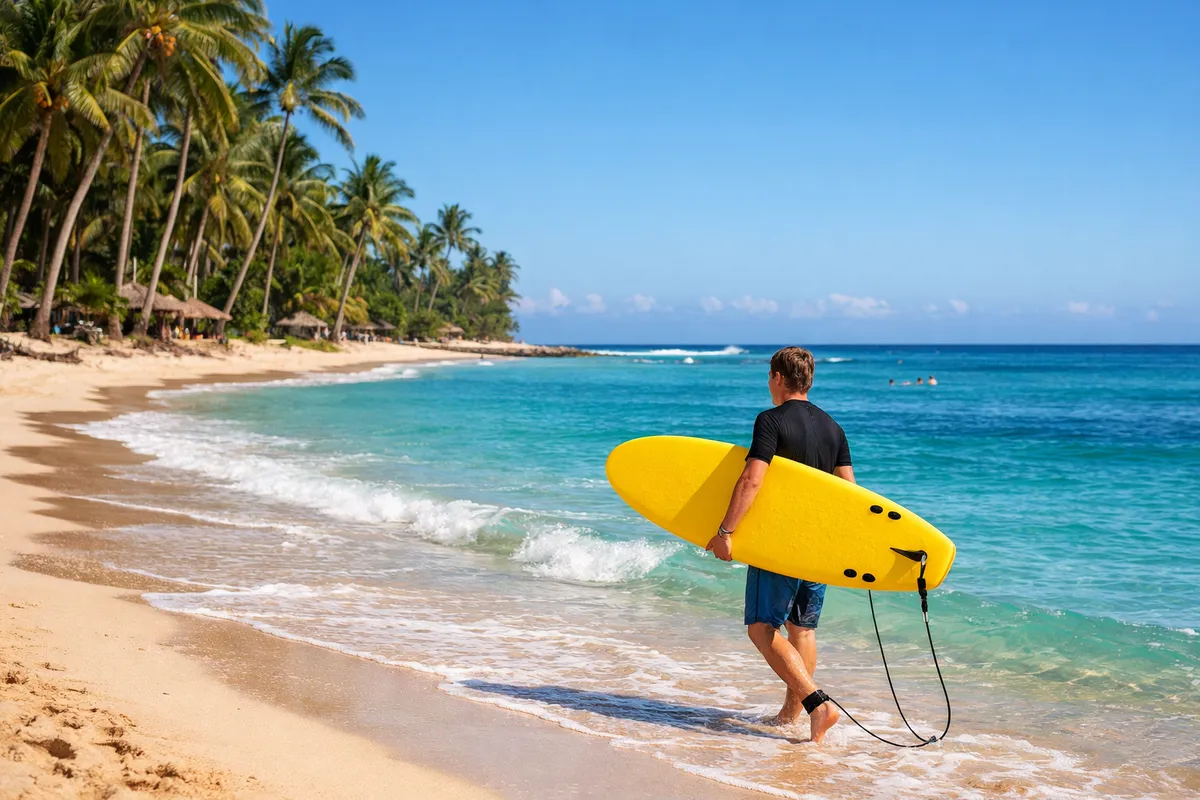
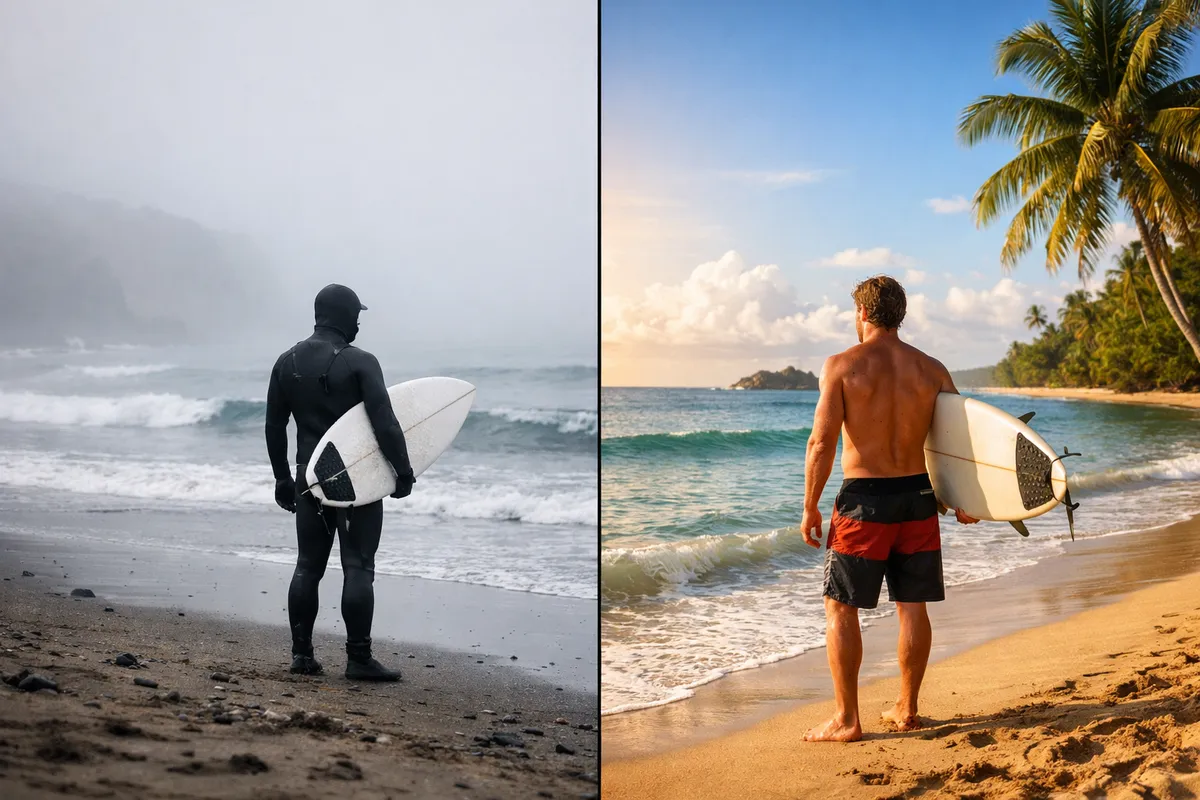
The Atlantic is generally cooler. Most Atlantic surf destinations require a wetsuit year-round (Morocco is the warmest exception). The tropical Pacific is warm enough to surf in board shorts all year.
For beginners, warm water is genuinely easier to learn in. You're more relaxed, you can stay in the water longer, and you don't have the added complexity of a wetsuit restricting your movement. If temperature is a deciding factor, tropical Pacific wins.
Swell consistency
Atlantic
The North Atlantic produces consistent swell from October through April — this is when Morocco, the Canaries, and Madeira light up. Summer swells are smaller and less reliable on the European coast, though Portugal and France still get enough to learn on.
The Atlantic has more "messy" days — wind-affected, multi-directional swell. For beginners this is less important because you're in the whitewater zone where conditions matter less.
Pacific
The Pacific generates swell year-round from different sources. North Pacific storms in winter, South Pacific groundswell in summer. Tropical destinations like Bali and Costa Rica are almost never flat.
The Pacific rewards destination timing more. Hawaii's North Shore in winter is for experts; the same beaches in summer are gentle. Costa Rica's Pacific coast has distinct dry and green seasons. Get the timing right and you'll have consistent small waves every day of your trip.
Culture and vibe
This is subjective, but observable:
- Atlantic Europe (Portugal, France, UK, Spain) — the surf culture is community-oriented, often centered around small towns and local clubs. Lineups can be territorial at advanced spots but are generally welcoming at beginner beaches. Post-surf: wine, coffee, local food.
- Atlantic Africa (Morocco) — a developing surf scene with a backpacker/adventure vibe. Very affordable. The cultural experience (markets, food, landscape) is unlike anywhere else.
- Pacific Americas (California, Costa Rica, Mexico) — commercial and well-organized. Lots of schools, clear pricing, lifeguards. Pura vida or SoCal — both easygoing in their own way.
- Pacific Asia/Oceania (Bali, Australia, Hawaii) — diverse. Bali's Canggu has a modern digital-nomad surf culture. Australia's coast towns are deep-rooted in generations of local surfing. Hawaii carries the weight of being surfing's birthplace.
Which ocean is easier to learn in?
There's no universal answer, but here are the tradeoffs:
- Easiest wave conditions: Atlantic beach breaks (Portugal, Morocco, France). Sand bottom, short-period swell, forgiving falls.
- Most comfortable conditions: Tropical Pacific (Bali, Costa Rica, Hawaii). Warm water, no wetsuit, consistent small waves at beginner spots.
- Best value: Morocco (Atlantic) or Bali (Pacific). Both offer excellent learning conditions at $30–60/day all-in.
- Best infrastructure: California, Australia, Portugal. Lifeguards, certified schools, and decades of learn-to-surf industry.
If you're choosing between a cold Atlantic trip and a warm Pacific trip, and you've never surfed before, the warm-water option is almost always the better first experience. But if you're in Europe and can get to Portugal or Morocco easily, don't overthink it — both are world-class beginner destinations.
The short version
Atlantic: cooler water, shorter swells, more beach breaks, easier wave shape. Pacific: warmer water, longer swells, more reef breaks, more powerful waves — but the beginner beaches are purpose-built for learning.
Both oceans have world-class beginner destinations. Pick based on budget, travel distance, and water temperature preference.
Find your destination
On Surfyx, use the spot map to explore beginner beaches across both oceans. Every listed surf school and lesson includes verified reviews, upfront pricing, and instructor credentials.