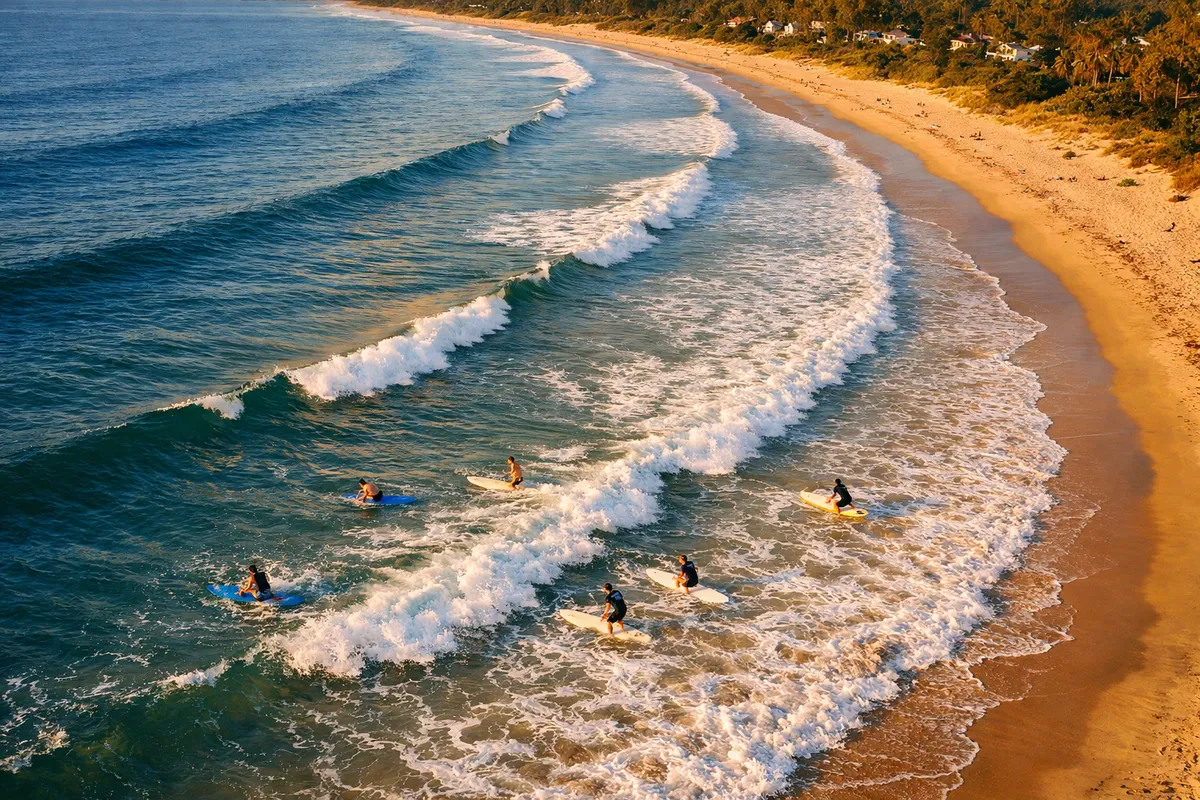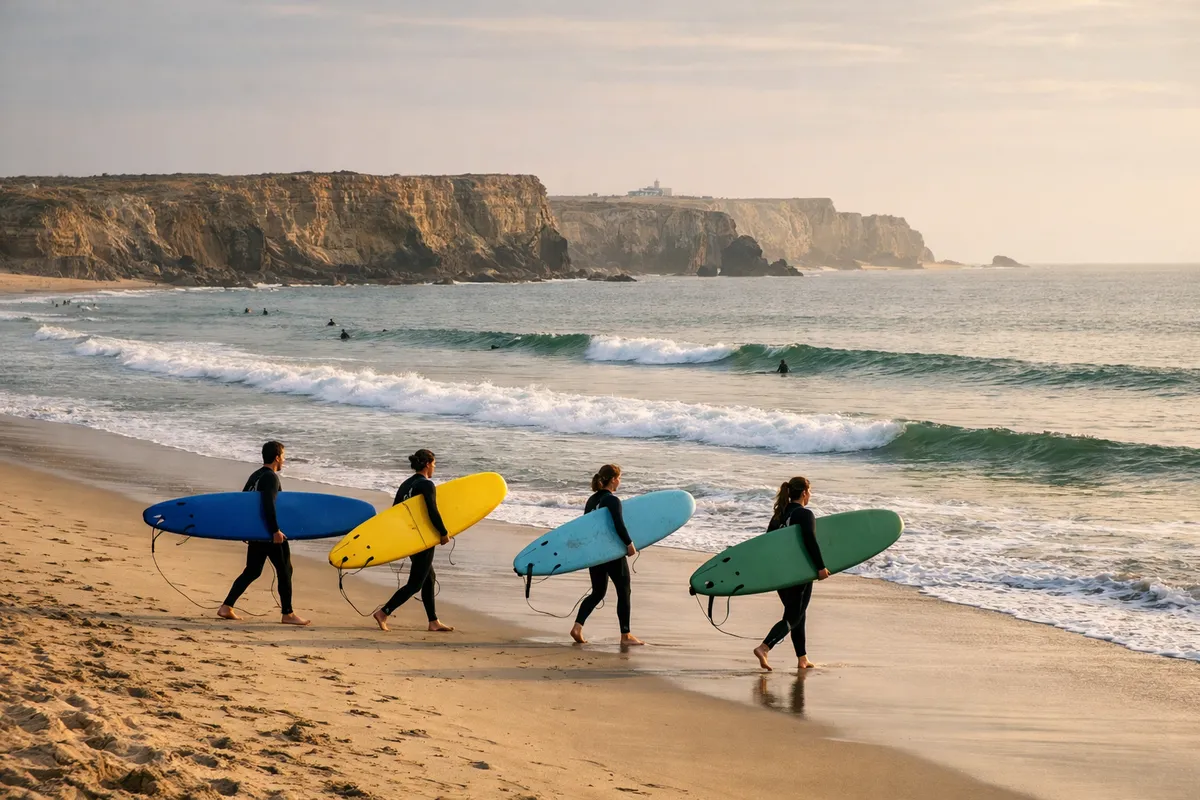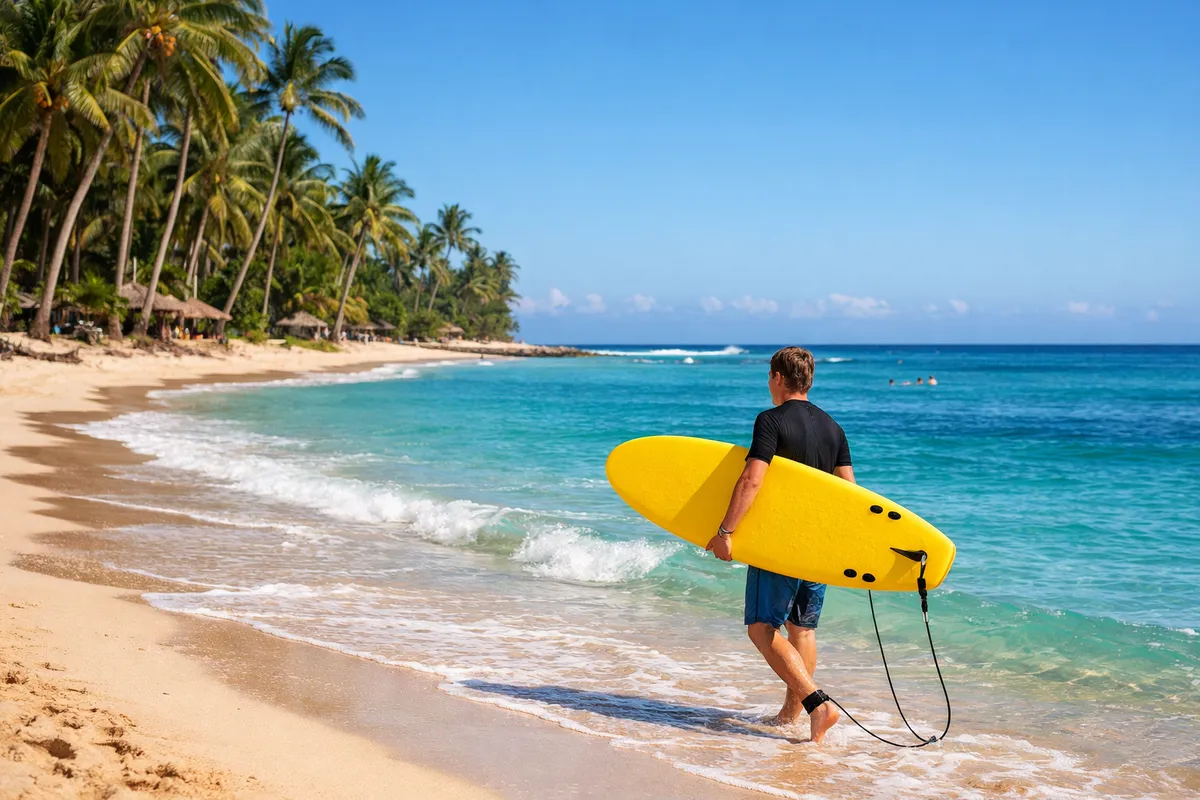
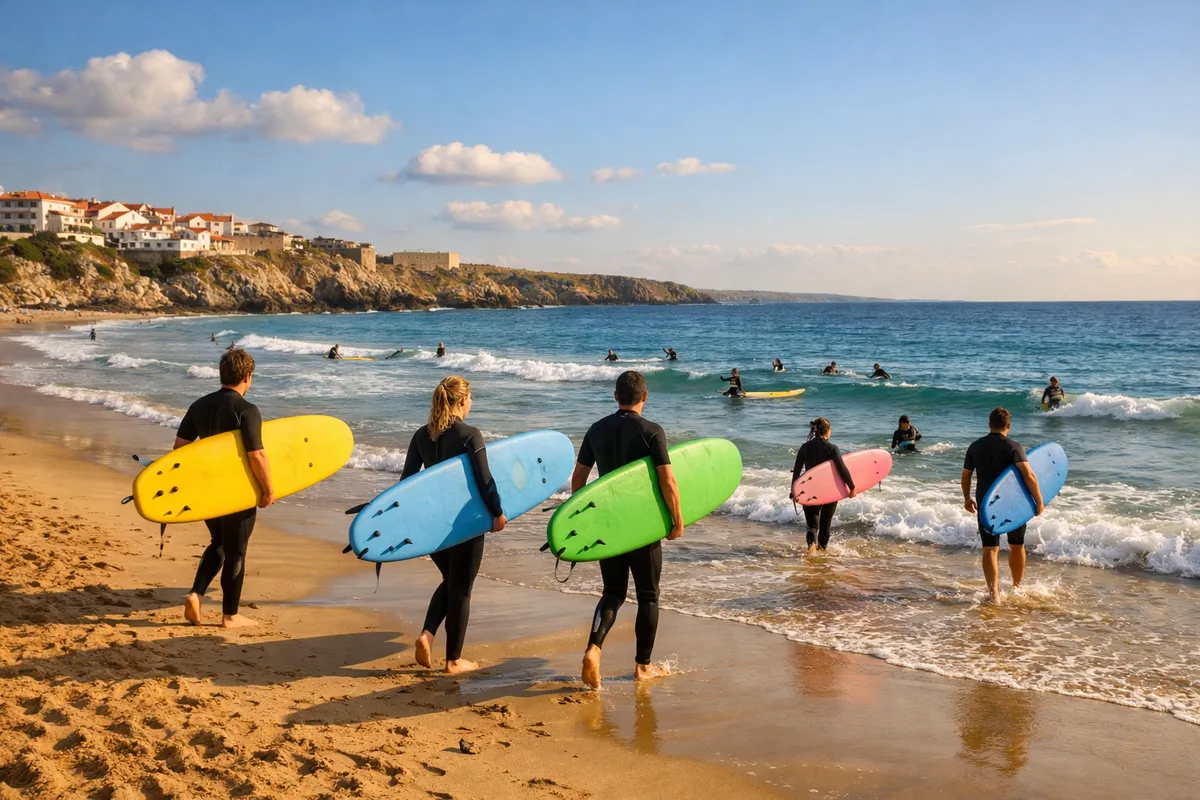
Summer is when most people first try surfing. The days are long, the water is warmer than it'll be all year, and beaches that are too big and wild in winter settle into friendly, manageable conditions. If you're planning your first surf trip between May and September, these are the destinations that deliver.
Portugal (May–October)
Europe's best beginner surf coast. Ericeira, Peniche, and the Algarve all work through the summer — reliable small swells, warm air, water reaching 19–20°C by August, and hundreds of surf schools competing for your business.
- Where: Peniche (Baleal), Ericeira (Foz do Lizandro), Algarve (Sagres, Lagos)
- Why it works: Consistent waves, affordable camps (€350–800/week), walkable surf towns, great food
- Watch out for: July–August crowds at popular beaches. Go in May–June or September for the sweet spot.
Read our full Portugal surf trip guide.
Southwest France (June–September)
Hossegor, Seignosse, Capbreton, Anglet — the French Atlantic coast has miles of sandy beach break with schools set up every hundred meters in summer. The waves are smaller and friendlier than in autumn, the weather is warm (air 25–30°C, water 18–22°C), and the French surf culture is alive and well.
- Where: Anglet (beginner-friendly), Seignosse (all levels), Biarritz (Côte des Basques for longboarding)
- Why it works: Beach-break sand bottom everywhere, excellent food and wine, well-organized surf schools
- Watch out for: August is peak holiday season — book early. September is often the best month.
Pair it with a road trip: Biarritz to San Sebastián is only 30 minutes across the Spanish border.
California (May–September)
Summer in California means smaller, cleaner swells and the warmest water of the year (16–20°C in SoCal, 12–16°C in NorCal — wetsuit still needed). The beginner beaches are at their friendliest.
- Where: San Onofre, Bolsa Chica, Huntington (SoCal); Pacifica / Linda Mar, Santa Cruz (NorCal)
- Why it works: World-class infrastructure, lifeguards everywhere, consistent small summer swells, iconic surf culture
- Watch out for: Southern California is expensive ($100+/night for basic lodging near the beach). NorCal is cold even in summer.
San Onofre State Beach is the hidden gem — mellow, uncrowded compared to Huntington, and one of the most forgiving waves in Southern California.
Cornwall & Devon, UK (June–September)
Britain's surf coast comes alive in summer. Water temperature reaches 15–17°C (still need a 3/2 mm wetsuit), air is pleasant, and the swells drop to beginner-friendly sizes. Newquay is the hub — Fistral and Watergate Bay have dozens of schools.
- Where: Newquay (Fistral, Watergate), Croyde (Devon), Polzeath
- Why it works: Established surf school scene, wide sandy beaches, dramatic scenery, authentic British surf culture
- Watch out for: British summer weather is unpredictable. Bring layers. July–August school holidays mean crowds at the popular breaks.
Polzeath is a quieter alternative to Newquay — same quality waves, half the crowd, and popular with families learning together.
Australia — Gold Coast & Byron Bay (June–August)
Winter in Australia (June–August) is actually prime time for the Gold Coast and Byron Bay. North swells hit the points and beaches, the weather is mild (air 20°C, water 20–22°C — no wetsuit or a thin spring suit), and the beaches aren't packed with summer tourists.
- Where: The Spit, Currumbin, Greenmount (Gold Coast); The Pass, Main Beach (Byron Bay)
- Why it works: World-class waves scaled down to beginner size, lifeguards, excellent schools, laid-back culture
- Watch out for: Sea life — bluebottles (jellyfish) can be present. Check with lifeguards.
Byron Bay's The Pass is one of the friendliest beginner-to-intermediate waves anywhere — a long right-hand point that peels gently for 200+ meters.
Japan — Shonan & Chiba (June–September)
Japan's Pacific coast has a genuine surf scene that most foreigners don't know about. Shonan (1 hour from Tokyo) and Chiba (1.5 hours from Tokyo) have beach breaks with schools, warm summer water (22–26°C), and a uniquely Japanese surf culture that's worth experiencing.
- Where: Kugenuma, Enoshima (Shonan); Ichinomiya, Chiba (2020 Olympics surf venue)
- Why it works: Warm water, organized surf schools, amazing food, a completely different surf culture from the Western norm
- Watch out for: Typhoon season can bring big swells. Stick to beginner beaches when there's a typhoon warning.
How to choose
| Destination | Water temp | Budget (week) | Wetsuit? |
|---|---|---|---|
| Portugal | 16–20°C | €400–1000 | 3/2 mm |
| SW France | 18–22°C | €500–1200 | 3/2 mm or spring |
| California | 14–20°C | $800–1800 | 3/2 mm |
| UK | 14–17°C | £400–900 | 3/2 mm |
| Australia | 20–22°C | AUD 800–1500 | Optional spring |
| Japan | 22–26°C | ¥80k–150k | None or spring |
What to pack for a summer surf trip
- 3/2 mm wetsuit for European and California destinations (or rent)
- Board shorts and rash guard for warm-water spots
- Reef-safe sunscreen — summer UV is strong everywhere
- Sunglasses and a sun hat for off-water time
- Light layers for evening (European Atlantic coasts cool down at night)
Find schools at every destination
On Surfyx, use the spot map to find any of these locations with live conditions and community session data. Every listed surf school and lesson includes verified reviews and upfront pricing.