Costa Rica is the easiest warm-water surf destination in the Western Hemisphere. It has two coasts, both surfable. Water temperature never drops below 26°C. You don't need a wetsuit. Lessons cost a fraction of what they cost in California or Hawaii. And the country itself — jungle, wildlife, volcanoes, coffee — makes the off-water experience as good as the on-water one.
It's also one of the safest countries in Central America, with reliable tourist infrastructure, clean tap water in most areas, and a culture that genuinely welcomes visitors. "Pura vida" isn't just a slogan — it's how the place actually operates.
Why Costa Rica works for beginners
- Warm water year-round. 26–30°C. Board shorts and a rash guard are all you need.
- Two coasts, two swell windows. Pacific coast catches southern-hemisphere and North Pacific swells. Caribbean coast catches Caribbean and North Atlantic swells. There's almost always somewhere surfable.
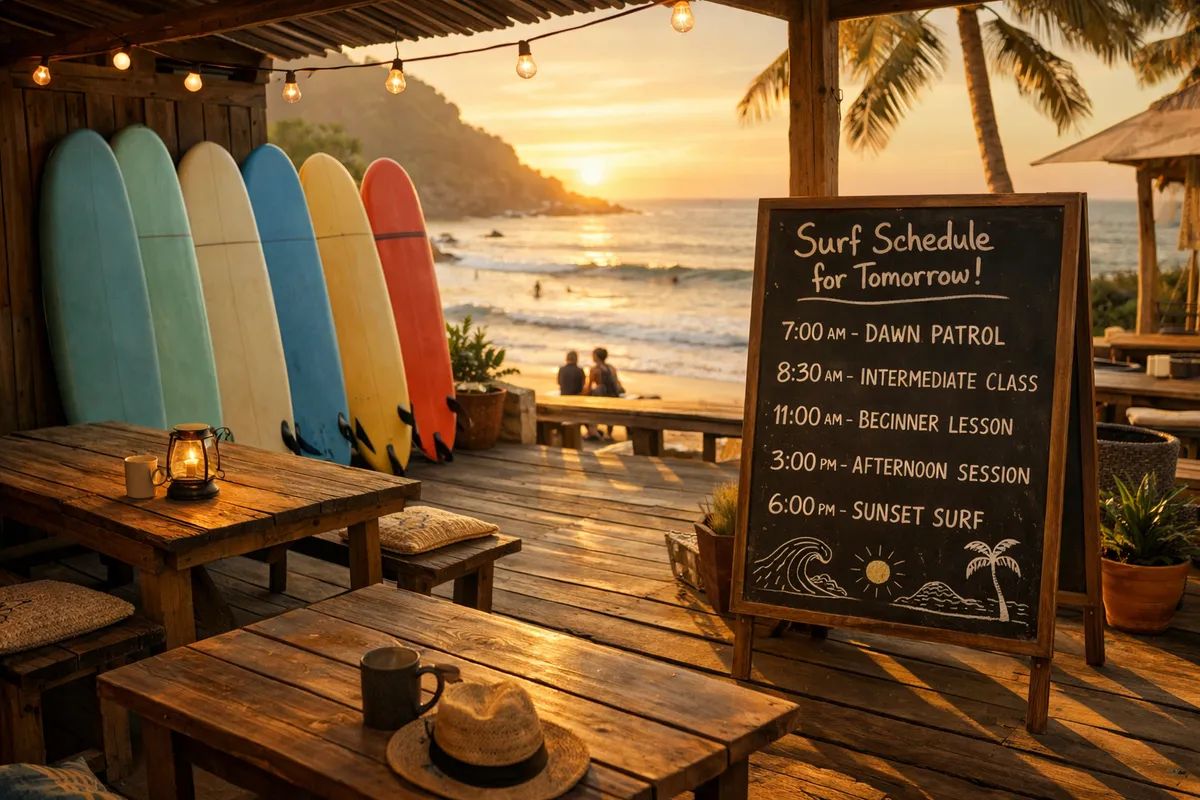
- Affordable lessons. Group lesson: $40–65. Private: $70–120. Less than half of what the US charges.
- Friendly lineups. Beginner beaches like Tamarindo and Nosara have a mellow, learning-focused crowd.
- No visa hassle. Most nationalities get 90 days visa-free on arrival.
- English widely spoken. Tourism is a major industry; most instructors and hospitality staff speak English.
When to go
Dry season (December–April)
The most popular time. Sunny skies, offshore winds on the Pacific coast, and consistent swell. Crowds peak in December–January and during Easter week (Semana Santa). Prices are highest.
Best beginner months in dry season: February, March, early April — past the holiday rush, still dry, consistent small waves.
Green season (May–November)
Afternoon rain showers (usually brief and warm), lush green jungle, lower prices, fewer tourists. Swell is actually more consistent on the Pacific coast during this period — bigger south swells arrive from May through October. Beginner beaches stay manageable because the sand-bottom breaks absorb size well.
Best beginner months in green season: May, June, November — shoulder months with good waves and thin crowds.
Where to go — the four main surf towns
Tamarindo
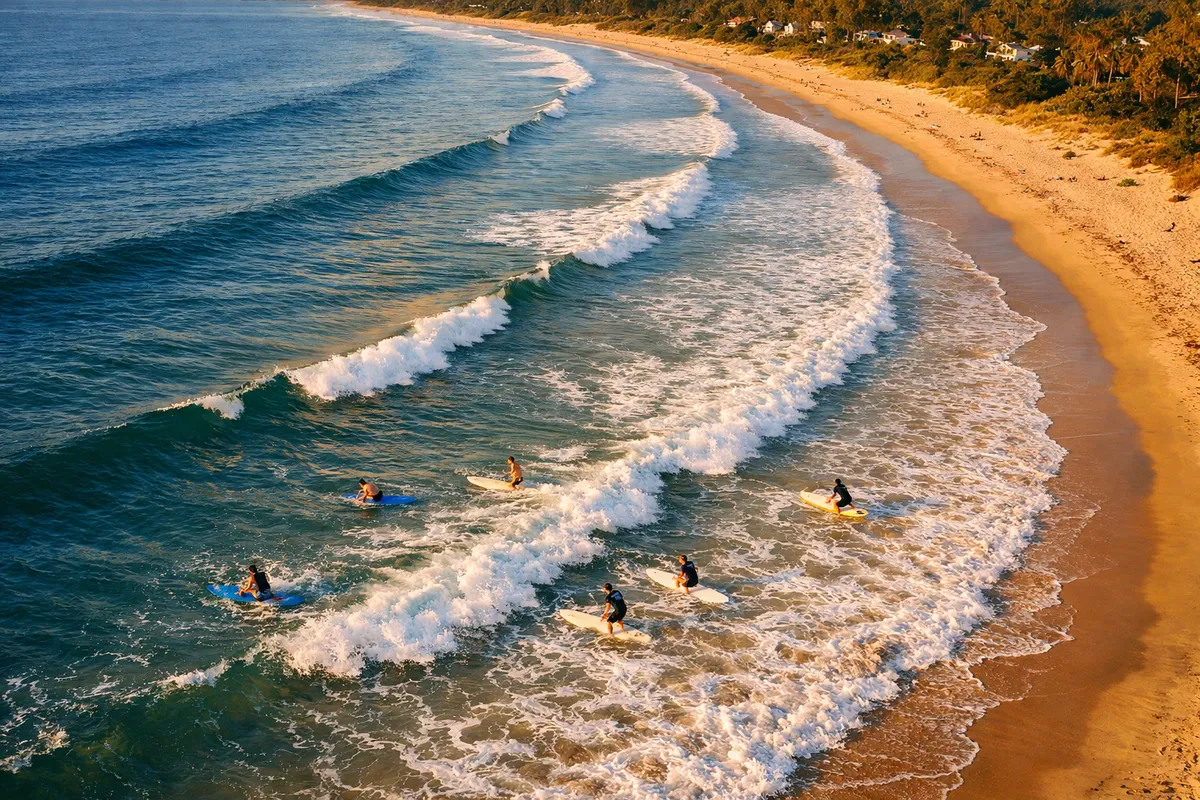
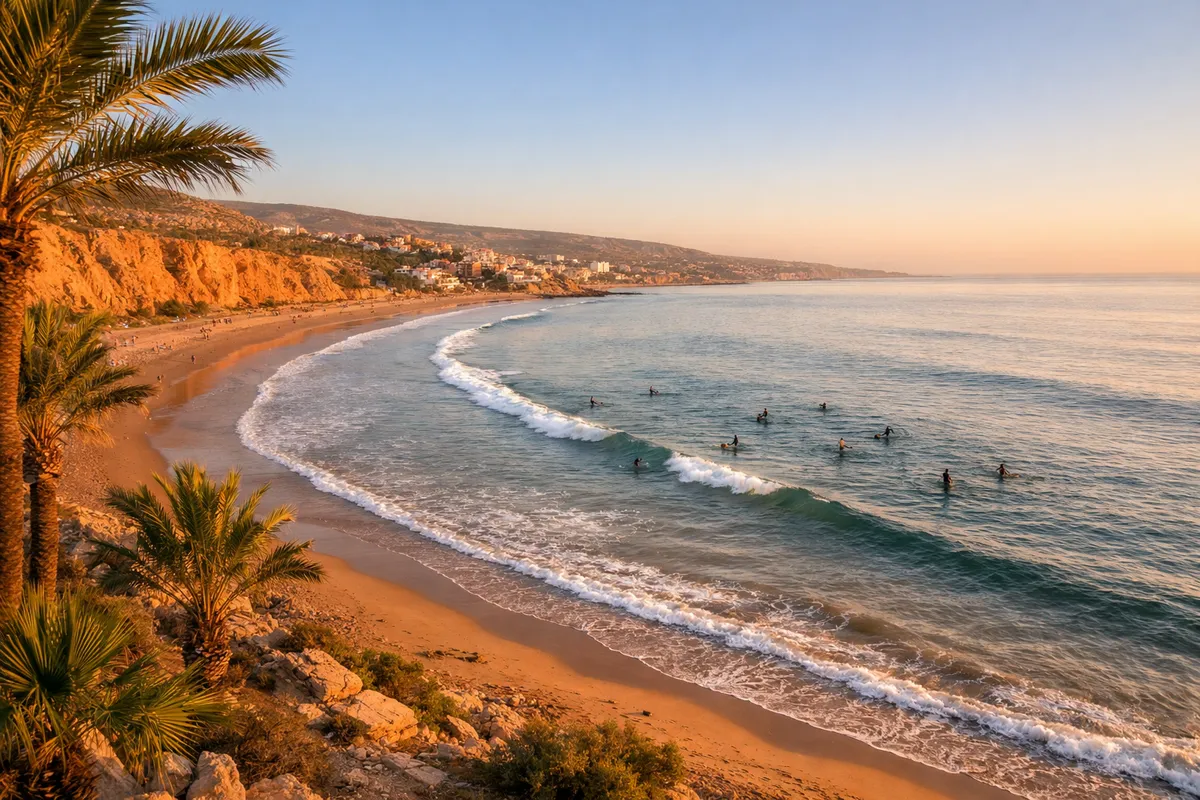
The surf school capital of Costa Rica. A wide crescent bay with gentle, rolling whitewater that's perfect for first-timers. More surf schools per meter of beach than almost anywhere on earth. The town is walkable, has good restaurants, and is well-connected to Liberia airport (1.5 hours).
Downsides: it can feel touristy, and the lineup gets crowded in high season. But for a first trip focused purely on learning, Tamarindo is hard to beat.
Nosara / Playa Guiones
Our top recommendation. Playa Guiones is a long, consistent beach break with sand bottom and mellow whitewater — arguably even better than Tamarindo for learning because the crowd is smaller and the wave more forgiving. The town of Nosara is more spread out (you'll want a car or ATV), with a yoga-and-wellness vibe that attracts a slightly older, calmer crowd.
From Liberia airport: 2.5 hours. From San José: 5 hours.
Santa Teresa / Mal País
A long dirt-road village on the Nicoya Peninsula. The vibe is bohemian — surfers, digital nomads, yoga retreats. The main beach break is slightly punchier than Tamarindo or Nosara, making it better for confident beginners or early intermediates. The town itself is one of the most beautiful in Costa Rica.
Access: fly to Tambor (20 min from San José) + 1-hour drive, or ferry from Puntarenas + 2-hour drive.
Jacó
The closest surf town to San José (1.5 hours). A wide beach break with schools and rentals. Less charming than the other three — Jacó is more developed, more nightlife-oriented — but it's the most convenient if you're short on time. The beginner section of the beach works fine for learning.
How to get there
Two international airports:
- Juan Santamaría (SJO) — San José. Main hub. Direct flights from most US and European cities.
- Daniel Oduber (LIR) — Liberia, Guanacaste. Closer to Tamarindo and Nosara. Growing number of direct flights from the US and Canada.
Domestic flights (Sansa Airlines) connect San José to Nosara, Tambor, and other beach towns. Small planes, ~30 minutes, $80–130 one way.
Renting a car is the most flexible option ($40–70/day for a basic SUV). Roads to surf towns vary — Tamarindo is paved, Nosara has some dirt road, Santa Teresa is unpaved for the last stretch. A basic SUV handles all of them.
Where to stay
Surf camp
All-inclusive packages with accommodation, meals, lessons, and board rental. Costa Rica's surf camps range from basic hostels to luxury eco-lodges.
- Budget camp: $400–700 per week
- Mid-range camp: $700–1200 per week
- Premium eco-lodge: $1200–2500 per week
Independent
Airbnb or hotel ($30–150/night depending on town and season), lessons booked separately ($40–65 group, $70–120 private), board rental ($10–20/day). More flexibility, slightly more effort.
Costs (2026 estimates)
| Item | Approximate cost |
|---|---|
| Hostel or budget guesthouse, per night | $20–45 |
| Mid-range hotel or Airbnb, per night | $60–150 |
| Group surf lesson (2 hours) | $40–65 |
| Private surf lesson | $70–120 |
| Board rental per day | $10–20 |
| Meal at a soda (local eatery) | $5–10 |
| Meal at a tourist restaurant | $12–25 |
Typical week including lessons, accommodation, and food:
- Budget backpacker: $500–700
- Mid-range: $800–1300
- Comfortable: $1300–2000
Food
Costa Rican food is simple and good:
- Casado — the national dish. Rice, beans, plantain, salad, and a protein (chicken, fish, or beef). Available everywhere for $5–8.
- Gallo pinto — rice and beans mixed together. The standard breakfast.
- Ceviche — fresh fish marinated in lime. Best near the coast (which is where you are).
- Fresh fruit — mangoes, papayas, pineapples, all ridiculously good and cheap.
- Imperial — the local beer. Light, cold, and perfect after a session.
"Sodas" are small local eateries serving casados and gallo pinto for $4–8. They're the best value and often the best food.
What to pack
- Board shorts / swimsuit (bring several — they dry slowly in humid weather)
- Rash guard for sun protection
- Reef-safe sunscreen (SPF 50+, zinc-based)
- Bug spray (mosquitoes are real, especially in green season)
- Light rain jacket (green season)
- Flip flops and one pair of walking shoes
- Dry bag for phone and wallet at the beach
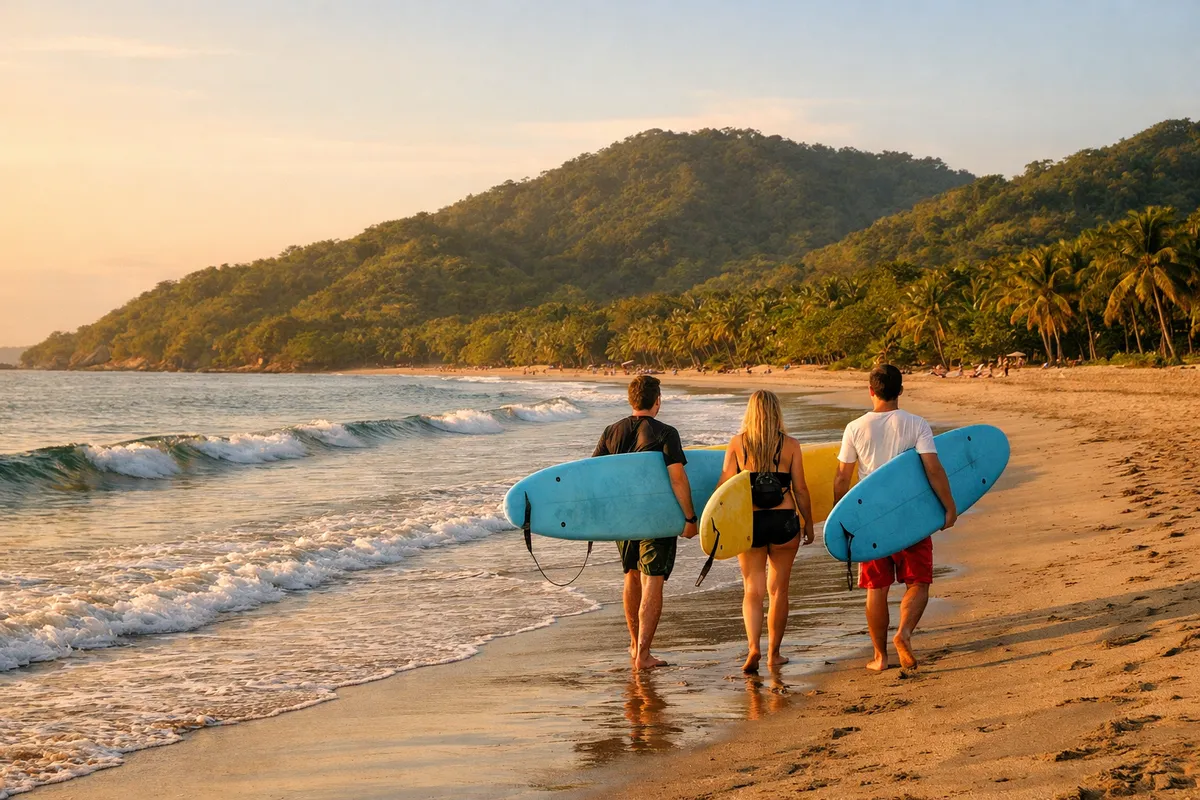
Don't pack a board. Don't pack a wetsuit. Rentals are everywhere and cheap.
Safety
- Rip currents — present at every Pacific beach. Ask your instructor about the day's conditions and stay in the designated zone.
- Crocodiles — yes, really. River mouths on the Pacific coast (especially near Jacó and Tamarindo) can have crocodiles. Don't surf near river mouths. Your instructor will know the safe zones.
- Petty theft — don't leave valuables unattended on the beach. Use a dry bag or leave things at your accommodation.
- Road conditions — some roads to surf towns are unpaved and potholed. Drive slowly, especially at night.
A typical beginner week in Nosara
- Day 1: Arrive, settle in, walk to Playa Guiones, watch the sunset.
- Day 2: First morning group lesson. Afternoon: rest, yoga, explore town.
- Day 3: Morning lesson, afternoon independent practice on a rented foamie.
- Day 4: Rest day. Biological reserve hike, waterfall visit, or just hammock time.
- Day 5: Two sessions — morning and late afternoon (the light is incredible).
- Day 6: Morning private lesson for focused feedback, afternoon free surf.
- Day 7: Last morning session. Drive to airport, fly home.
Where to find schools and instructors
On Surfyx, find Tamarindo, Nosara, and Santa Teresa on the spot map with live conditions and community session data. Every listed surf school and lesson includes verified reviews, upfront pricing, and instructor credentials.