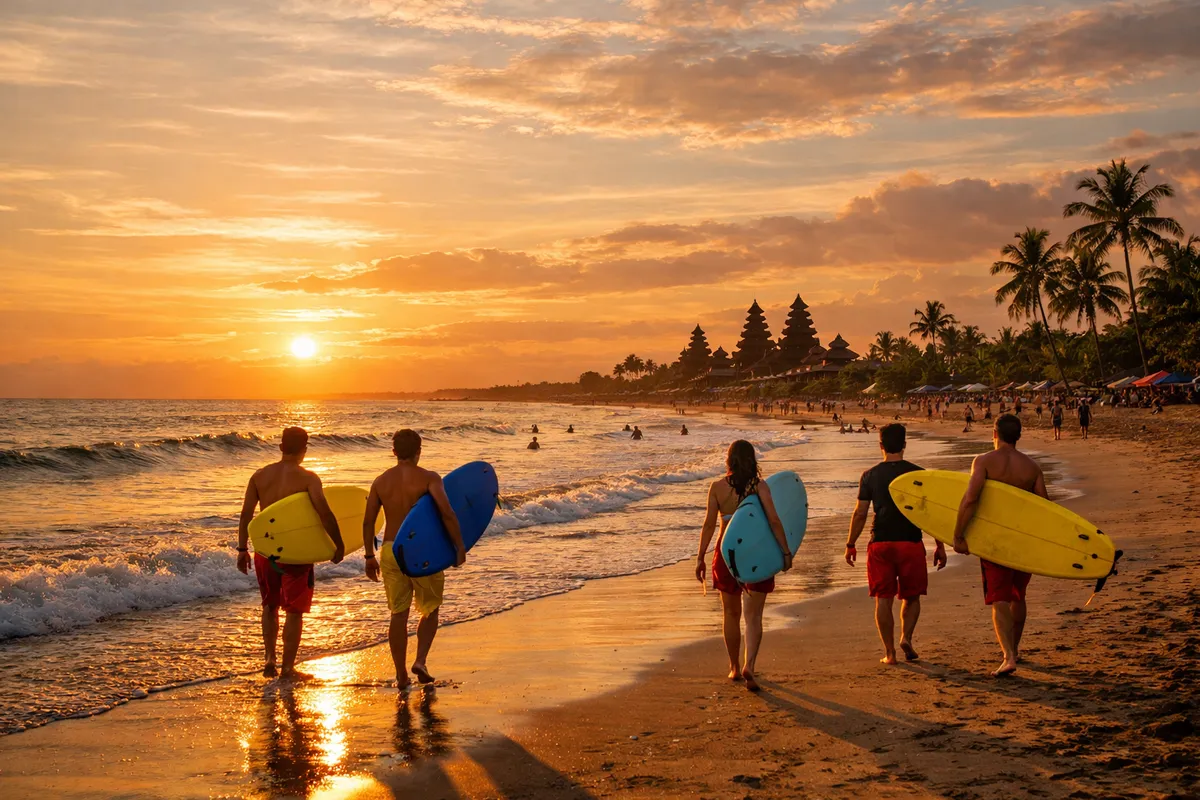
Bali invented modern surf tourism. In the 1970s it was a quiet Indonesian island famous mostly for reef breaks and Eat Pray Love. Today it's the single most visited surf destination on earth, with dozens of beginner beaches, thousands of surf schools, and entire towns whose economies run on learning to surf.
It's also, still, one of the best places on the planet for a first surf trip.
Why Bali works for beginners
- Warm water year-round. 27–29°C. No wetsuit, ever.
- Consistent small waves at beginner beaches. You rarely show up and find it flat.
- Very cheap lessons. A group lesson is $15–25. A private is $30–60. Less than a quarter of what it costs in California.
- Infrastructure everywhere. Schools, rentals, boards, instructors on every street corner in the surf towns.
- Low barrier to entry. Visa-free for most countries up to 30 days, direct flights from most of Asia and Oceania, good tourist infrastructure.
When to go
Bali has two seasons, both surfable:
Dry season (April–October)
The "classic" Bali surf season. Offshore winds on the west coast. Bigger, cleaner waves — intermediate and advanced spots work best. For beginners, this is still a great time because the beginner beaches (Kuta, Legian, Canggu Batu Bolong) stay manageable. Expect sunshine most days. Tourist crowds are highest in July–August.
Wet season (November–March)
Offshore winds switch to the east coast. West-coast beginner beaches are slightly choppier but still very surfable. Rain showers in the afternoon are common (and brief). Crowds are much lower. Prices are lower. Our actual recommendation for first-timers looking for value: November, early December, or late February through March.
Best months for a first beginner trip: May, June, September, October in the dry season; November, March in the wet season.
Where to stay
Canggu (recommended)
The modern surf hub. Canggu used to be rice fields; now it's a sprawling village of coffee shops, surf schools, coworking spaces, and villas. The main beginner beach is Batu Bolong, a long sand-bottom break with mellow whitewater and some of the most welcoming beginner lineups on the island.
Canggu is also where most modern surf camps are. Yoga, healthy food, remote workers, a young international crowd — the vibe is laid-back but not primitive.
Uluwatu / Bingin / Padang Padang (not for beginners)
The Bukit Peninsula's famous reef breaks. Skip these on a first trip. Beautiful place to stay if you're going to take one-on-one lessons at dedicated beginner beaches — but don't even think about paddling out at the main spots as a beginner.
Kuta / Legian (budget option)
The original Bali surf town. More touristy, more nightlife, cheaper, more crowded. The beach itself is still one of the best beginner waves in Indonesia — a wide sandy bay with dozens of surf schools. Kuta is a fine place to stay for a first trip if you want the cheapest option.
Medewi (quiet option)
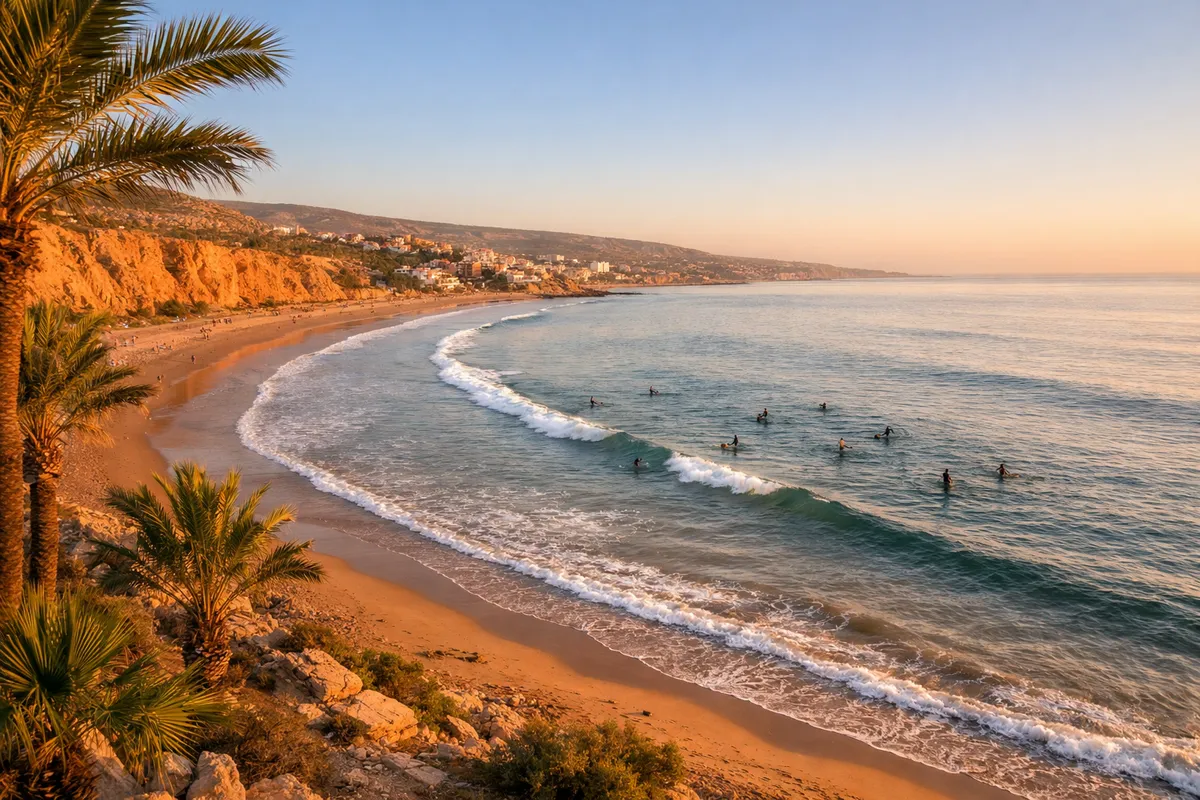
West coast, 3 hours from the airport. A slow left-point that peels forever. Great for your second or third Bali trip; a little too remote and limited for a first-timer without independent transport.
Where to learn — the beginner beaches
Batu Bolong (Canggu)
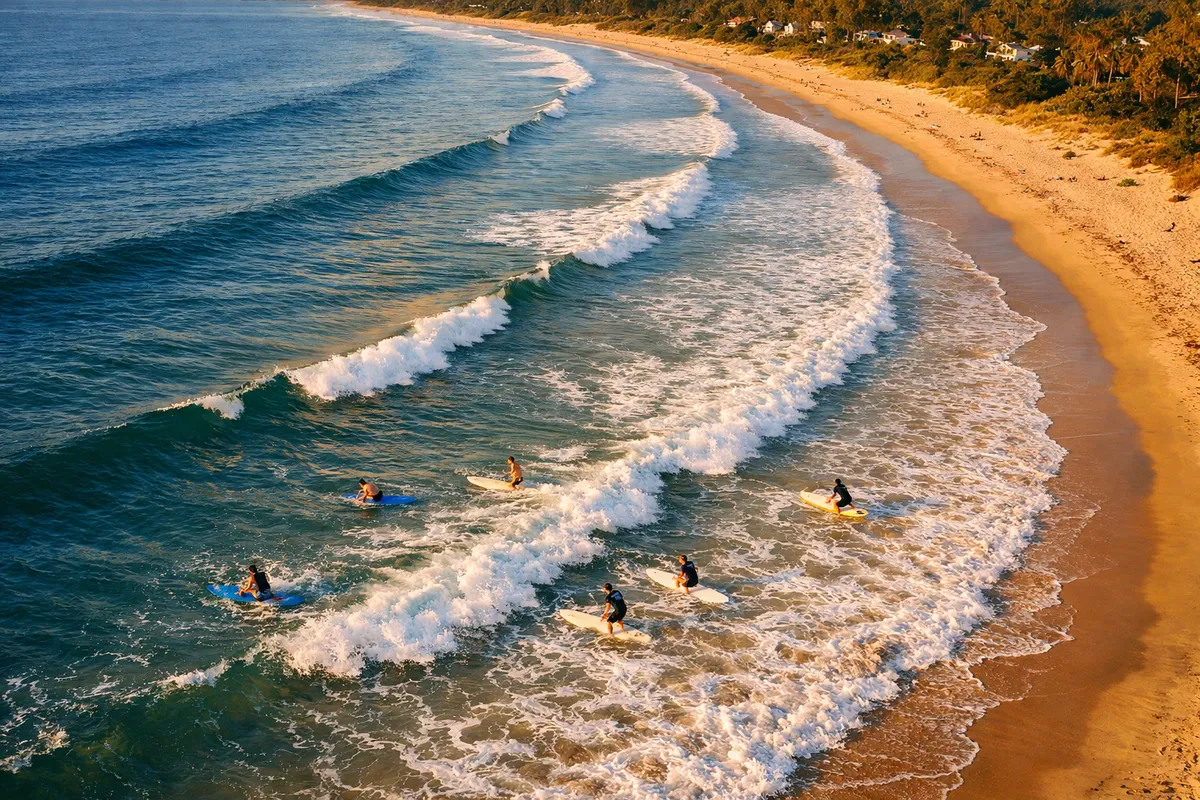
The best all-round beginner beach on Bali. Sand bottom, long rolling whitewater, slow unbroken waves on the outside for when you're ready to progress, and a friendly lineup because 60% of the people in the water are other learners. Surf schools line the sand.
Old Man's (Canggu)
Just north of Batu Bolong. Slightly bigger, slightly punchier, slightly more advanced. A good step up once Batu Bolong feels too easy.
Kuta Beach
Long sandy bay stretching several kilometers. Rarely crowded in the morning, very busy in the afternoon. One of the most forgiving beach breaks anywhere.
Legian / Seminyak Beach
North of Kuta, slightly less crowded, same general wave. A good alternative if Kuta feels too touristy.
Costs (2026 estimates)
| Item | Approximate cost |
|---|---|
| Budget guesthouse, per night | $15–35 |
| Mid-range villa, per night | $50–120 |
| Surf camp, 7 nights all-inclusive | $400–900 |
| Group surf lesson | IDR 350–500k ($22–32) |
| Private surf lesson | IDR 500–900k ($32–60) |
| Board rental per day | IDR 70–150k ($4–10) |
| Meal at a warung (local restaurant) | IDR 25–60k ($2–4) |
| Meal at a cafe/restaurant in Canggu | IDR 80–200k ($5–13) |
Typical week including lessons, accommodation, and food:
- Backpacker budget: $400–600
- Mid-range: $700–1200
- Comfortable: $1200–2000+
Bali is cheap by international standards. Even at the low end you'll live well.
Getting there
Fly into Ngurah Rai International Airport (DPS). Direct flights from most of Asia, Australia, Europe, and the US West Coast. Most visitors get a visa on arrival (check current rules for your passport).
From the airport to Canggu: 45–75 minutes by taxi or Grab (Indonesia's Uber equivalent). Cost: 180–280k IDR ($12–18). Many surf camps include pickup.
Scams and traps
- Airport taxi mafia. Use Grab or pre-arranged transport. Don't take "official" airport taxis that aren't metered.
- Overpriced board rentals at the beach. Expect 70–150k IDR per day. Anything above 200k is a tourist markup.
- "Professional" lesson packages on the beach. Some street-sellers pose as certified instructors without credentials. Stick with established schools or book through your accommodation.
- Motorbike scams. If you rent a scooter, take photos of every scratch before riding away. Scratch claims are a common scam.
- Fake cops at Kuta. Rare but real — people in uniform stopping you and demanding money. If it happens, ask to go to a real police station.
Cultural etiquette
- Dress modestly off the beach. No bikinis in supermarkets or restaurants.
- Don't touch children's heads or point with your feet — both are considered rude.
- At Balinese temples, sarongs and sashes are required (temples provide them).
- Tip instructors 20–50k IDR per lesson in addition to the listed price if you're happy with the teaching.
- Respect ceremonies and processions — Bali is one of the most actively Hindu places in Indonesia.
Health and safety
- Bali belly — almost everyone gets mild food poisoning at some point. Drink bottled or filtered water. Eat at places with high turnover.
- Reef cuts — if you surf anywhere with reef (not the beginner beaches), get them treated immediately to avoid infection.
- Rip currents — Kuta and Batu Bolong have rips. Stay in the designated beginner zones and talk to lifeguards if you're unsure.
- Sunburn — equatorial sun is no joke. SPF 50, reef-safe, reapply every hour.
What to pack
- Swim suit or board shorts
- Rash guard (for sun protection on long sessions)
- Reef-safe sunscreen (expensive to find in Bali)
- Flip flops / sandals
- Light clothes
- A prescription for Imodium, just in case
- A power adapter (Indonesia uses European-style round-pin plugs)
Again, skip the board. Rent when you're there. Board bag fees + risk of damage in transit + easy availability = renting is always the right call for beginners.
What a typical week looks like
- Day 1: arrive, rest, evening walk to the beach to scope the water
- Day 2: morning group lesson with a school, afternoon independent practice on a rented foamie
- Day 3: another lesson, maybe private this time for feedback
- Day 4: rest day, explore Canggu, yoga, massage (or more surfing — nobody's judging)
- Day 5: two sessions — morning and late afternoon
- Day 6: last full surf day, ideally two sessions
- Day 7: last morning session, fly home tanned and tired
Where to find instructors
On Surfyx, use the spot map to find Canggu and Kuta with community session data, then check local surf lessons with verified reviews and upfront pricing. Compare ratings and book directly.