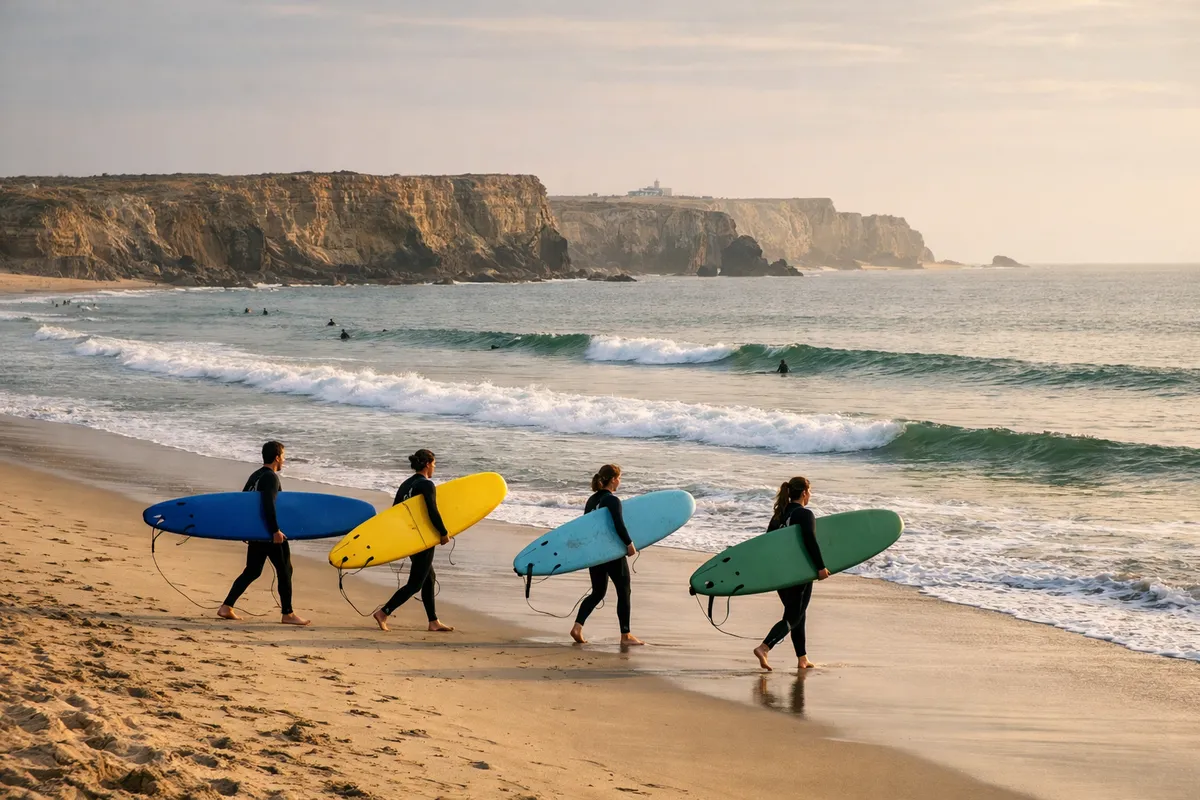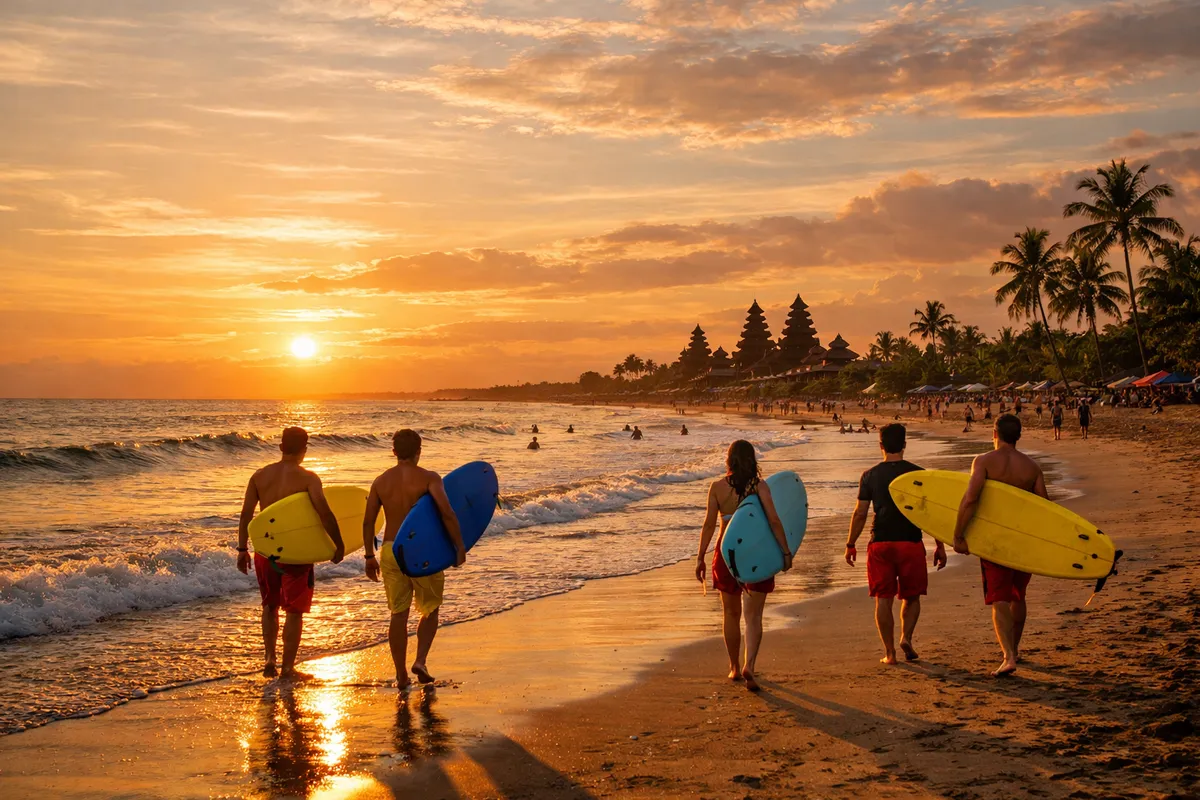
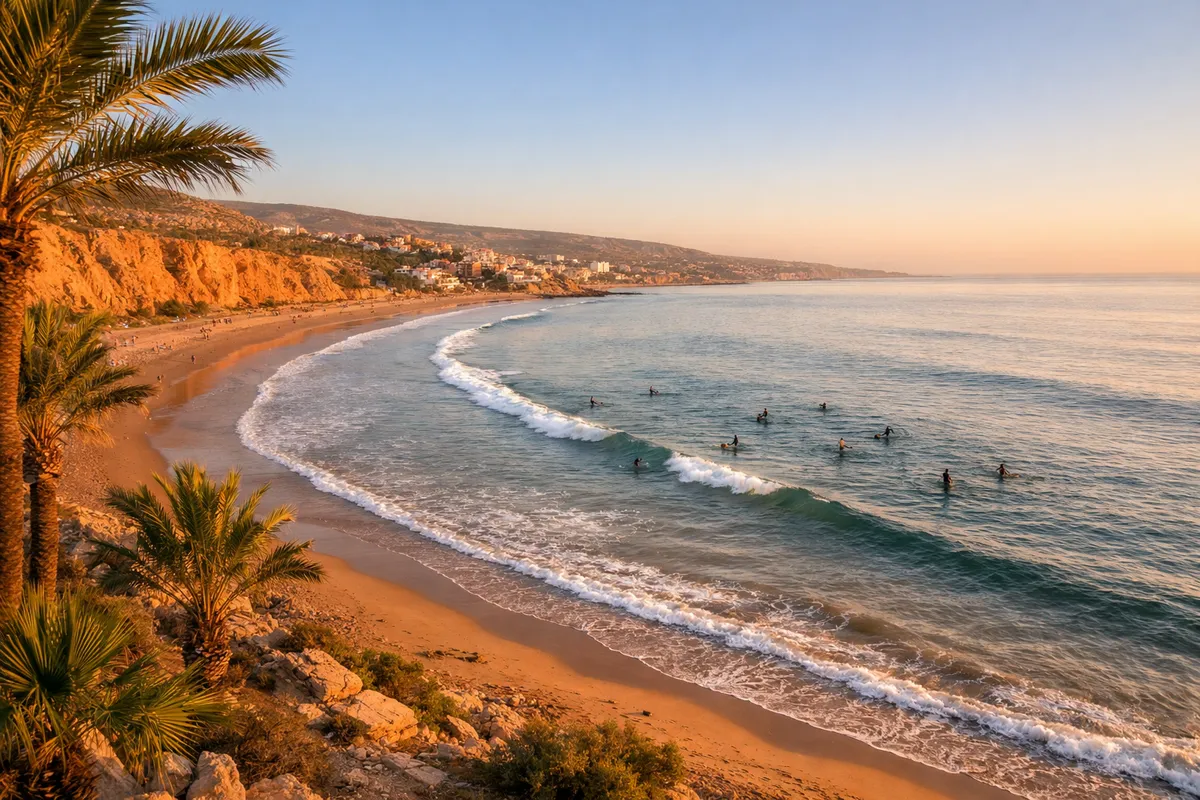
If you want the single best value beginner surf trip on the planet, it's Morocco. Warm water (warmer than Europe year-round), reliable swell season from October through April, surf lessons that cost a third of what they cost in California, and some of the most forgiving beginner waves in the Atlantic.
The main surf zone is a 50 km stretch of coast between Agadir and Essaouira on the west-central coast. Within that stretch sit three villages — Taghazout, Tamraght, and Imsouane — that collectively form the beginner surf capital of North Africa.
When to go
The surf season in Morocco runs October to April. This is the counterintuitive part: Morocco's best waves come during the months when Europe is cold and grey. That's because the North Atlantic winter storms send consistent swell down to Morocco's coast, and the offshore winds are cleanest in those months.
Best months for a first-ever beginner trip: November, December, March, April. You get consistent waves but the size is manageable. January and February are bigger and reserved for slightly more experienced surfers.
Summer (May to September) is the low season for beginners. Waves are smaller and weaker, fewer surf schools are open, and it's hot. Not a waste of a trip, but not the best time.
Weather
Mild and pleasant year-round. December highs are 18–21°C, lows are 10–12°C. You'll want a light jacket for evenings and mornings but it's never cold by European winter standards. Summer gets into the high 20s — hot but dry.
Water temperature
18–22°C most of the year. A 3/2 mm wetsuit is the right choice for almost any visit. Surf schools include wetsuit rental with lessons — you don't need to pack your own.
Where to go — the three main villages
Taghazout
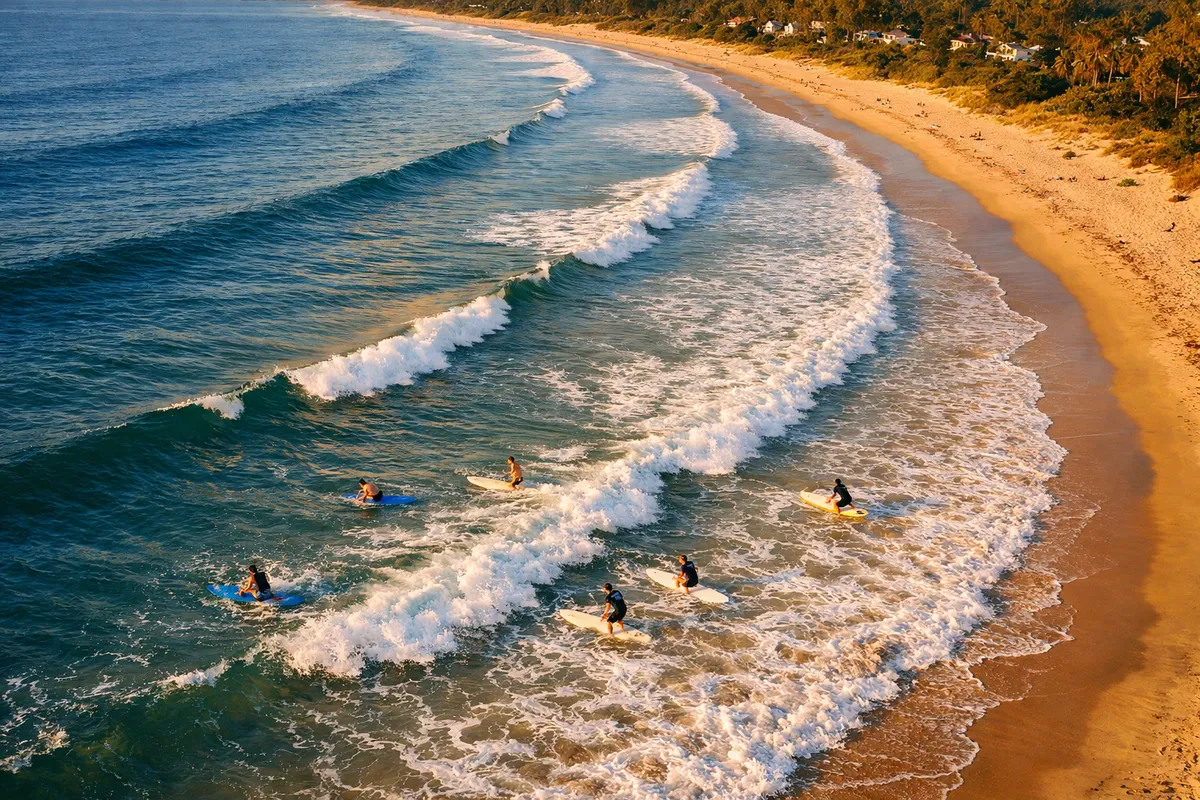
The main hub. Formerly a tiny fishing village, now a surf tourism economy with dozens of camps, schools, hostels, and rental shops. It's where most first-time visitors stay. The main beginner spot is Panorama just south of town, a sandy beach break with mellow whitewater and an empty lineup. Devil's Rock is the other main learner beach, slightly north of town.
Taghazout has a relaxed, backpacker-meets-surfer vibe. It's not luxurious but it's also not rough — there are nice yoga-surf camps, a decent food scene, and everything is walkable.
Tamraght
10 minutes south of Taghazout by taxi. Smaller, quieter, even cheaper. The beginner beaches are Tamraght Beach and Banana Beach, both gentle sandy bays that beginner schools use exclusively for lessons. If Taghazout feels too busy, Tamraght is the fix.
Imsouane
An hour and a half further north along the coast. Famous for The Bay — one of the longest, gentlest right-hand rides in the world, a 500-meter peeling wave that's perfect for the transition from whitewater to green waves. The Bay is one of the few places on earth where a beginner can paddle into a genuine unbroken wave on their first trip.
Imsouane also has Cathedral Point for more advanced surfers — don't paddle out there unless you're comfortable.
Imsouane is quieter than Taghazout and more remote. Fewer schools, less nightlife, more isolation. Perfect if you want a focused surf-and-rest trip with no distractions.
How to get there
Fly into Agadir Al Massira airport (AGA). Most major European airlines (easyJet, Ryanair, TUI, Royal Air Maroc) have direct flights from London, Madrid, Paris, Barcelona, Brussels, and a dozen others. Off-season round trips from Europe are often €100–200.
From Agadir airport to Taghazout:
- Prearranged surf camp pickup — usually included in your camp package, ~30 minutes drive
- Taxi — negotiate 300–400 MAD (~€30–40) at the airport
- Bus then taxi — cheapest but slower, ~50 MAD
For Imsouane, add another 90 minutes of driving. Most camps can arrange a transfer for a small fee.
Where to stay — surf camp vs independent
Surf camp (recommended for first-timers)
A surf camp is an all-inclusive package: accommodation, breakfast and dinner, lessons or guided surf sessions, board and wetsuit rental, and usually airport pickup. One payment covers the whole trip.
Typical price range:
- Basic hostel-style camp: €300–500 per week, shared dorm, daily lesson/guide
- Mid-range camp: €500–800 per week, private room, sometimes yoga included
- Premium camp: €800–1500+ per week, boutique accommodation, small groups, food upgraded
For a first trip, the mid-range level is the sweet spot. You get personal attention without paying boutique rates.
Independent travel
Rent an apartment or stay at a cheap hostel (€15–30/night), buy lessons and rentals separately at the beach shops. Much cheaper but requires more planning and you have to figure out logistics yourself.
Typical independent traveler budget: €300–500 for a week including accommodation, food, lessons, and rentals.
What a typical day looks like
On a surf camp:
- 7:00 AM — wake up, light breakfast
- 8:00 AM — morning surf session or lesson (2–3 hours)
- 11:00 AM — full breakfast back at the camp
- Midday — rest, yoga, or beach time
- 3:00 PM — afternoon surf session (optional)
- 6:00 PM — shower, dinner, relax
Most camps run 2 sessions a day. After 5 days of this you'll have logged more water time than in a month of weekend surfing at home.
Costs (2026 estimates)
| Item | Approximate cost |
|---|---|
| Mid-range surf camp, 7 nights | €550–750 |
| Independent travel, 7 nights | €300–500 |
| Daily group lesson (independent) | MAD 250–400 (€25–40) |
| Board + wetsuit rental per day | MAD 100–180 (€10–18) |
| Meal at a local cafe | MAD 40–80 (€4–8) |
| Meal at a surfer restaurant | MAD 80–150 (€8–15) |
Cultural etiquette and practical tips
Language
Arabic and French are the official languages. Almost everyone in the surf villages also speaks English. You do not need to learn Arabic to travel comfortably, but "Shukran" (thank you) and "La shukran" (no thank you) go a long way.
Dress
Morocco is a Muslim country. In the surf villages this is relaxed — bikinis on the beach are fine, wetsuits in the water are obviously fine. In the streets of Taghazout or Tamraght, dress modestly (shorts and t-shirt are fine, but cover up for walking through town). In bigger cities like Agadir or Essaouira, be more conservative.
Alcohol
Alcohol is not freely available. Some surf camps have alcohol on premises, a few local restaurants have licenses, and supermarkets in Agadir sell it. Don't plan a party trip.
Cash
Morocco is still a mostly-cash economy outside of the big cities. Bring or exchange some dirhams. ATMs exist in Agadir and Taghazout but can be unreliable.
Scams and safety
Morocco is extremely safe for tourists in the surf zones. The main "scam" is aggressive taxi drivers at the airport — negotiate and ideally use a prearranged pickup. Women travelers report some hassling in cities but the surf villages are relaxed.
Local etiquette in the lineup
- Imsouane and Taghazout have local regulars. Respect them. Don't drop in.
- Beginner beaches (Panorama, Banana Beach) are welcoming — nobody cares if you're new.
- Never go to Anchor Point or Killer Point as a beginner. These are advanced waves.
- Tip your instructor at the end of the week — 50–100 MAD per lesson is a good standard.
What to pack
- Swim suit or board shorts
- Sandals (for walking to and from the beach)
- Light jacket or fleece for evenings
- Reef-safe sunscreen (expensive to buy in Morocco)
- Personal hygiene and any prescriptions
- A paperback book for downtime
Do NOT pack your own board unless you're an advanced surfer planning to hunt specific waves. Rentals and schools cover everything you need for a beginner trip, and boards add €60–100 per flight in baggage fees.
What to do next
- Pick your village: Taghazout (social), Tamraght (quiet), or Imsouane (remote)
- Pick your travel style: surf camp or independent
- Book flights for November–April
- On Surfyx, use the spot map to research the specific beaches and find instructors and schools with real reviews
For more beginner destinations, see our 20 best beginner surf spots in the world. Other destination deep-dives: Bali, Portugal.