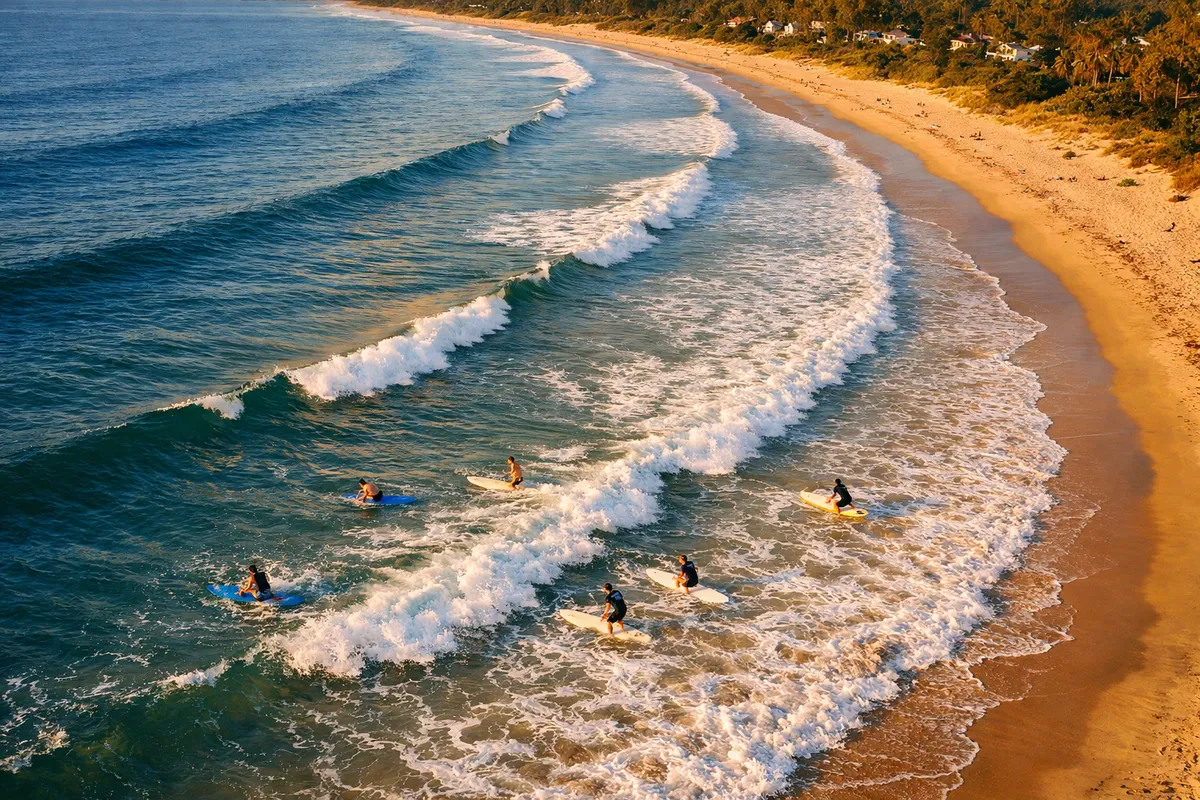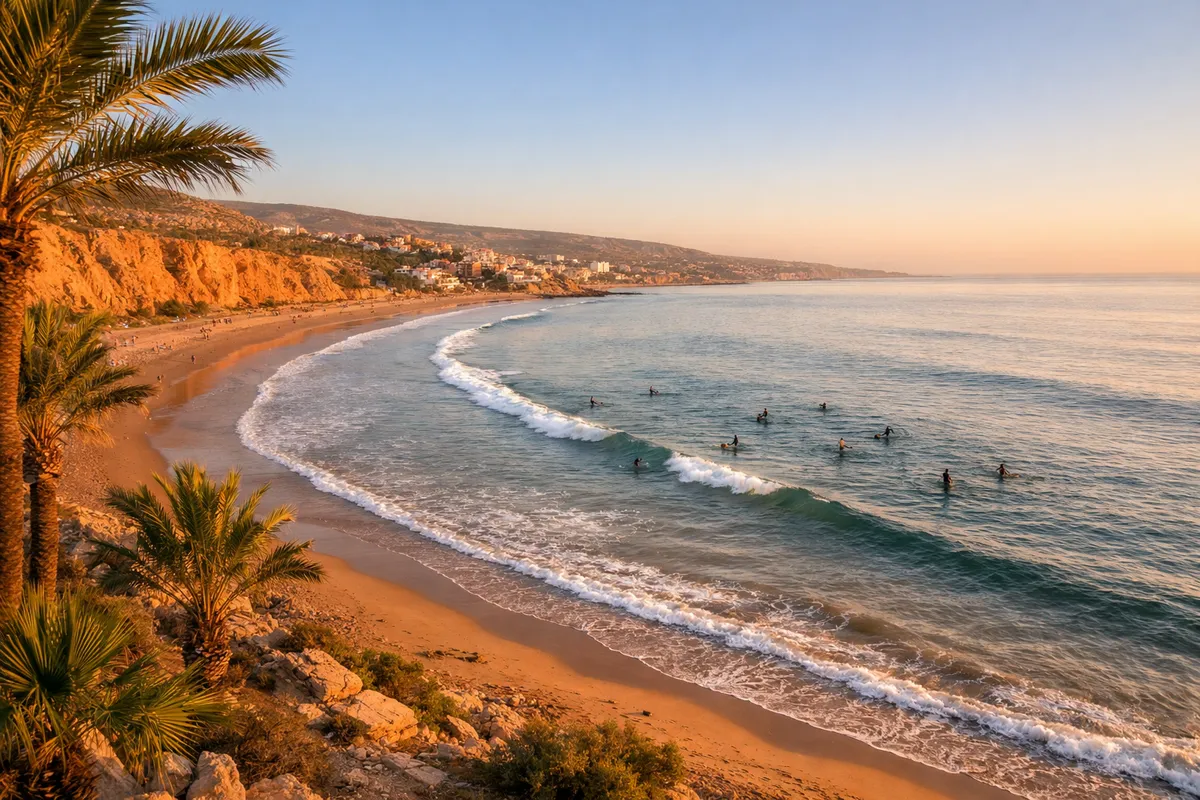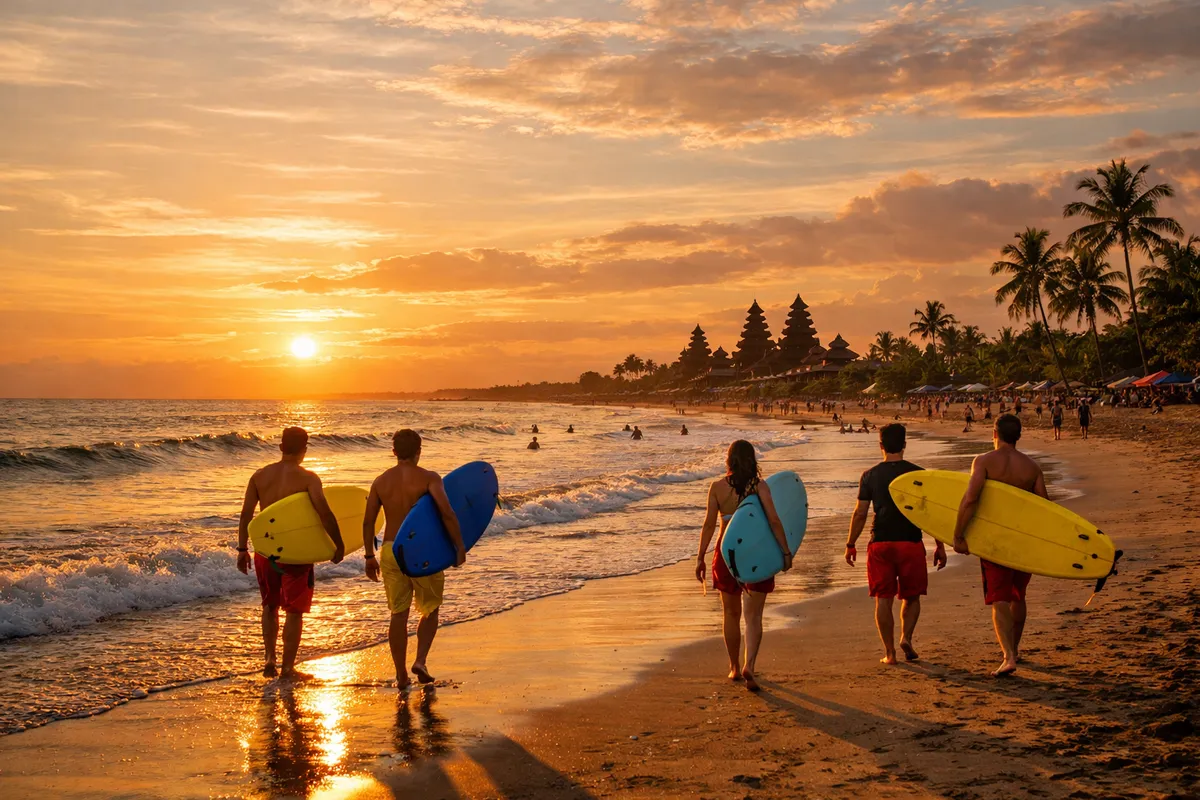
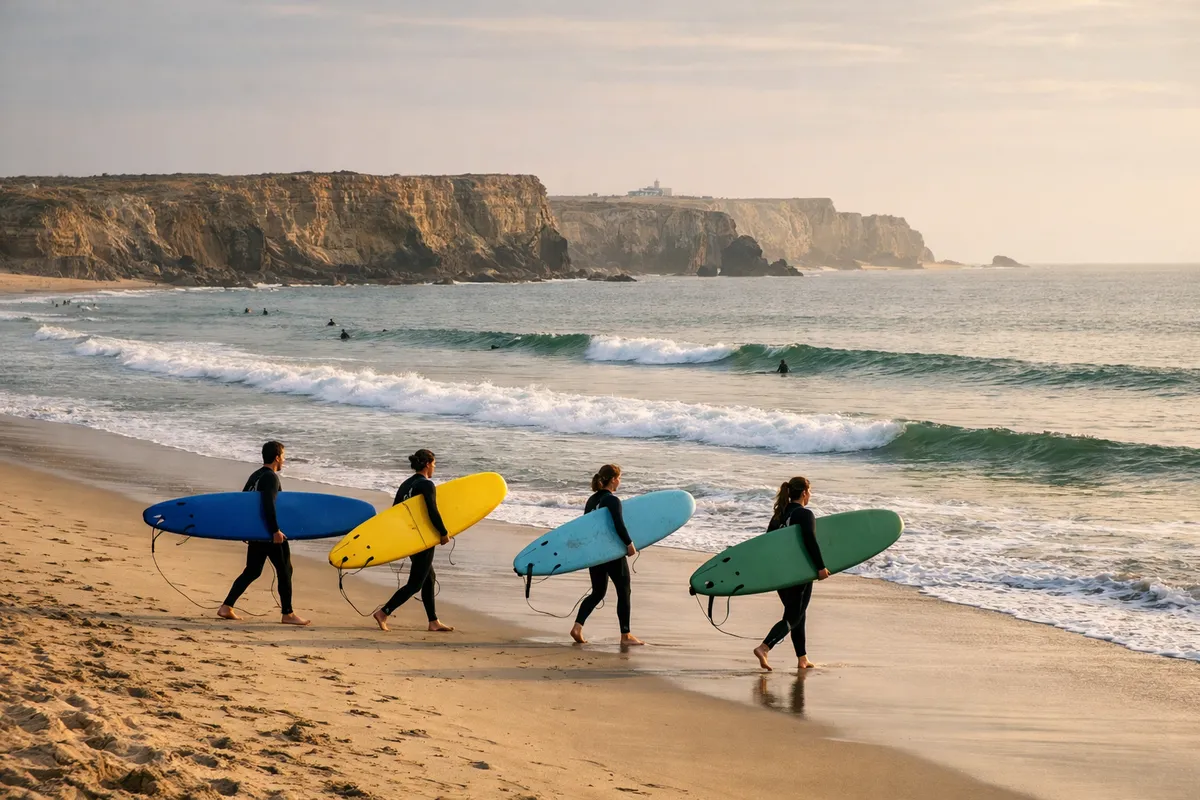
Portugal has quietly become Europe's best beginner surf destination. It has everything that makes a great learner trip: reliable waves, mellow beach breaks, affordable surf camps, a welcoming local scene, and flights so cheap from the rest of Europe that it often costs less than a weekend in Paris.
It's also the place that hosted the biggest wave ever surfed (Nazaré's 86-foot monster in 2020) — but don't worry, Nazaré is 50 km from the nearest beginner beach.
Why Portugal works
- Long coastline, diverse conditions. Over 800 km of Atlantic coast means there's always somewhere with rideable beginner waves, no matter what the swell direction.
- Consistent year-round surf. Portugal catches every North Atlantic swell that heads for Europe. Flat days are rare.
- Cheap compared to France and Spain. A week at a mid-range surf camp costs 30% less than the equivalent in Hossegor.
- English-friendly surf scene. Almost every instructor and shop worker speaks English fluently.
- Small, walkable surf towns. Ericeira, Peniche, Sagres — all genuine surf villages, not resort towns.
- Food and wine. The off-water experience is some of the best in Europe.
When to go
Best months for a first beginner trip:
- May, June — warming weather, consistent small swells, manageable crowds
- September, October — arguably the single best month. Summer crowds gone, water still warm enough, reliable swell
Avoid:
- July, August — peak tourist season, busy lineups, sometimes inconsistent swell
- December to February — surf is big, water is cold, only for more experienced surfers
Water temperature ranges from 14°C in winter to 20°C in late summer. You need a 3/2 mm wetsuit from April to October, and a 4/3 mm or thicker in winter.
Where to go — the three main regions
Ericeira
One hour north of Lisbon. A genuine fishing village turned surf town — and a designated World Surfing Reserve. Ericeira has both some of the best waves in Portugal (Ribeira d'Ilhas, Coxos, Pedra Branca — all advanced) and some of the best beginner beaches (Foz do Lizandro, Praia do Matadouro).
The village is small, walkable, and beautiful. Great food, great coffee, friendly surf scene. Our top pick for a first Portugal surf trip.
Peniche
About an hour and a half north of Lisbon, closer to Supertubos (the famous barrel) and Nazaré (the famous giant wave). Peniche is a bigger, more industrial town than Ericeira, but it has one of the best beginner beaches in Europe: Baleal. Baleal is a sandy peninsula with waves on both sides, so there's almost always a side that's working even when the other is blown out. Perfect for learning.
Peniche has more schools and camps than any other town in Portugal. It's the volume hub.
Algarve (Sagres, Lagos, Luz)
The southern coast. Warmer water, more consistent sunshine, and slightly more laid-back than the central coast. The main beginner spots are around Sagres (Beliche, Tonel, Amado) and Lagos (Porto de Mos, Luz). The Algarve has a longer summer and works well for shoulder-season trips in April and October when the central coast is cold.
How to get there
Fly into Lisbon (LIS) for central coast trips (Ericeira, Peniche, Nazaré) or Faro (FAO) for the Algarve. Both airports have cheap direct flights from most of Europe — Ryanair, easyJet, TAP, Vueling all serve them.
From Lisbon to Ericeira: ~1 hour by bus, taxi, or transfer. Rent a car for flexibility (~€25/day off-season). From Faro to Sagres: ~1.5 hours by car or transfer.
Where to stay — surf camp vs independent
Surf camp
Portugal has more surf camps per coastline than almost any other country in the world. Typical packages include accommodation, breakfast, 2 guided sessions or lessons per day, board and wetsuit rental, and airport transfer.
Price ranges:
- Budget / hostel-style camp: €350–500 per week in high season, €250–400 in shoulder season
- Mid-range camp: €500–800 per week, usually with private rooms
- Boutique / premium camp: €800–1400 per week, small groups, upgraded food, sometimes yoga
Peniche has the most options at every price point. Ericeira is slightly pricier because the town itself is more expensive. Algarve is mid-range.
Independent travel
Book an Airbnb or small hotel (€40–120/night off-season), take lessons at a local school (€35–55 for a group lesson), rent gear separately (€15–25/day). More flexibility, slightly more logistics.
Costs
| Item | Approximate cost |
|---|---|
| Hostel or budget guesthouse, per night | €25–50 |
| Mid-range apartment or hotel, per night | €60–120 |
| Group surf lesson (2 hours) | €35–55 |
| Private surf lesson | €60–110 |
| Board + wetsuit rental per day | €15–25 |
| Meal at a local tasca | €8–15 |
| Meal at a nicer restaurant | €15–30 |
Typical week including lessons, accommodation, and food:
- Budget backpacker: €400–600
- Mid-range: €600–1000
- Comfortable: €1000–1500
Language
Portuguese is the official language, but English is universal in surf towns. Spanish helps in some interactions. A few Portuguese phrases ("obrigado" = thank you, "bom dia" = good morning) are appreciated.
Food
Portugal is a food destination in its own right. Key things to eat:
- Bacalhau — salt cod, the national dish, done a thousand ways
- Sardines — grilled on the beach in summer, iconic
- Pastel de nata — the custard tart
- Francesinha — the heavy meat sandwich from Porto
- Local wine — Vinho Verde (young green wine) and Douro reds
In a surf town, expect €8–15 for a solid meal at a local tasca. Coffee is strong and cheap (€1–2 for an espresso).
What to pack
- 3/2 mm wetsuit (or rent at the school — most camps include this)
- Light rain jacket and warm layer for evenings (even summer evenings can be cool on the Atlantic)
- Sun hat, sunglasses, reef-safe sunscreen
- Flip flops and walking shoes
- A Portuguese SIM or eSIM for navigation (Vodafone, MEO, or NOS — easy to get on arrival)
Don't pack a board unless you're an intermediate planning to hunt specific waves. Rentals are cheap and widely available.
A note on "big wave Portugal"
Yes, Nazaré has hosted the largest wave ever surfed (86 feet, Sebastian Steudtner, 2020). No, you are not going to Nazaré as a beginner. Nazaré is a 30-minute drive from Peniche and you can visit the viewing fort to watch big-wave days — it's one of the most impressive things you'll see in surfing — but the closest you should paddle out there is 2 km south, at Nazaré's beginner beaches, and only on flat days.
Ericeira, Peniche, and the Algarve's beginner beaches are all far from the big-wave zones. You'll be safe.
A typical beginner week in Ericeira
- Day 1: arrive, unpack, coffee in the main square, evening walk to the beach
- Day 2: first lesson at Foz do Lizandro, afternoon walk along the cliffs
- Day 3: morning session + independent afternoon practice
- Day 4: rest day, drive to Nazaré viewing fort, return for evening at a local tasca
- Day 5: two sessions
- Day 6: two sessions, improving visibly
- Day 7: morning session, drive back to Lisbon, fly home
Where to find schools and instructors
On Surfyx, find Ericeira, Peniche, and the Algarve on the spot map with live conditions and community session data. Every listed surf school and lesson includes verified reviews, upfront pricing, and instructor credentials.