A surf camp is the fastest way to go from zero to standing on a wave. You show up, they hand you a board, feed you, teach you, and put you in the water twice a day for a week. No logistics, no decision fatigue, just surfing.
But surf camps range from €250/week shared-dorm hostels to €2000/week boutique retreats, and the quality varies just as widely. A bad camp can waste your money and your trip. Here's how to tell the difference.
What a surf camp typically includes
- Accommodation — shared dorm, shared room, or private room depending on price tier
- Meals — usually breakfast + dinner; some include lunch or snacks
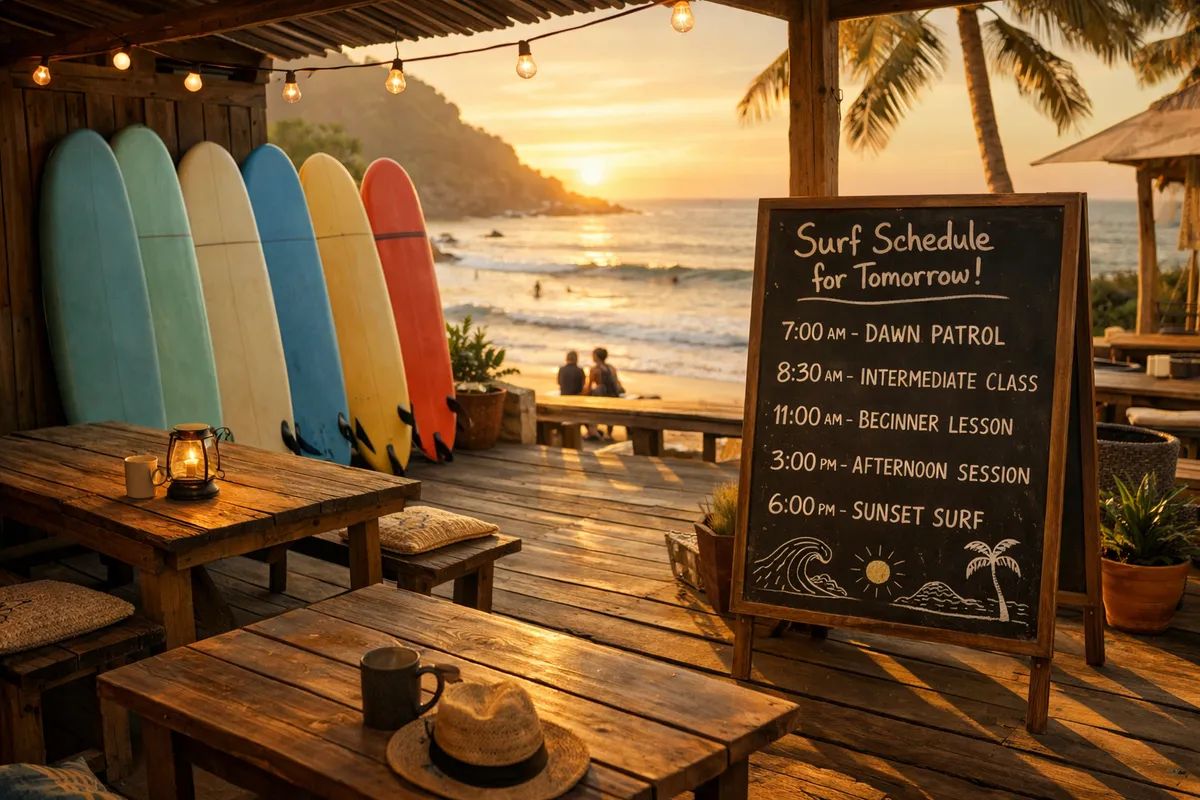
- Surf lessons or guided sessions — 1–2 per day, usually 2 hours each
- Board and wetsuit rental — included in most packages
- Airport transfer — included at mid-range and above
- Extras — yoga, photos, video analysis, excursions (varies)
What's not included (usually): flights, travel insurance, tips for instructors, meals out, alcohol, and any activities outside the camp schedule.
The five things that actually matter
1. Instructor-to-student ratio
This is the single most important factor in how fast you'll learn. A 1:4 ratio means the instructor can watch your technique, correct you in real time, and keep you safe. A 1:8 ratio means you're largely on your own.
- Good: 1:4 or 1:5
- Acceptable: 1:6
- Avoid: 1:8 or higher — you're paying for a crowd, not a lesson
Ask the camp directly: "What is your instructor-to-student ratio in the water?" If they dodge the question, that's your answer.
2. Instructor qualifications
Certified instructors (ISA, Surfing Australia, BSA, or national federation equivalent) have been trained in water safety, first aid, and surf pedagogy. Uncertified instructors may be great surfers but terrible teachers — or worse, unsafe.
Look for:
- ISA (International Surfing Association) certification
- Current first aid and CPR certification
- Lifeguard training or ocean rescue qualifications
A camp that lists instructor certifications on its website is a green flag.
3. The beach itself
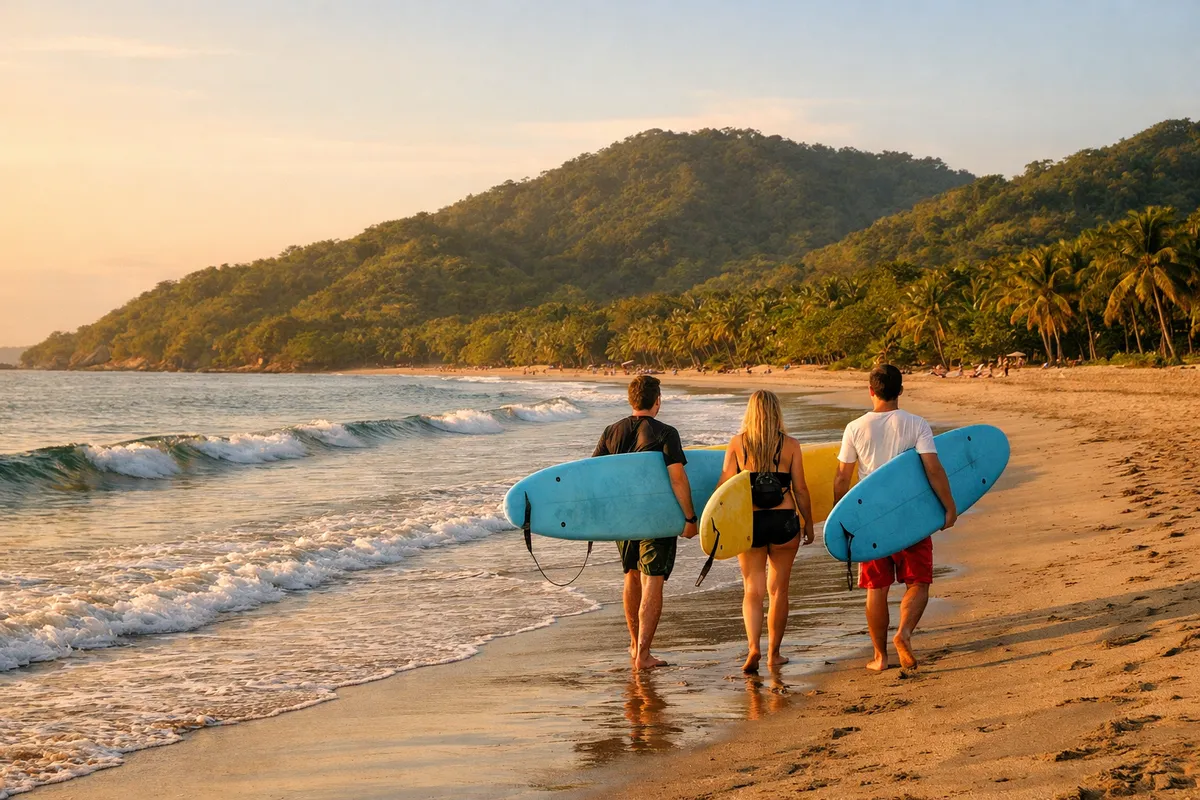
The best instructor in the world can't teach you on the wrong wave. A good beginner camp operates on a sand-bottom beach with gentle whitewater, not a reef break or a shore dump.
Before booking, ask:
- "Which beach do you teach at?"
- "Is it sand bottom?"
- "What happens if that beach is too big — do you have a backup?"
Camps that adapt to conditions (moving to a sheltered beach on big days) are better than camps that teach at the same spot regardless.
4. What "guided session" actually means
Some camps distinguish between "lessons" (full instruction) and "guided sessions" (instructor takes you to a spot and watches from shore). Both have value, but they're not the same thing.
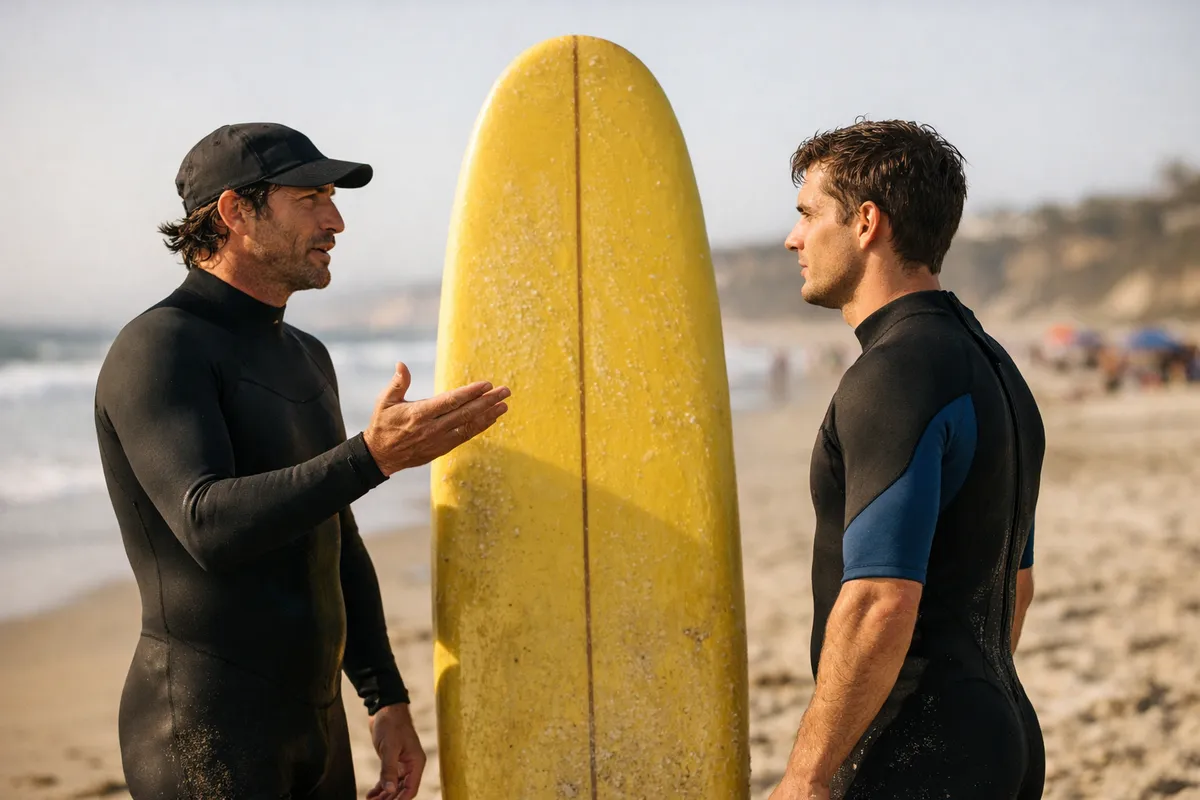
For your first trip, you want actual instruction in the water — someone pushing you into waves, correcting your stance, and giving real-time feedback. Ask whether the instructor is in the water with you or on the beach.
5. Reviews from actual beginners
A camp with glowing reviews from intermediate surfers who used it as a base for free-surfing tells you nothing about the teaching quality. Look for reviews that specifically mention learning, progressing, standing up for the first time, or instructor attentiveness.
Red flags
- No instructor names or credentials listed. Legitimate camps are proud of their team.
- "Up to 10 students per group." That's not a lesson, it's a tour.
- No photos of actual lessons in the water. Stock beach photos instead.
- Pricing that seems too cheap. A €200/week "all-inclusive" camp in Portugal is cutting corners somewhere — usually on instructor quality or food.
- Pressure to book immediately. "Only 2 spots left!" is a sales tactic, not a fact.
- No cancellation policy. Legitimate businesses have clear terms.
Budget vs mid-range vs premium
Budget (€250–500/week)
Shared dorms, basic meals, larger groups. Fine if you're young, social, and budget-conscious. The teaching quality varies widely — some budget camps have great instructors, others have backpackers who learned to surf last year.
Mid-range (€500–1000/week)
Private or semi-private rooms, better food, smaller groups (1:5 or better), usually includes video analysis and photos. This is the sweet spot for most first-timers. You get real instruction without paying luxury prices.
Premium (€1000–2500/week)
Boutique accommodation, chef-prepared meals, small groups (1:3 or 1:4), video coaching, yoga, wellness extras. Worth it if you want the whole experience — learning to surf in comfort with personalized attention. Especially good for couples or older learners who want quality over party vibes.
Questions to ask before booking
- What is the instructor-to-student ratio in the water?
- Are your instructors ISA-certified (or national equivalent)?
- Which beach do you teach at? Is it sand bottom?
- Is the instructor in the water during lessons, or on the beach?
- What happens on days when the conditions are too big or too small?
- What's your cancellation policy?
- What's included in the price, and what's extra?
- Can you accommodate dietary requirements?
Surf camp vs booking lessons independently
Surf camps are best for: first-timers who want zero logistics, solo travelers who want to meet people, and anyone who wants to maximize water time on a short trip.
Independent travel is better for: people who want flexibility, experienced surfers who just need a board, and budget travelers in cheap destinations (Bali, Morocco) where DIY is easy.
Read our group vs private lessons guide if you're considering independent lessons instead.
Where to find verified surf camps
On Surfyx, every listed surf school and camp includes verified reviews from past students, instructor credentials, upfront pricing, and student-to-instructor ratios. Compare camps side by side before you book.