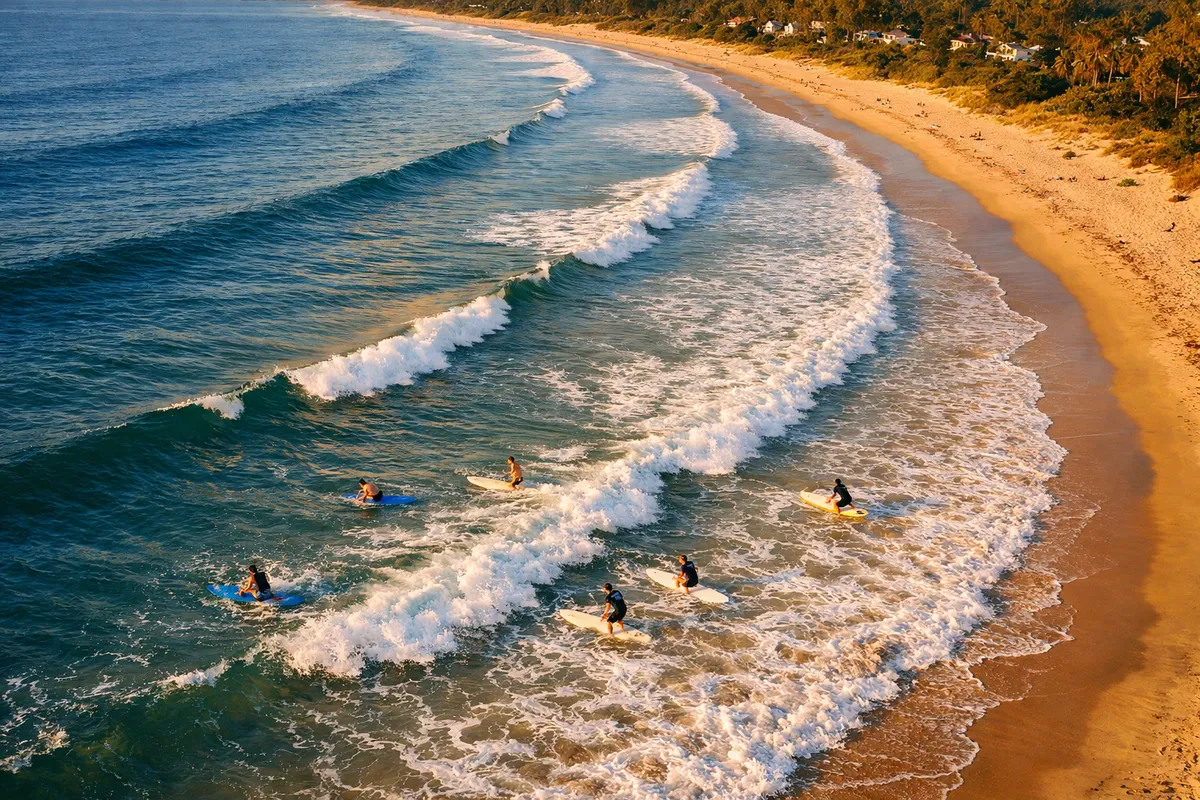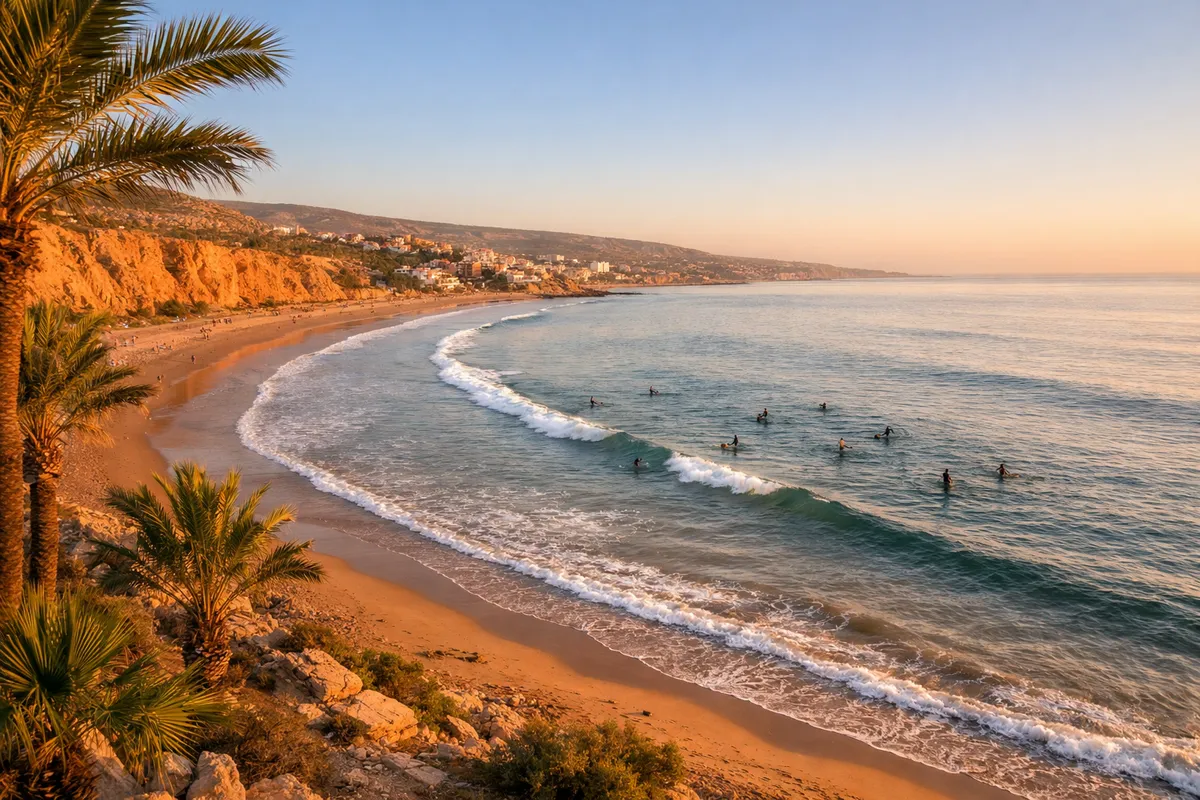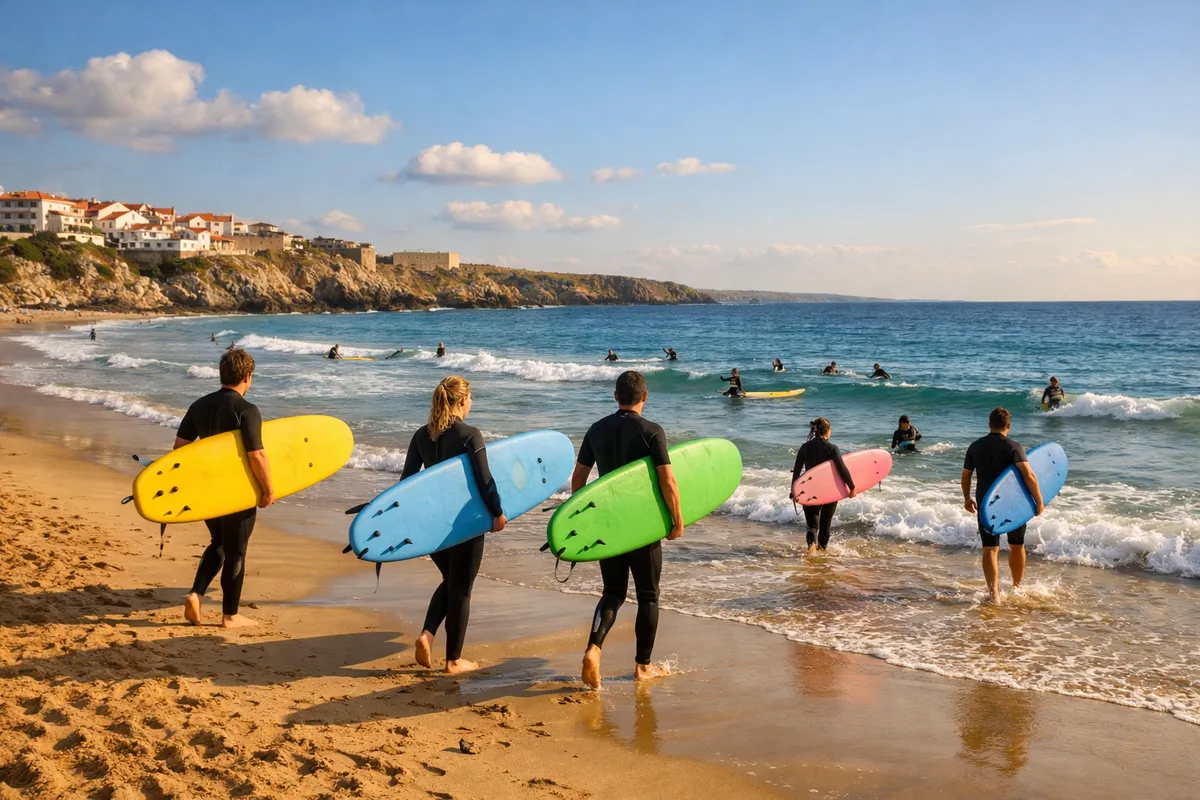
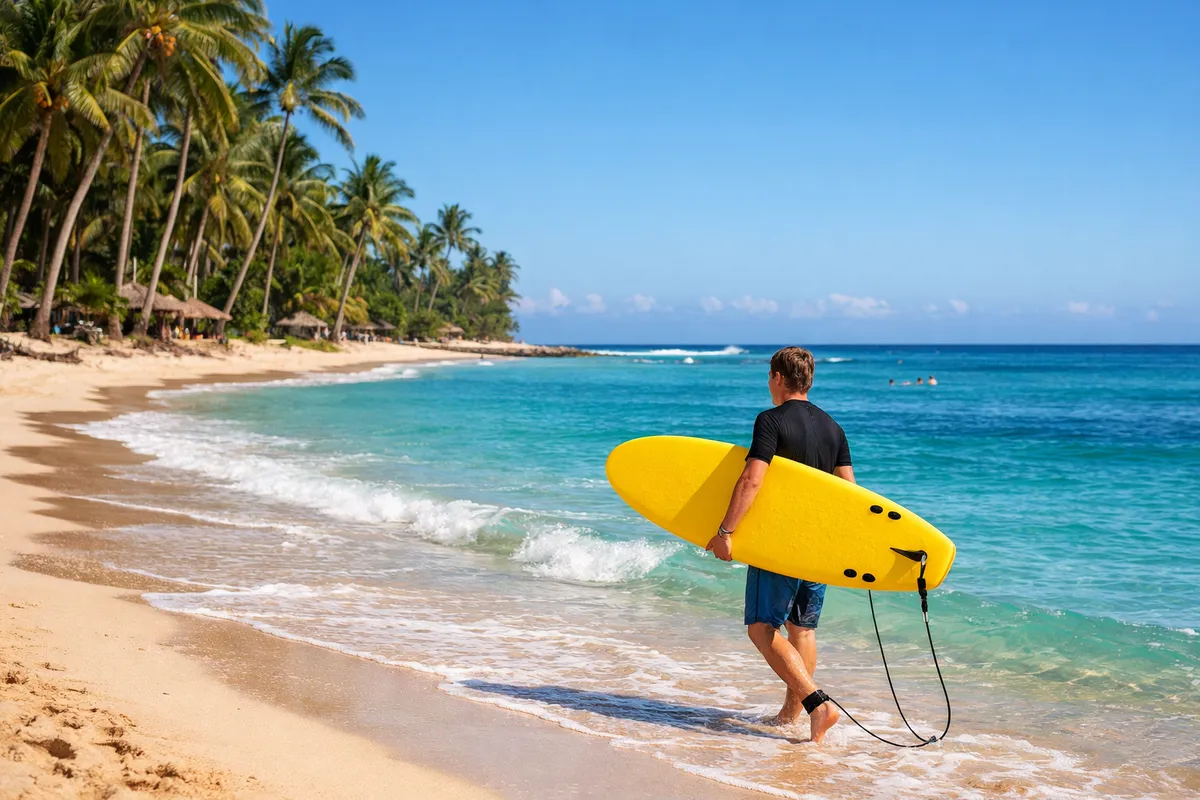
Winter in the Northern Hemisphere is prime time for some of the world's best beginner surf. While European and North American beaches turn cold and the swells get big, equatorial and southern destinations light up with warm water, manageable waves, and empty lineups.
Here are the best places to learn to surf between November and March — every one of them tested, beginner-verified, and reachable without an expedition budget.
Morocco (November–March)
Morocco's Atlantic coast is purpose-built for winter surf trips. Water temperature sits at 17–20°C (a thin 3/2 wetsuit is enough), air temperatures are pleasant, and the swell is consistent without being overwhelming at beginner beaches.
- Where: Taghazout, Tamraght, Imsouane
- Why it works: Affordable (€30–50/day all-in at a surf camp), English-speaking instructors, short flights from Europe, and some of the most forgiving beginner beaches anywhere
- Best for: Europeans looking for the closest warm-water winter escape
Read our full Morocco surf trip guide.
Canary Islands, Spain (November–March)
Technically part of Europe, but geographically off the coast of Africa. The Canaries — especially Fuerteventura and Lanzarote — have reliable winter surf, air temperatures around 20–24°C, and water at 18–20°C.
- Where: Corralejo and Cotillo (Fuerteventura), Famara (Lanzarote)
- Why it works: Short flights from mainland Europe, EU infrastructure, dozens of surf schools, beach breaks with sand bottom
- Best for: Beginners who want a European destination without the European cold
Famara beach on Lanzarote is particularly good — a wide bay sheltered from the strongest swells, with schools scattered along the sand.
Bali, Indonesia (November–March)
Bali's wet season is actually a great time for beginners. The crowds thin out, prices drop, and the beginner beaches (Kuta, Batu Bolong in Canggu) stay perfectly surfable. Rain comes in short afternoon bursts — mornings are usually clear.
- Where: Canggu (Batu Bolong), Kuta
- Why it works: 27–29°C water, no wetsuit, $15–25 group lessons, world-class food and culture
- Best for: Budget travelers, digital nomads, anyone who wants the full tropical surf experience
Read our full Bali beginner's guide.
Costa Rica (December–April)
Costa Rica's dry season aligns perfectly with Northern Hemisphere winter. Pacific coast towns like Tamarindo and Nosara have consistent small waves, offshore winds, and sunshine most days.
- Where: Nosara (Playa Guiones), Tamarindo, Santa Teresa
- Why it works: 26–30°C water, direct flights from the US, affordable lessons ($40–65 group), friendly culture
- Best for: North Americans looking for the closest warm-water surf
Read our full Costa Rica surf trip guide.
Sri Lanka (November–April)
Sri Lanka's southwest coast — Weligama, Mirissa, Ahangama — fires in the Northern Hemisphere winter. Weligama Bay is one of the most beginner-friendly waves in Asia: a long, wide sandy bay with gentle rolling waves and warm water (27–29°C).
- Where: Weligama (the bay), Mirissa, Ahangama
- Why it works: Very affordable ($15–30 for lessons, $20–60/night accommodation), beautiful island, incredible food, friendly locals
- Best for: Travelers who want something different from the Bali crowd, or those combining surfing with cultural exploration
Weligama is the standout. The bay is shallow, sandy, and wide enough that you never feel crowded even in peak season.
Mexico — Sayulita & Punta de Mita (November–April)
Mexico's Pacific coast has warm water (24–28°C) and consistent small waves through the winter. Sayulita's town-center right-hander is one of the gentlest beginner waves in the Americas, and Punta de Mita has several sheltered breaks that work for first-timers.
- Where: Sayulita, Punta de Mita (both near Puerto Vallarta)
- Why it works: Direct flights from most US cities to Puerto Vallarta, warm water, cheap lessons ($30–50), excellent food
- Best for: North Americans wanting a short-haul warm-water trip
How to choose
| Destination | Water temp | Budget (week) | Best from |
|---|---|---|---|
| Morocco | 17–20°C | €400–800 | Europe |
| Canary Islands | 18–20°C | €500–1000 | Europe |
| Bali | 27–29°C | $400–900 | Asia, Australia |
| Costa Rica | 26–30°C | $500–1300 | Americas |
| Sri Lanka | 27–29°C | $350–700 | Europe, Asia |
| Mexico | 24–28°C | $500–1000 | Americas |
The simplest filter: where are you flying from? Pick the closest warm destination with direct flights. You'll spend more time surfing and less time traveling.
What to pack for a winter surf trip
- Board shorts / swimsuit (3–4 pairs)
- Rash guard (essential for tropical sun)
- Reef-safe sunscreen SPF 50+
- Light rain jacket (wet-season destinations)
- Flip flops and one pair of light walking shoes
- Thin 3/2 wetsuit only if going to Morocco or Canaries (rent at the destination if you prefer)
For warm-water destinations: no wetsuit, no booties, no hood, no gloves. Just you and the ocean.
Find schools at every destination
On Surfyx, use the spot map to find any of these locations with live conditions and community session data. Every listed surf school and lesson includes verified reviews and upfront pricing.