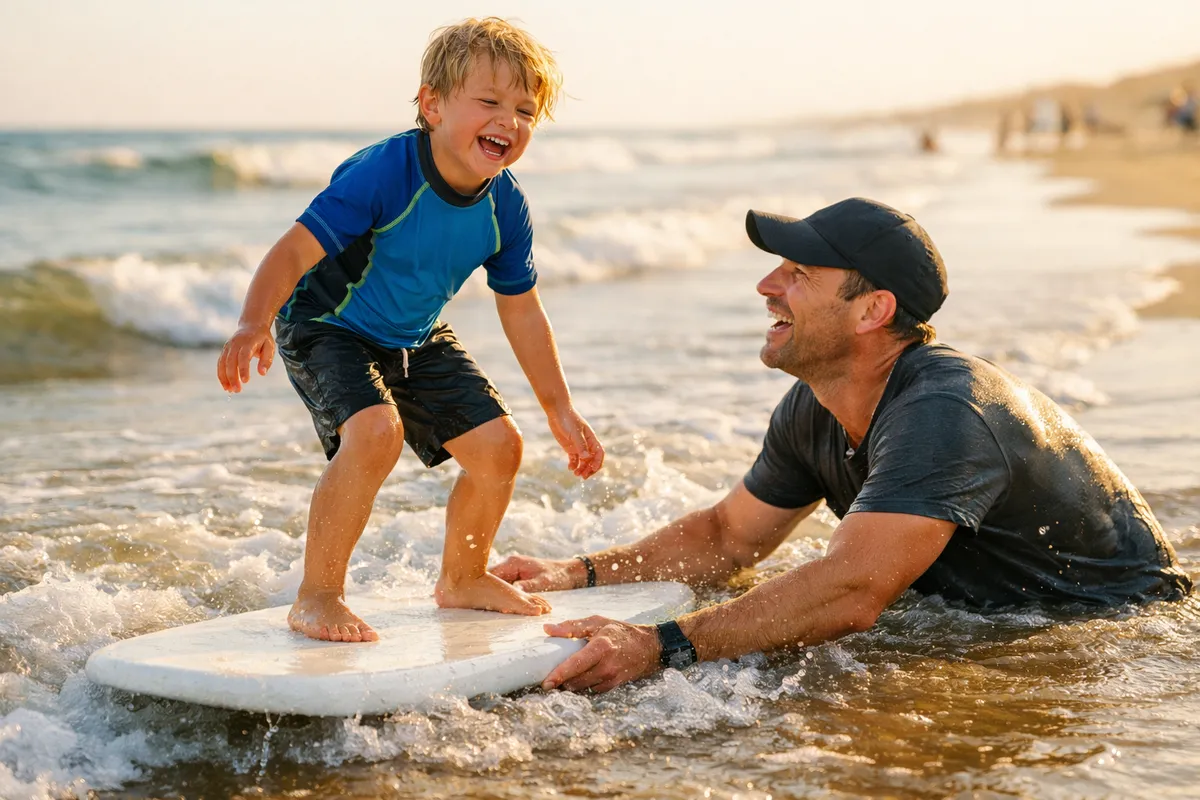
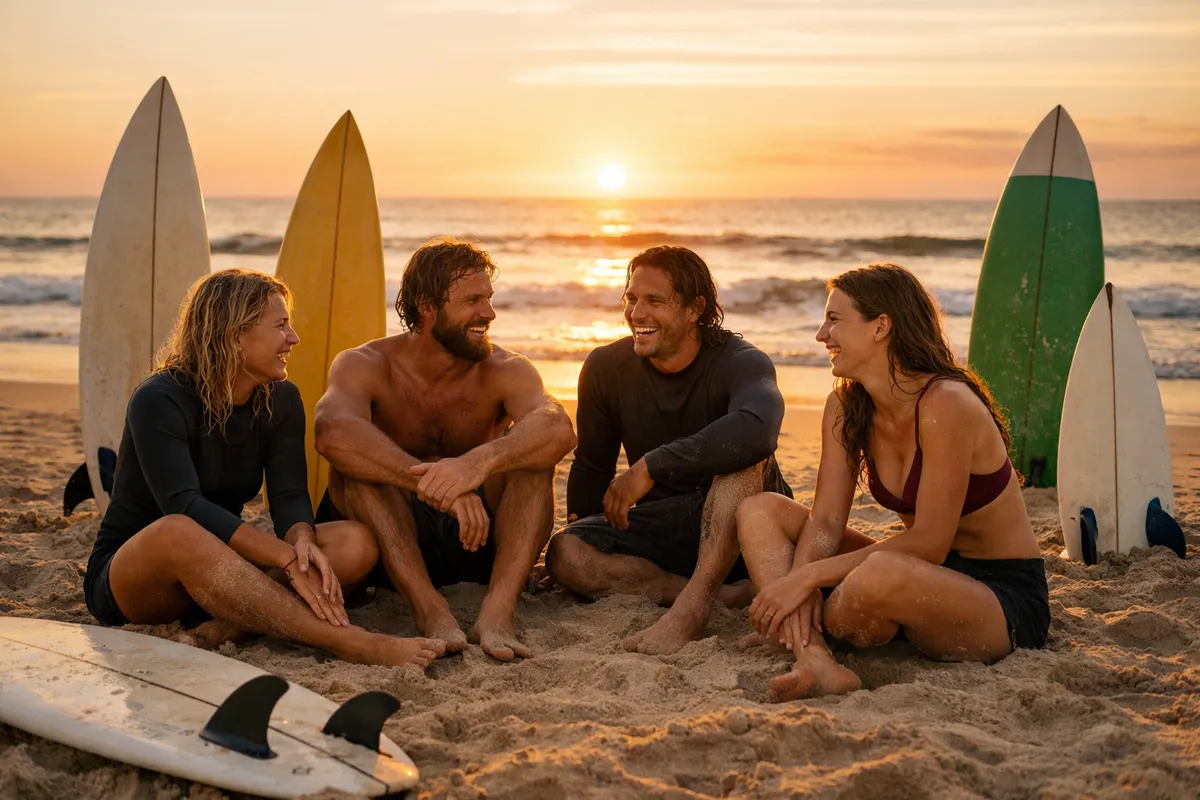
Surfing looks like a solo activity — one person, one board, one wave. But the reality is that the surfers who progress fastest, surf most consistently, and enjoy it most are almost always part of a community. A surf buddy who texts you "Dawn patrol?" at 5:30 AM gets you in the water on days you'd otherwise skip. A local crew teaches you which sandbars work on which tide. A community keeps you accountable, keeps you safe, and keeps surfing fun long after the initial excitement fades.
Why community matters
Safety
Surfing alone is riskier than surfing with others. A buddy notices when you're struggling. A group spots the rip current you didn't see. Having someone who knows your ability level and will check if you don't surface after a wipeout is a genuine safety net.
Consistency
The hardest part of getting good at surfing is going regularly. Life gets in the way — work, weather, fatigue, inertia. A surf buddy creates accountability. When someone else is counting on you to show up, you show up.
Local knowledge
Every break has secrets that aren't in any forecast app. The sandbar that shifts after a big swell. The rip that only shows at low tide. The 30-minute window on a rising tide when the left actually works. This knowledge lives in the local community and it's shared through relationships, not Google searches.
Progression
Surfing with people slightly better than you is the fastest way to improve. You watch their wave selection, their positioning, their timing. You unconsciously copy their habits. And they give you tips that no YouTube video can personalize to your specific weaknesses.
Joy
Sharing a wave with a friend — hooting when they nail a turn, laughing after a spectacular wipeout, recapping the session over coffee — is fundamentally different from surfing alone. The shared experience amplifies the stoke.
How to find your surf community
Take group lessons
The easiest entry point. Group lessons naturally create bonds — you're all beginners, all nervous, all celebrating each other's first waves. Exchange numbers with people you connect with. Some of the strongest surf friendships start in beginner classes.
Surf at the same spot at the same time
Regularity creates familiarity. If you surf the same beach every Saturday morning, you'll start seeing the same faces. A nod becomes a "hey," which becomes "good waves today," which becomes "want to grab coffee after?" This is how local crews form.
Join a surf club or group
Many beaches and towns have surf clubs — formal or informal groups that organize sessions, events, and social activities. Some are competitive, some are purely social. Search for local surf clubs on social media or ask at the surf shop.
Surf camps and retreats
Surf camps are community-building machines. You live, eat, and surf together for a week. The shared experience creates bonds quickly. Many surf camp friendships turn into ongoing surf partnerships.
Online communities
Local surf Facebook groups, Instagram accounts, and apps like Surfyx connect surfers by location. Use them to find surf partners, get condition reports, and learn about local events. But use them as a bridge to real-world connections — the community lives in the water, not on the screen.
Being a good community member
Community is reciprocal. You get value by giving value:
- Share waves. Don't hog the peak. Call your friends into good ones.
- Share knowledge. If you notice a beginner struggling, offer a tip. Be the person who helped you when you started.
- Show up reliably. If you say you'll be there at 6 AM, be there at 6 AM.
- Respect the beach. Pick up trash. Support beach cleanups. The beach is the common ground — literally.
- Support local businesses. Buy your wax at the local shop, not Amazon. Book lessons from the local school. Eat at the beach cafe. These businesses support the surf community and the community supports them.
Surf community and mental health
Surfing is increasingly recognized for its mental health benefits — the combination of physical exercise, nature exposure, mindfulness (you can't think about email while a wave is breaking on your head), and social connection. Surf therapy programs exist worldwide for veterans, at-risk youth, and people with depression and anxiety.
For everyday surfers, the community aspect amplifies these benefits. Belonging to a group that shares a meaningful activity — that gathers regularly around something joyful and challenging — is one of the most reliable paths to wellbeing that exists.
Building community as a traveler
If you're a traveling surfer (not local), you can still build temporary community:
- Stay at surf camps — instant community for the week.
- Surf the same break daily. Locals notice regulars, even short-term ones.
- Be humble and friendly. A smile, a wave, a "nice wave" goes far.
- Learn people's names. The instructor, the shop owner, the guy who surfs the same peak as you. Names matter.
Find your community
On Surfyx, the spot map shows community session data — who's surfing where, when, and what the conditions were like. Use it to find your local lineup, connect with surfers at your level, and join the community around your break.