Most people's first surf trip is solo. Your friends don't surf. Your partner isn't interested. Your schedule doesn't align with anyone else's. And so you face a choice: wait for company, or go alone.
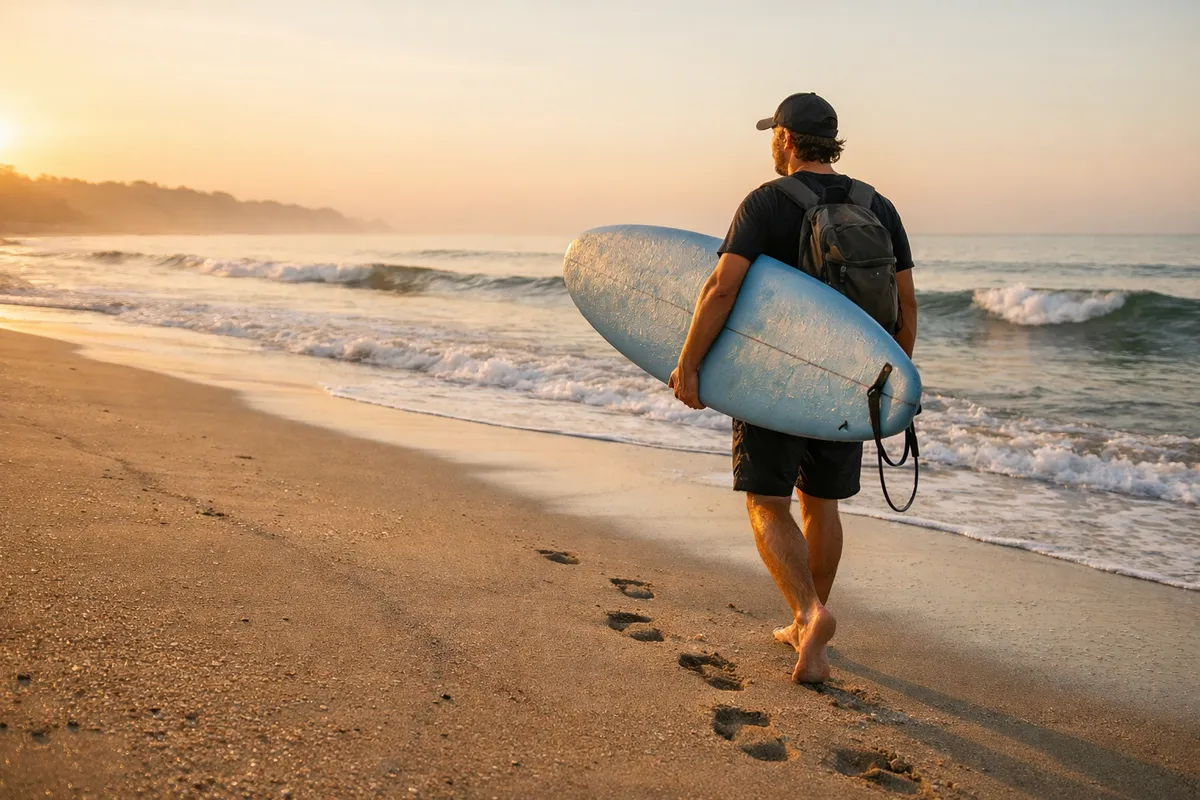
Go alone. Solo surf travel is one of the most rewarding ways to travel, period. You'll meet more people, progress faster (no compromising on when and where to surf), and experience a freedom that group travel can't match.
Why solo surf travel works
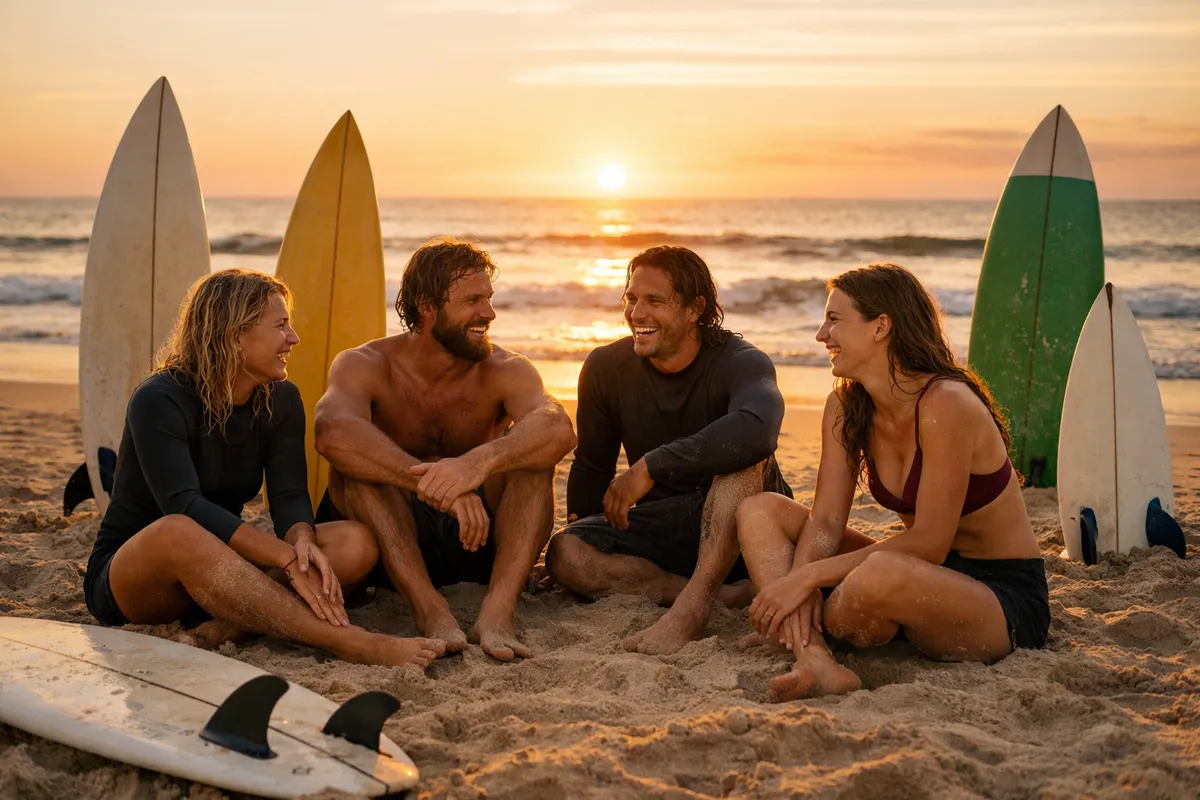
- Surfing is social by nature. You're in a lineup with other surfers. You're at a camp with other learners. You're at the beach cafe after the session. Meeting people is the default, not the exception.
- Surf camps are designed for solo travelers. Most guests at surf camps are traveling alone. The shared meals, shared lessons, and shared dorms create instant community.
- You control the schedule. You surf when conditions are best, eat when you're hungry, and rest when you're tired. No group negotiations.
- You progress faster. Solo learners take more lessons, surf more sessions, and pay more attention because there's no social distraction.
Choosing the right destination
For a first solo surf trip, prioritize:
- Established surf camp scene. Camps handle accommodation, meals, lessons, and transfers — you just show up. Best for: Portugal, Morocco, Bali, Costa Rica.
- Walkable surf town. You don't want to rely on a car or tuk-tuk to reach the beach. Best for: Ericeira, Taghazout, Canggu, Tamarindo.
- Safety and infrastructure. Solo travelers, especially women, should prioritize destinations with good tourist infrastructure and low crime. Best for: Portugal, Australia, Costa Rica, Japan.
- English-friendly. If you don't speak the local language, go somewhere where English is widely spoken in the surf scene. Every major surf destination qualifies.
Accommodation strategy
Surf camp (recommended for first trip)
The best choice for a first solo surf trip. Everything is organized, you meet people immediately, and the social structure (shared meals, group lessons) prevents the isolation that solo travel can sometimes bring.
Hostel
Good for flexibility and budget. Choose a hostel near the beach with a common area. Look for ones that organize surf lessons or have a partnership with local schools.
Airbnb / guesthouse
More privacy, less social. Works well if you're comfortable being alone and proactive about meeting people in the lineup or at the beach.
Safety as a solo surfer
- Tell someone where you're going. Text a friend or your accommodation: "Surfing at Foz do Lizandro, back by noon."
- Surf at patrolled beaches. Lifeguards are your safety net when you don't have a buddy.
- Know your limits. Without a friend to reality-check you, it's easy to overestimate your ability. If conditions look bigger than what you've surfed before, sit it out.
- Don't leave valuables on the beach. Use a key safe, a dry bag, or leave everything at your accommodation.
- Trust your instincts. If a person, a deal, or a situation doesn't feel right, walk away.
Solo female travelers
Women traveling solo to surf is common and generally very safe at established surf destinations. Extra considerations:
- Research the destination's culture around women. Most surf towns are progressive and welcoming, but some areas require more cultural sensitivity.
- Women-specific surf camps exist in Portugal, Morocco, Bali, and Costa Rica. They provide a female-focused environment and community.
- Trust your instincts about instructors. A professional instructor maintains appropriate boundaries. If something feels off, switch schools.
Meeting people
- Book a surf camp for at least the first 3–4 days. After that, you'll have friends to surf with for the rest of the trip.
- Eat at the same beach cafe. Regularity creates familiarity. The staff and other regulars become your network.
- Say yes to social invitations. Someone at the camp invites you to dinner? Go. The instructor recommends a sunset spot? Check it out.
- Join shared activities. Yoga classes, beach cleanups, pub quizzes — whatever is happening. Showing up is the only requirement.
Practical logistics
- Flights: Book early for the best prices. Solo flights are often cheaper than you'd think — you're flexible on dates.
- Insurance: Get travel insurance that covers surfing activities. Most standard policies exclude "extreme sports" — look for one that explicitly includes surfing.
- Communication: Buy a local SIM or eSIM on arrival. WhatsApp is universal in the surf world for group chats and condition updates.
- Journal: Solo travel is a good time to journal. The clarity that comes from surfing + solitude + reflection is one of the unspoken benefits.
The solo surf trip mindset
Expect loneliness on day 1 or 2. It's natural and temporary. By day 3, you'll have met people at the camp, in the lineup, or at dinner. By day 5, you'll have a crew.
The irony of solo surf travel: you almost never end up alone. The surf community is inherently social, and solo travelers are welcomed immediately because everyone understands why you're there — you came to surf, and surfing is better shared.
Find your trip
On Surfyx, use the spot map to explore destinations and find surf camps and schools with verified reviews from other solo travelers.