Kids are natural surfers. They're light, flexible, fearless (sometimes too fearless), and they don't overthink the pop-up. The biggest barrier to getting kids surfing isn't their ability — it's parents not knowing how to start safely.
Here's the practical guide: when to start, how to keep it fun, what gear to use, and which destinations work for families.
What age can kids start?
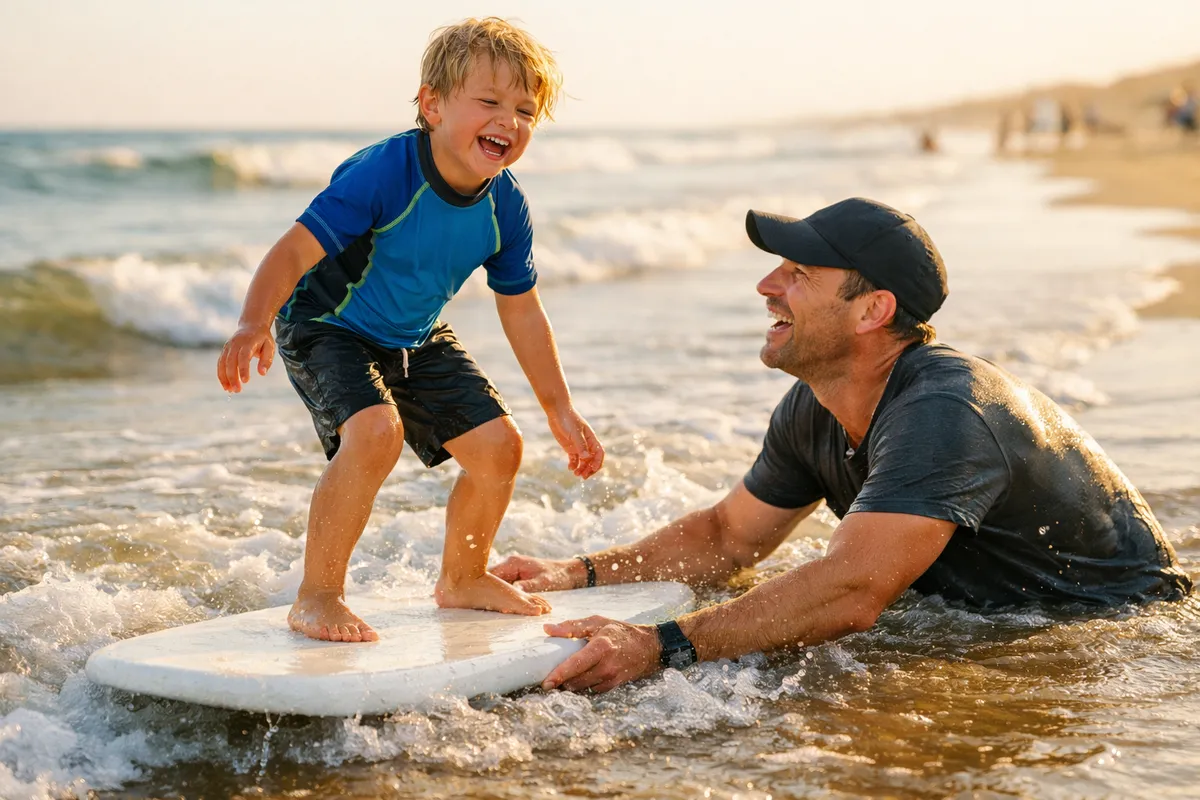
- Age 3–4: Tandem surfing (parent or instructor pushes the child on a board in the whitewater). The child lies down or kneels. It's more about ocean comfort than surfing technique.
- Age 5–6: Standalone whitewater surfing. Most kids this age can lie on a soft-top, get pushed into whitewater, and stand up with help. Lessons at this age are usually 30–45 minutes (attention span is the limit, not ability).
- Age 7–9: Real lessons begin. Kids can paddle, catch whitewater independently, and start learning wave selection. This is the age most surf schools accept for group lessons.
- Age 10+: Full beginner progression. At this age, kids learn at the same pace as adults — often faster, because they're lighter, more flexible, and less afraid of falling.
There's no hard rule. A confident 5-year-old swimmer might be ready before a nervous 8-year-old. The key prerequisites: comfortable in the ocean (not terrified of waves), can swim 25+ meters unassisted, and wants to try (not being forced).
Safety first
Always supervise
Even with an instructor present, a parent should be on the beach watching. Kids can drift, get tired suddenly, or panic in ways that aren't always visible from the water.
Soft-top boards only
No hard boards for kids under 10. A foam soft-top is lighter, safer on impact, and more forgiving when it inevitably hits someone. A fin-free or soft-fin setup is even better for beginners.
Leash always on
A board leash is non-negotiable. A loose board in the whitewater is dangerous to the child and everyone nearby. Size the leash to the board (not the child).
Sun protection
Kids burn faster than adults. SPF 50+ reef-safe sunscreen, applied 20 minutes before entering the water. A rash guard or UV suit provides better protection than sunscreen alone and doesn't need reapplying.
Know the beach
Before putting kids in the water:
- Check for rip currents — ask a lifeguard
- Check for rocks, reef, or debris in the whitewater zone
- Stay between the flags if lifeguards are present
- Choose a section of beach with gentle slope and no shore dump
Making it fun (not a lesson)
The biggest mistake parents make: treating the first surf session like a training camp. Kids don't want to "learn proper technique." They want to play in the waves.
Keep it short
- Ages 5–7: 30 minutes maximum
- Ages 8–10: 45 minutes
- Ages 11+: 60–90 minutes
End the session while the child is still having fun. "One more wave!" is the perfect exit point — it means they'll want to come back tomorrow.
No pressure to stand
If a 6-year-old spends the whole session riding waves on their belly and laughing, that's a perfect session. Standing up comes naturally with repetition. Forcing it creates frustration and resistance.
Celebrate everything
First time in the whitewater without crying? Celebrate. Rode a wave on their belly? Celebrate. Stood up for half a second? Celebrate like they won a championship. Positive reinforcement builds confidence, and confidence builds surfers.
Go with a friend
Kids surf better with a buddy. If you can coordinate with another family, the social aspect makes the experience more fun and less intimidating.
Kids' gear
Board
- Ages 5–8: 5–6 foot soft-top foam board. Light enough for the child to carry (with help). Wide and stable.
- Ages 9–12: 6–7 foot soft-top. Still foam, but slightly longer for paddling power.
- Ages 13+: 7–8 foot foam or a youth-sized hardboard if they're progressing quickly.
Don't buy an expensive board for a first-time kid. Rent first. If they love it and want to continue, buy a used soft-top for $50–100.
Wetsuit
Kids lose body heat faster than adults. In water under 20°C, a wetsuit is essential. Even in warmer water, a thin spring suit or rashguard provides warmth and UV protection.
- Warm water (22°C+): Rash guard or UV suit
- Mild water (18–22°C): 2mm or 3/2mm wetsuit
- Cold water (under 18°C): 4/3mm wetsuit, booties
Kids' wetsuits are cheaper than adult sizes ($40–80 new, often available used). They outgrow them before they wear them out, so second-hand is a smart choice.
Other essentials
- Reef-safe sunscreen SPF 50+
- Rash guard (even under a wetsuit, for chafe protection)
- Towel and warm clothes for after
- Snacks and water (surfing makes kids very hungry)
Should you teach them yourself or hire an instructor?
Teaching them yourself
Works if: you're a competent surfer, you're patient, and your child takes instruction from you well (not all kids do — some learn better from a stranger).
Advantages: free, flexible timing, no scheduling pressure.
Risks: you may not know proper beginner technique, you can't be both teacher and safety watcher, and parent-child dynamics can create frustration on both sides.
Hiring an instructor
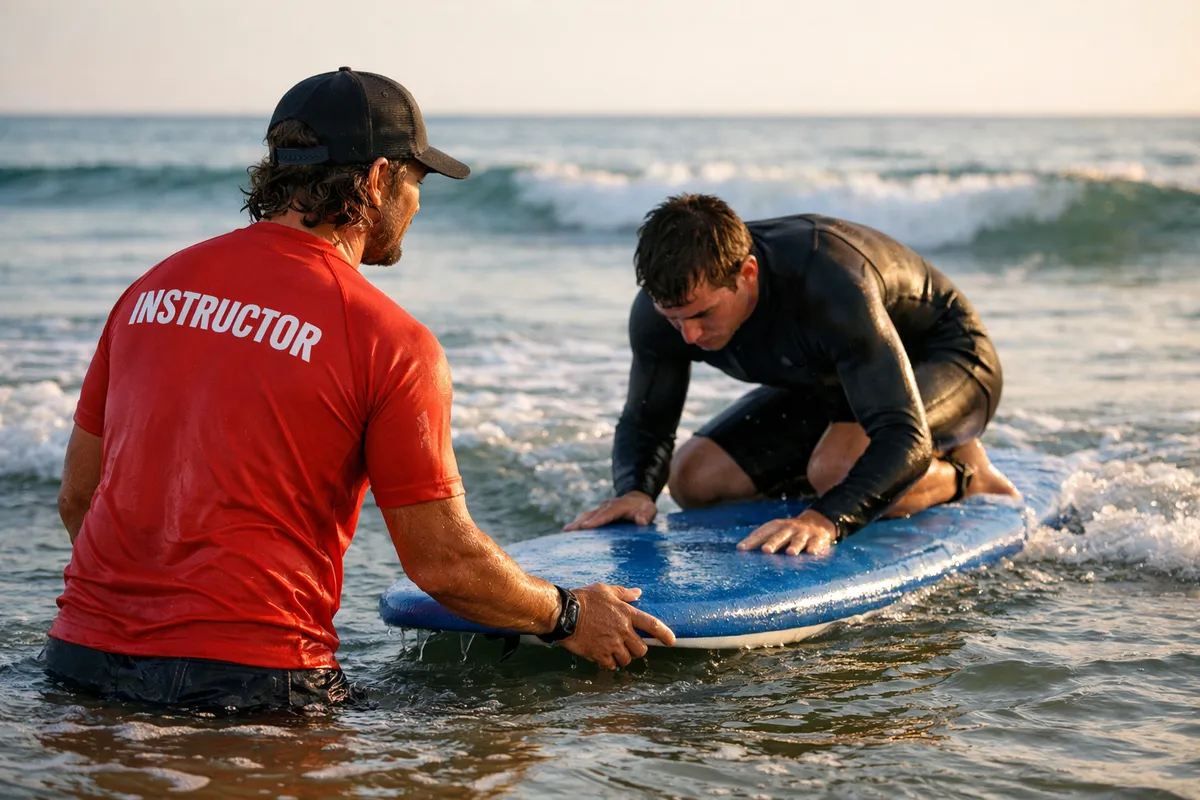
Works better if: your child is nervous, you're not a confident surfer, or your child responds better to a "coach" figure than a parent.
Look for instructors who:
- Have specific experience teaching kids (ask them directly)
- Keep groups small (1:3 or better for kids under 8)
- Focus on fun first, technique second
- Have current first aid and lifeguard training
Many surf schools offer family packages — the parent learns in one group while the child learns in a separate kids' group, then everyone surfs together for the last session.
Family-friendly surf destinations
The best destinations for families combine beginner waves with kid-friendly infrastructure:
- Bali (Kuta, Batu Bolong) — warm water, cheap lessons, pool villas, family-friendly restaurants everywhere
- Costa Rica (Tamarindo, Nosara) — warm water, nature activities for rest days, safe and welcoming
- Portugal (Peniche, Ericeira) — great food, walkable towns, surf camps with family packages
- Cornwall, UK (Newquay, Polzeath) — Polzeath is particularly family-oriented, with gentle waves and family surf schools
- Australia (Byron Bay, Gold Coast) — lifeguards, clean beaches, and kid-specific surf programs everywhere
- Hawaii (Waikiki) — the gentlest beginner wave on earth, warm water, and the birthplace of surfing
When it doesn't work
Not every child takes to surfing — and that's fine. Signs it's not working:
- Genuine fear of the water (not just first-time nervousness, but real distress)
- Repeated requests to stop (listen to them)
- Physical discomfort (cold, exhaustion, sunburn)
If a child doesn't enjoy it, don't push. Try again in a year — kids change fast. Some of the best surfers started at 12 after rejecting it at 7.
Find family-friendly schools
On Surfyx, filter surf schools and lessons by "family-friendly" or "kids' lessons" to find instructors with specific experience teaching children. Verified reviews from other parents help you choose with confidence.