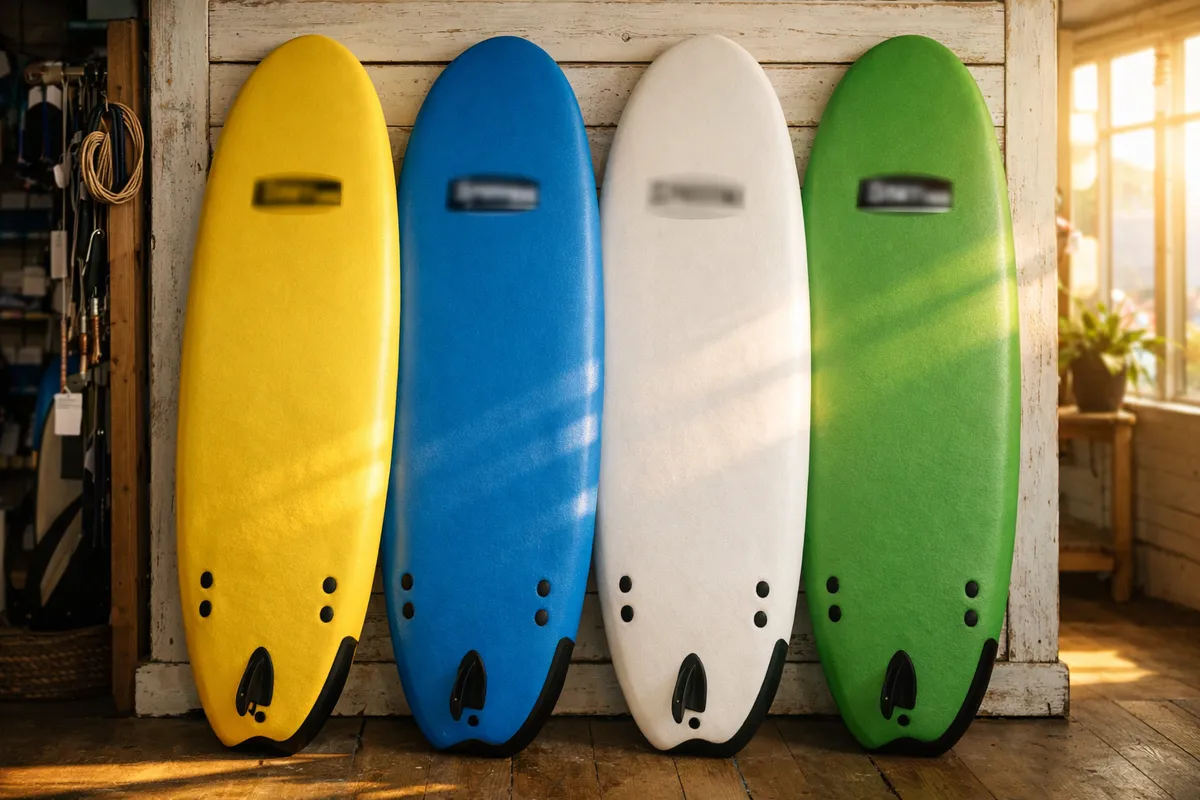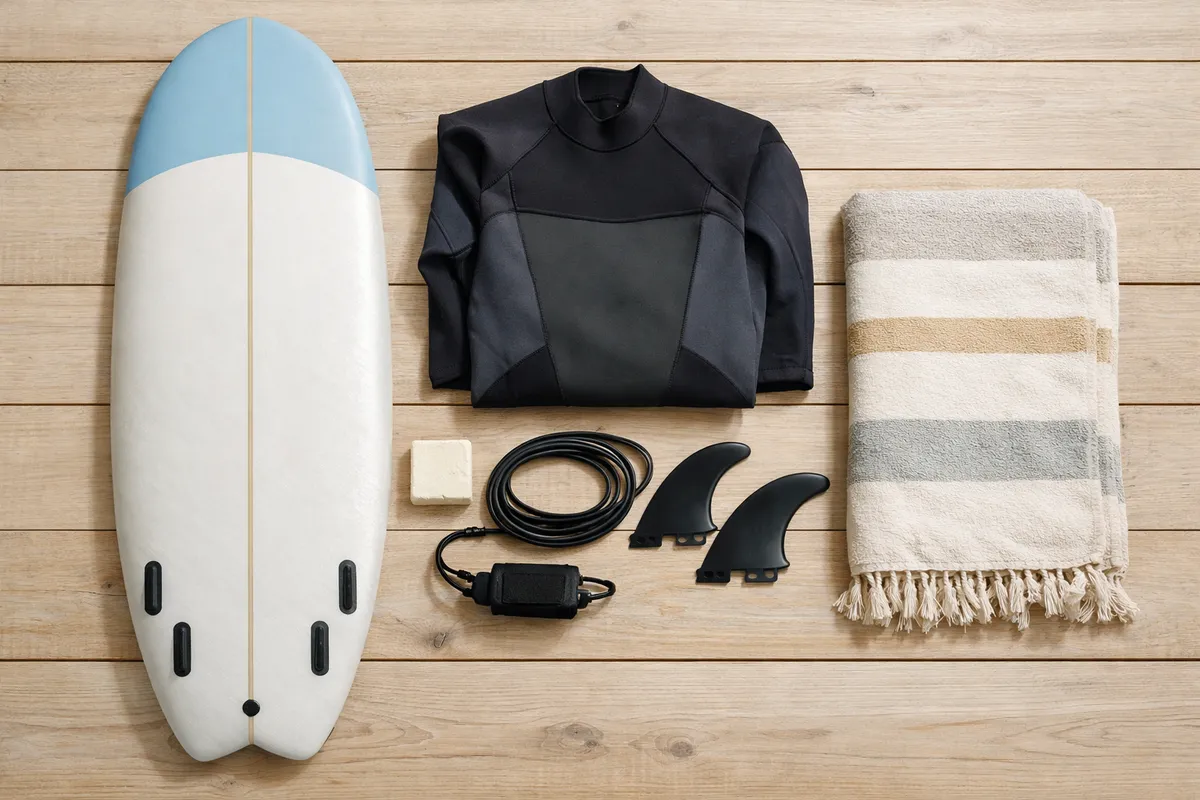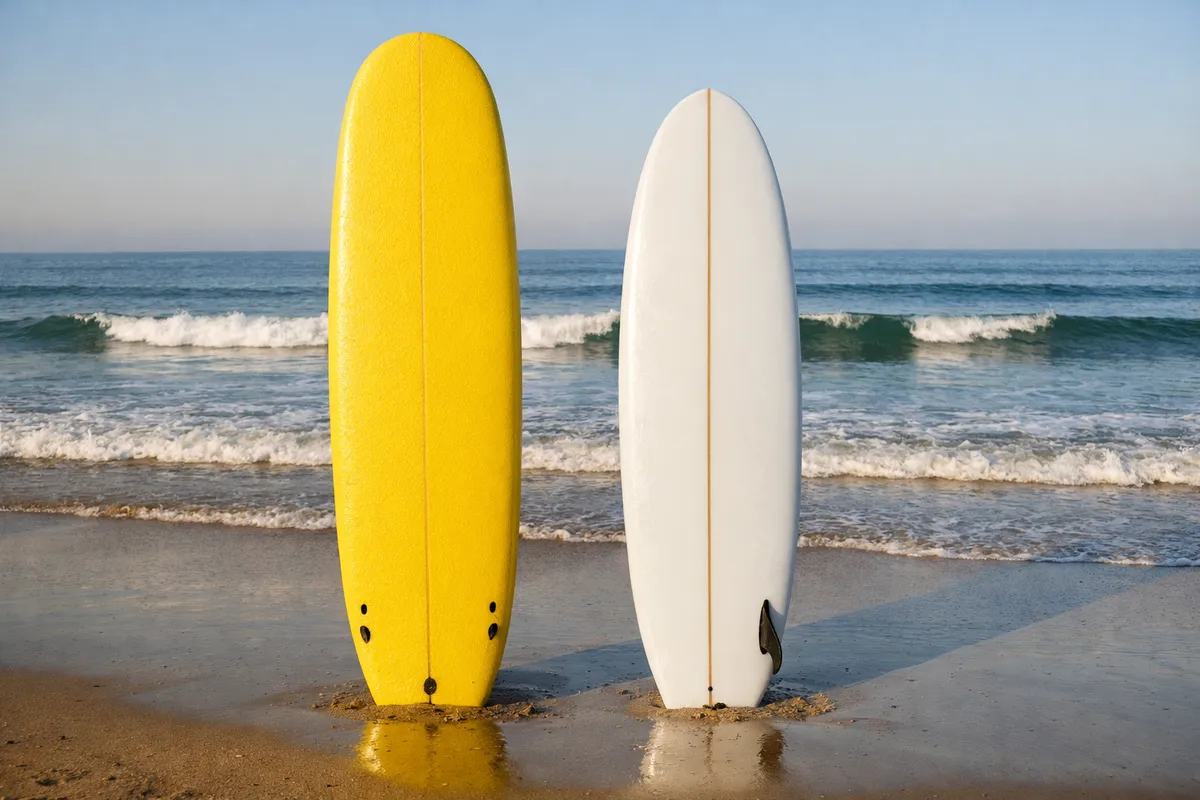
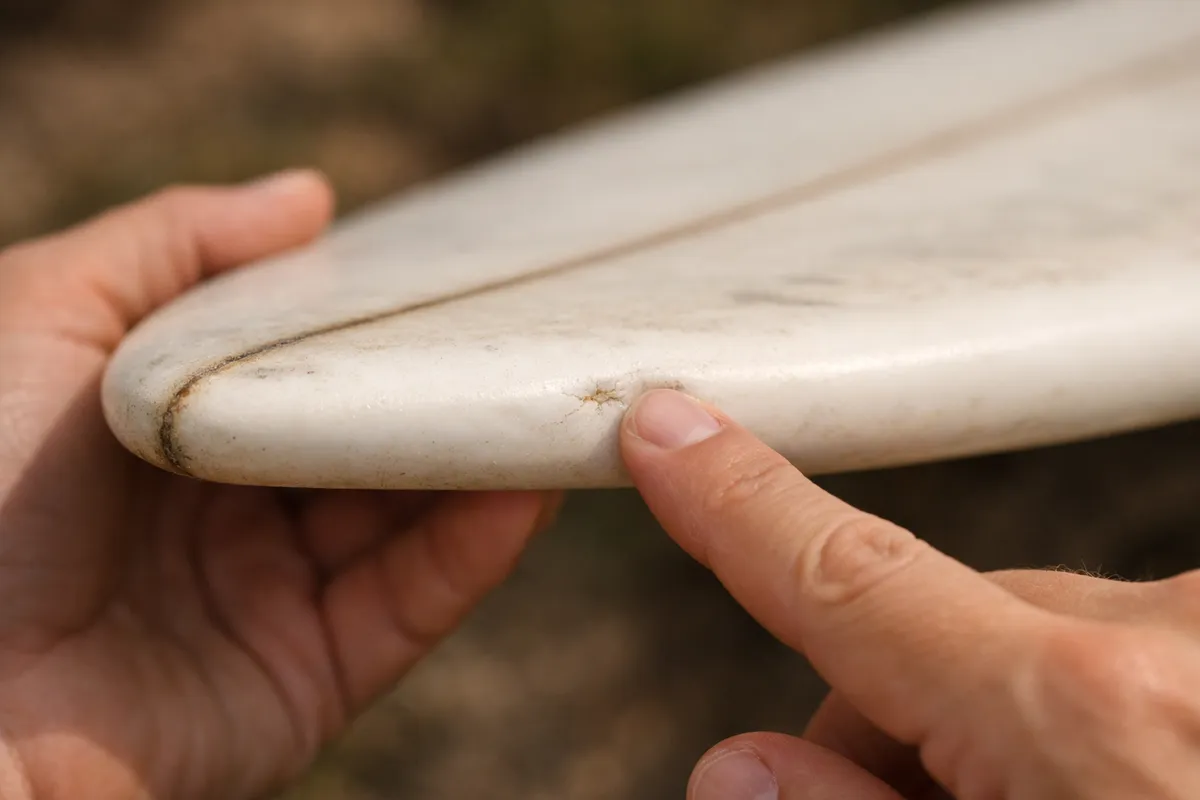
A used surfboard in decent shape is the best deal in surfing. A $900 new board is $400 used after a year. A $400 board is $200. Someone else already ate the depreciation, and the board surfs exactly the same.
The catch: a bad used board is worse than no board at all. Waterlogged foam, cracked stringers, snapped fin boxes — these are problems that turn your "great deal" into a $300 mistake.
Here's the 10-minute inspection that catches 95% of the bad ones.
Before you go
Bring:
- Your phone with flashlight
- A small towel (to dry the board if you're looking after a session)
- Cash or a payment app so you can close the deal if the board is good
Ideally meet the seller at their home in natural daylight. Avoid indoor fluorescent lighting — it hides dings and color changes in the foam. If the seller won't let you inspect the board properly, walk away.
The 8-step inspection
1. Look at the deck in flat light
Run your eye from nose to tail. What you're looking for:
- Pressure dings (small depressions from knees and feet during pop-ups) — normal on any used board, not a dealbreaker
- Cracks in the fiberglass with water marks or brown discoloration around them — means water has gotten in, possibly for a while
- Visible delamination — the glass lifting away from the foam, creating soft spots or bubbles. This is expensive to repair and usually disqualifying on a cheap board
Minor pressure dings are fine. Brown water stains and bubbling glass are not.
2. Check the bottom
Flip the board over. Look for:
- Scratches and scrapes — fine, normal wear
- Cracks around the fin boxes — a serious issue, usually means the fins took a hit
- Cracks on the nose or tail — check if they've been repaired (lighter-colored epoxy or resin patches)
- The stringer — the thin wooden strip down the center. Should be solid and straight. Any crack or gap along the stringer means a broken board that was repaired
A small, cleanly-done repair from a known shaper or ding repair shop is fine. A big patch of resin slapped over a crack is a red flag.
3. Press the rails with your thumb
The rails (the edges of the board) should be firm to pressure. Walk from nose to tail, pressing with your thumb. You're feeling for:
- Soft spots — the foam has absorbed water or the glass has delaminated. Walk away.
- Cracks — look for hairline fractures along the rail seam.
- Previous repairs — often visible as slight color or texture changes.
Rails take the most abuse on a surfboard. If they're compromised, the whole board's structural integrity is at risk.
4. Lift the board
Pick it up. A fresh, dry surfboard of standard size should feel surprisingly light. If it feels dense or heavier than expected, it's absorbing water.
Compare to a new board of similar size if possible — most surf shops will let you lift one as a reference. A waterlogged used board often feels 30–50% heavier than an equivalent dry board. That weight is the cost of replacement.
5. Check the fin boxes
The fin boxes are the slots in the bottom tail where the fins clip in. Press down on each box and wiggle it. Check:
- The box should be solid — no movement when pressed
- No cracks radiating out from the box into the fiberglass
- The screws (if it's a screw-in system like FCS I or Futures) should turn cleanly
Cracked fin boxes are one of the most expensive repairs in surfboard maintenance. Don't buy a board with loose or cracked boxes unless you know how to fix them and the discount accounts for it.
6. Nose and tail corners
The most impact-prone parts of the board. Check both corners of the tail and the nose tip for:
- Old dings that have been repaired
- Current dings that are still open (water can get in)
- Cracks extending into the board body
Small dings at the nose or tail corners are the most common repair on used boards. A single well-repaired ding is not a dealbreaker. Multiple unrepaired dings are.
7. Sound test
Hold the board by the nose, let the tail hang. Flick the deck gently with your knuckles, walking from nose to tail.
A solid, dry board sounds crisp and uniform. A waterlogged or delaminated board sounds dull or hollow in affected areas. This is old surfer knowledge but it genuinely works — if one section of the board sounds noticeably different, that section has a problem.
8. Check the leash plug
The leash plug is the small fitting at the tail where your leash attaches. Check:
- It should be flush and solid
- No cracks radiating outward
- The leash string (the small rope loop) intact and clean
Leash plugs are cheap to repair but indicate how well the board's been cared for.
Red flags = walk away
Don't buy if you see:
- Visible delamination (glass lifting from foam) anywhere except maybe a tiny deck spot
- Water stains extending more than a few inches from any ding
- Noticeable weight vs a similar dry board
- Soft spots you can press with your thumb
- Cracked or wobbly fin boxes
- A repaired snap (the board broke in half and was glued back together)
- Seller won't let you inspect properly or is evasive about the board's history
Yellow flags = negotiate harder
These aren't dealbreakers but justify a lower price:
- Multiple small dings needing repair
- Visible previous repairs (even if clean)
- Yellowing foam (oxidation from sun exposure)
- Missing fins (you'll need to buy a set)
- No leash included
Price benchmarks
Rough used surfboard pricing as of 2026:
- Beginner soft-top longboard (7'–9'): $150–300 used, $250–500 new
- Funboard / mid-length (7'–7'6"): $200–400 used, $400–650 new
- Performance shortboard (5'10"–6'4"): $250–500 used, $600–900 new
- Longboard (9'+): $300–600 used, $700–1200 new
Expect to pay 40–60% of new price for a board in good condition. A 50%+ discount with multiple yellow flags is usually fair; a 70% discount on a board with no flags is a great deal and probably has a reason you should find out about.
Where to look
- Local surf shop used racks (often trade-ins from regulars)
- Facebook Marketplace and surfer-to-surfer groups
- Craigslist-style local classifieds
- Direct from friends and locals who are upgrading
- On Surfyx marketplace — where listed shops and individuals can sell locally with reviews and verified shop profiles
Next reads
- Choosing your first surfboard — which shape and size to target
- Softboards vs hardboards — when to upgrade from a foamie
- The beginner's surf gear guide — everything else you'll need