Wetsuits are the piece of surf gear that confuses beginners the most. There are five thicknesses, three zipper positions, four seam types, and seven brands everyone argues about — and almost none of it matters for your first suit.
Here's the ten-minute framework: figure out the water temperature, match it to a thickness chart, buy or rent accordingly, and get back to surfing.
The one question that decides everything
What is the water temperature at your local spot right now?
Not the air temperature. Not the summer peak. The water, today. Wetsuit thickness is matched to water temp, not air temp. A 15°C day with 22°C water needs a totally different suit than a 15°C day with 12°C water.
Check a surf forecast site for your region (Surfline, Magicseaweed, Windguru — any of them list water temperature). Write down the coldest water you're likely to surf in this year. That's your target temperature.
The thickness chart
Wetsuits are labeled with two numbers like 3/2 mm — the first is torso thickness (for warmth), the second is arms and legs (for flexibility). Warmer torso, more flexible limbs — that's the logic.
Match your water temperature to this chart:
| Water temp | Suit type | Extras |
|---|---|---|
| 25°C+ / 77°F+ | Board shorts + rash guard | None needed |
| 22–25°C / 72–77°F | 2 mm shorty or springsuit | None |
| 18–22°C / 64–72°F | 3/2 mm full suit | Optional thin booties |
| 13–18°C / 55–64°F | 4/3 mm full suit | Booties almost always |
| 9–13°C / 48–55°F | 5/4 mm full suit | Hood + booties + gloves |
| Below 9°C / 48°F | 6/5 mm or 6/5/4 mm | Full accessories, warm shower after |
When in doubt, go one step warmer. Being slightly too hot in a wetsuit is uncomfortable; being too cold is a safety issue that ruins sessions.
Zipper position
Three main options:
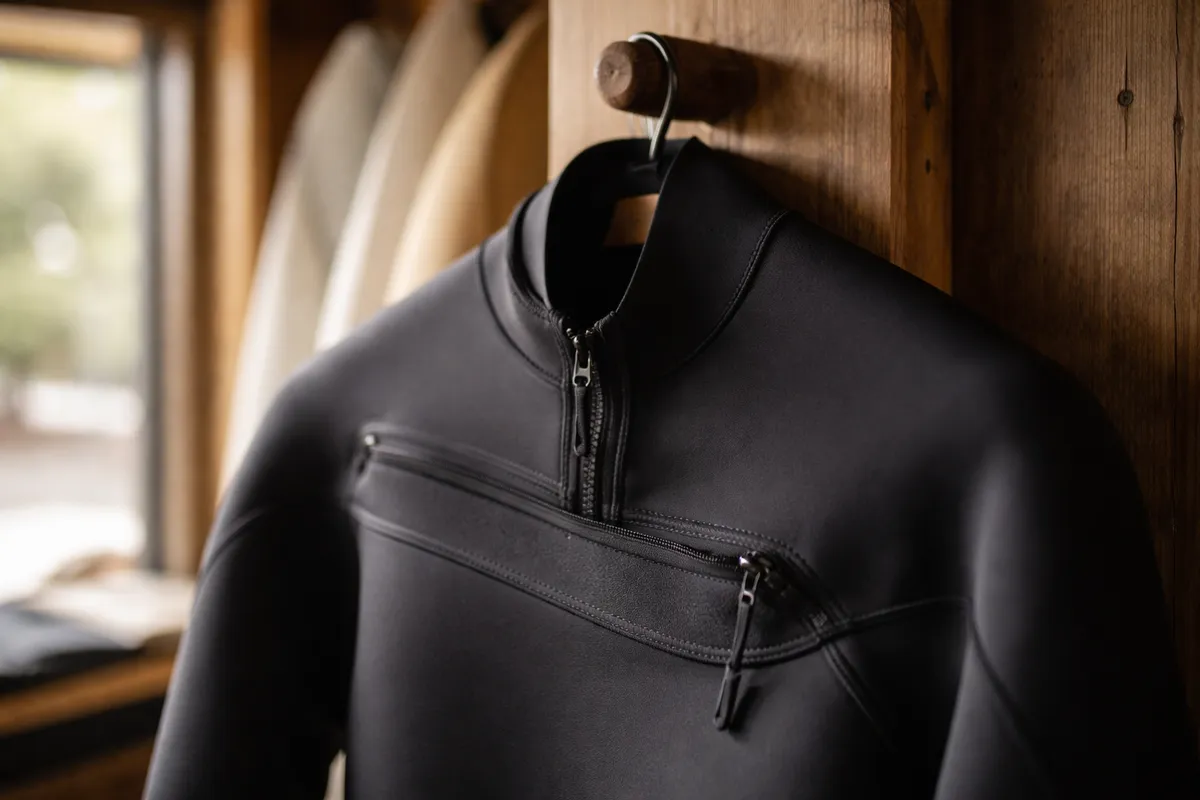
- Back zip. Easy to get in and out. A little flush of cold water when you first enter the water. Fine for warm and temperate suits. Cheapest and most forgiving of body shapes.
- Chest zip. Harder to get in and out (you have to fold the top over your head). Stays warmer — the classic choice for cold water. Most modern mid and premium suits are chest zip.
- Zipperless. Warmest and most flexible, annoying to put on. Rare except on very high-end suits and cold-water specialists.
For a first suit in temperate water, a chest zip is the modern default. Back zip is fine if you find one that fits well and it's cheaper.
Fit
Wetsuits must be tight. Uncomfortably tight the first time you try one on, in fact. That's correct — the suit is supposed to trap a thin layer of water against your skin that your body warms. Any slack anywhere and cold water flushes through.
Check these points:
- Torso should be snug with no bunching at the chest or waist
- Arms should extend fully with no pulling at the shoulders when you paddle-simulate
- Legs should hug the calves without pinching the knees
- Neck should seal but not choke
- The zipper should close all the way without straining
If you can pinch an inch of neoprene off your chest or stomach, the suit is too big. Go down a size.
Most brands run their sizing in MS, MT, LS, LT (medium-short, medium-tall, large-short, large-tall) in addition to the usual S/M/L. Getting the height right matters as much as the chest measurement.
Brands that matter for beginners
For your first suit, prioritize reputation over features. These brands make reliable entry-level suits:
- O'Neill — Reactor, Epic, Hammer lines are the classic beginner choices. Consistent sizing, durable.
- Rip Curl — Dawn Patrol and Omega are the entry-level lines. Warm for the thickness. Popular in Europe.
- Xcel — Comp X series is quality for the price. Good fit range.
- Billabong — Absolute and Furnace lines. Widely available, reasonable prices.
- Buell — Budget-friendly, good for cold water, made in the US.
- Need Essentials — Aussie direct-to-consumer, very cheap, surprisingly good quality for the price.
Premium brands (Patagonia R-series, Vissla 7 Seas) are beautiful but overkill for a beginner. Wait until year 2.
Buy or rent?
If you're not sure you'll stick with surfing, rent. Wetsuit rental is $5–15 a day from most beach shops. Eight rental sessions costs roughly $60–120, which is less than a decent beginner suit.
Buy once you've been surfing consistently for a month or two and you know:
- The thickness you actually need for your local water
- Whether you're a standard or tall or short fit
- Whether you can commit to the 15 minutes of post-session rinsing a wetsuit needs to last
First-suit budget: $120–200 for a new 3/2 mm from a reliable brand. Used suits can be great value if they're clean and intact — check the seams, neck, and ankle seals carefully.
Care
A wetsuit lasts 2–5 years if you treat it right, 6 months if you don't.
- Rinse in fresh water after every session. Hose it down inside and out.
- Hang it properly. On a thick plastic hanger, in the shade. Never fold it with the neoprene creased.
- Never dry it in direct sun. UV destroys neoprene.
- Never machine wash. Ever.
- Never pee in it. (Okay, everyone does. But rinse extra thoroughly if you do.)
Buying priorities summary
In order of what matters:
- Thickness matched to water temperature. Everything else is secondary.
- Correct fit. Tight, no bunching, full range of paddle motion.
- Reliable brand. Doesn't need to be premium, just reputable.
- Zipper type. Back for beginners in warm water, chest for temperate and cold.
- Color, logo, seam stitching quality. These genuinely don't matter for year 1.
For the complete beginner gear overview, see our full gear guide. For the board side of the question, read choosing your first surfboard. And for everything else you might carry to the beach, check out surf accessories every beginner needs.