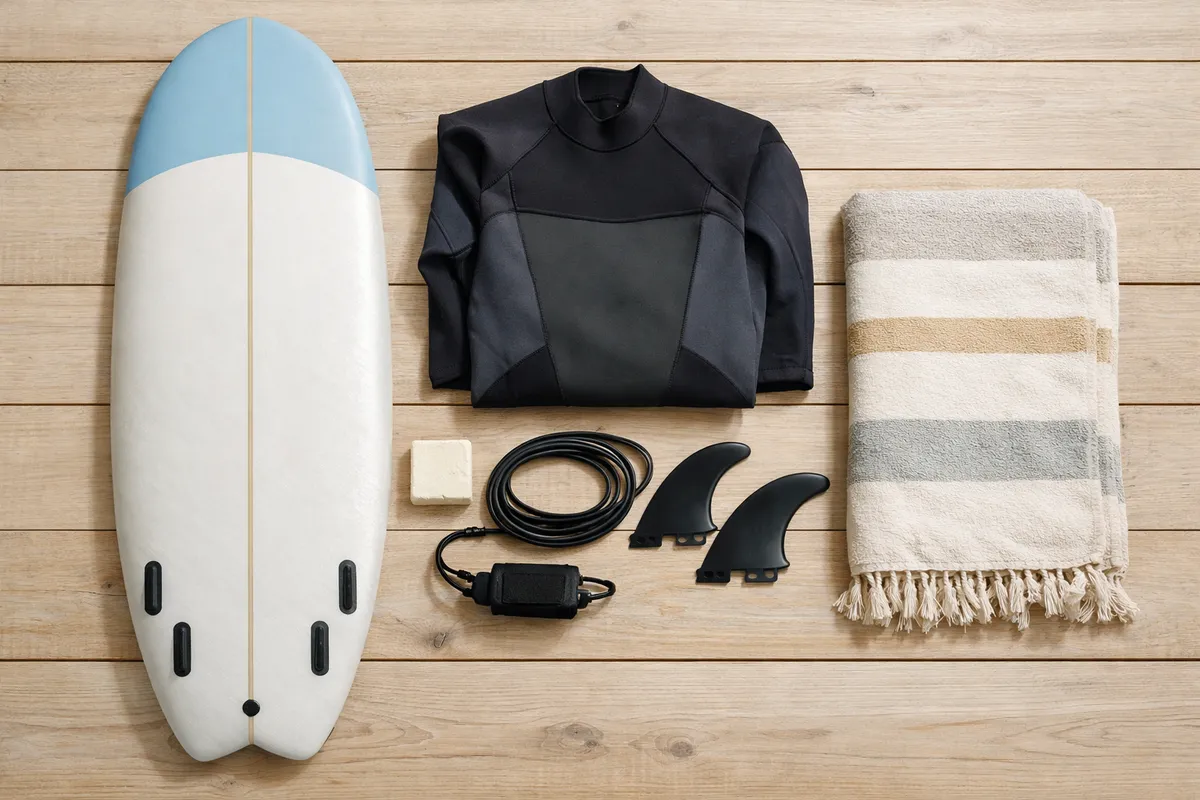
If you walk into a surf shop as a beginner, the staff will cheerfully ring up $300 of accessories in five minutes. A fancy board bag, a temperature-gradient wax kit, a custom leash, a set of "training fins," a neoprene hood you don't need for another year — all of it technically related to surfing, none of it necessary.
Here's the short list of what you actually need in your first year. Everything else can wait.
The essentials — buy these
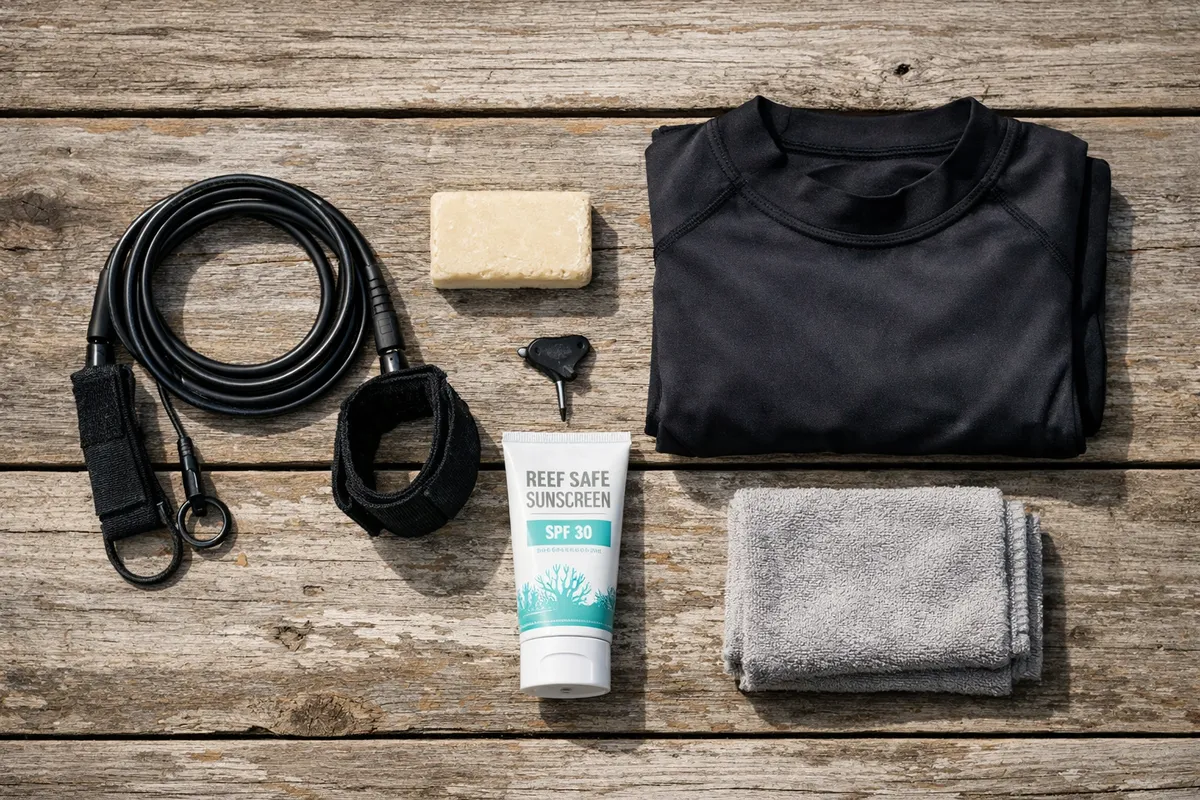
Leash
Non-negotiable. Your leash attaches your ankle to the board so when you fall, the board doesn't wash to shore (or worse, hit another surfer).
- Length: match the leash to the board. 8-foot board → 8-foot leash, etc.
- Thickness: "standard" for everyday beginner waves, "comp" for smaller and cleaner conditions, "big wave" only when you need it.
- Brands: FCS, Creatures of Leisure, Dakine, Ocean & Earth, Lost. Any of them are fine.
- Budget: $25–45 new. A good leash lasts 2–3 years if you rinse it after sessions.
Rental boards come with leashes. Once you buy your own board, the leash is the second thing you buy.
Wax
Your board is wet and slippery. Wax gives your feet grip.
- Temperature grade matters: tropical (warm water), warm, cool, cold. Buy the grade that matches your water temperature.
- Application: a base coat (rub in all directions until you see little bumps), then a top coat before every session.
- Brands: Sex Wax, Sticky Bumps, Mr. Zog's. All classic, all fine.
- Budget: $3–5 per bar, a bar lasts 3–5 sessions.
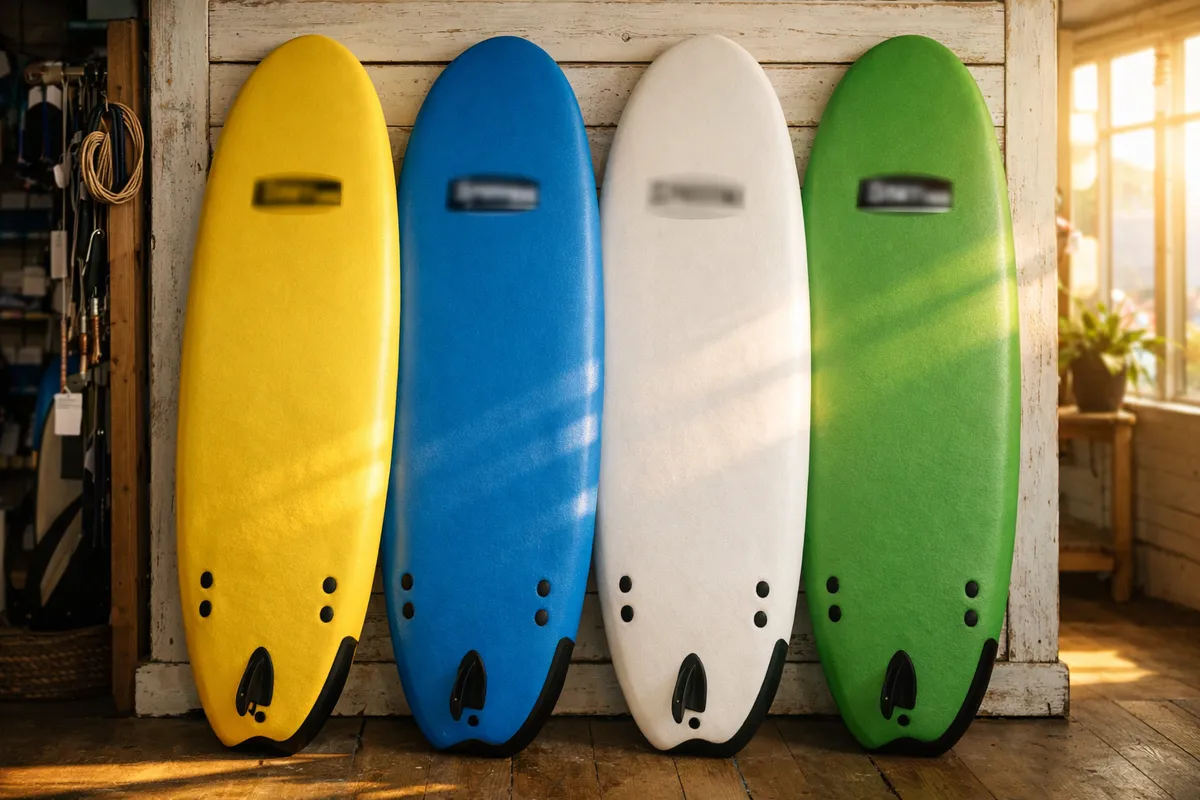
Soft-tops generally don't need wax because the foam is already grippy. Hard boards definitely need it.
Fin key
A tiny allen-key tool for tightening or removing fins. Comes with most boards when you buy new; for used boards, buy a $5 one and keep it in your board bag forever.
One fin key lasts your entire surfing life. There is no upgrade path.
Rash guard (warm-water surfers)
A lycra shirt that protects your chest from the rash you'll get from repeatedly pushing up off the board, and your shoulders and back from sun.
If you're surfing in warm water without a wetsuit, a rash guard is essential. Budget: $20–50. Brands: O'Neill, Billabong, Vissla, Quiksilver — all make reliable ones.
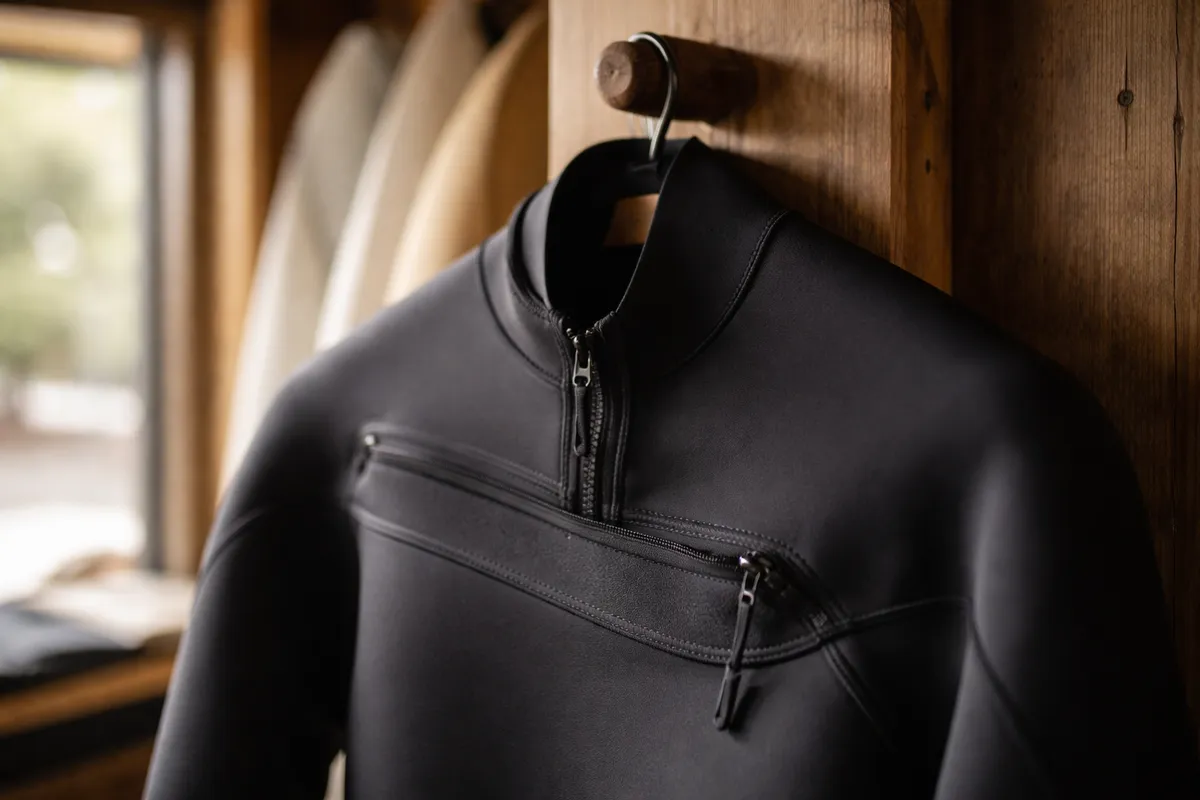
If you're surfing in a wetsuit, the suit handles the rash. You still might want a thin rash guard underneath for longer sessions (reduces irritation at the neck and wrists).
Reef-safe sunscreen
You're in the water for hours at peak UV. You need real protection, not a dab of generic drugstore SPF 30.
- Type: mineral (zinc oxide based) beats chemical for water resistance
- SPF: 50+ for face, 30+ for body
- Reef-safe: marked "reef-friendly" or explicitly stating "no oxybenzone or octinoxate"
- Brands: Sun Bum, Vertra, Manda, Stream2Sea, Thinksport
- Budget: $15–30 per tube, lasts 1–2 months
Apply 20 minutes before you paddle out. Reapply after every session.
A real towel
Not a hotel-size sheet. A thick absorbent towel you can throw in a car trunk, use to dry off, sit on at the beach, and change under in a parking lot. Microfiber surf towels (Dock & Bay, Slowtide, Nomadix) are designed for this and pack small. Budget: $25–40.
The "nice to have" — consider after year 1
Booties
Neoprene shoes for cold water or reef breaks. Skip until you need them. In warm water on sand, they make surfing harder and worse. In cold water under 13°C, they're essential. Over reef anywhere, they're essential.
Hood and gloves
Only for cold water (under 13°C / 55°F). Wait until you're freezing to buy.
Surf ear plugs
Repeated cold-water exposure causes exostosis (surfer's ear), a genuine medical problem. If you're a cold-water surfer, budget $10–30 for SurfEars, Doc's Pro Plugs, or Mack's. Not necessary for warm-water beginners.
Wax comb
A small plastic tool with one flat edge (for scraping old wax) and one combed edge (for texturing new wax). Optional but cheap ($3). A credit card or a house key works in a pinch.
Board bag
A padded sleeve or full-size travel bag to protect your board during transport. A "day bag" is $40–80, a travel bag is $120–200. Most beginners don't need one for the first few months if they're driving straight to the beach.
Changing robe
Those hooded terry-cloth robes you see surfers wearing in parking lots. Convenient for changing without flashing the beach. A nice-to-have ($50–100), not an essential.
The "skip entirely" list
Don't buy these in your first year no matter what a shop tells you:
- Replacement fins. Use what came with the board. Don't fiddle with fin setups until you can actually feel the difference.
- Traction pads (for shortboards you don't own yet)
- Noseguards (unless you're surfing a longboard and actually hitting the nose)
- Waterproof phone cases for taking selfies in the lineup. You do not need to Instagram a first session.
- "Training boards" or "balance boards" — they're cool but they don't substitute for real water time
- Specialized surf fitness gear — pull-ups, swimming, and yoga do more for your surfing than any dedicated product
The whole kit in dollars
Buy only what you need in month 1:
- Leash: $30
- Wax (2 bars): $8
- Fin key: $5
- Rash guard or wetsuit (rent the suit for now): $30 / $0
- Reef-safe sunscreen: $20
- Real towel: $30
- Total essential accessories: ~$120
Compare to what a shop will try to sell you ($300+). Big difference.
Where to shop
Local surf shops are your best friend for accessories. They'll give you the right wax for your water, size a rash guard properly, and they often take old gear in trade. On Surfyx, products are listed by verified local shops with transparent pricing.
For everything else you'll need, see the full beginner gear guide. For the board specifically, read choosing your first surfboard. For wetsuits, how to choose a wetsuit.