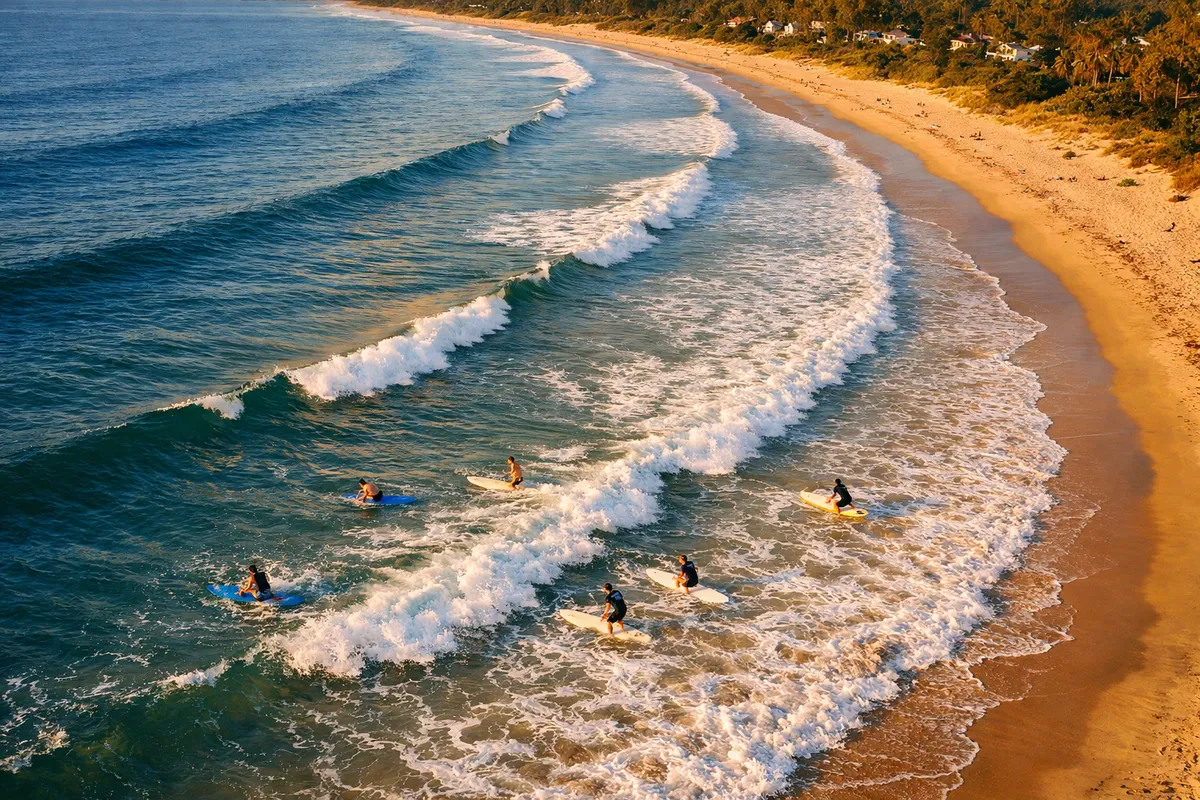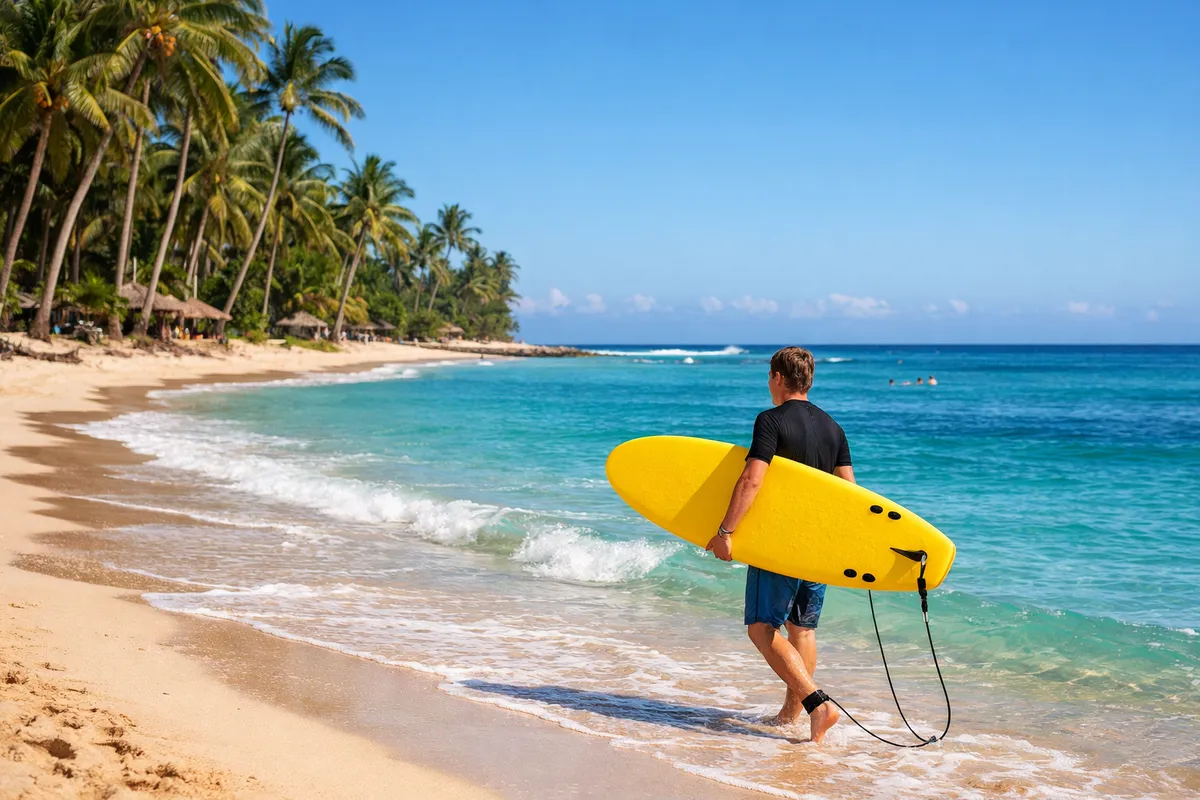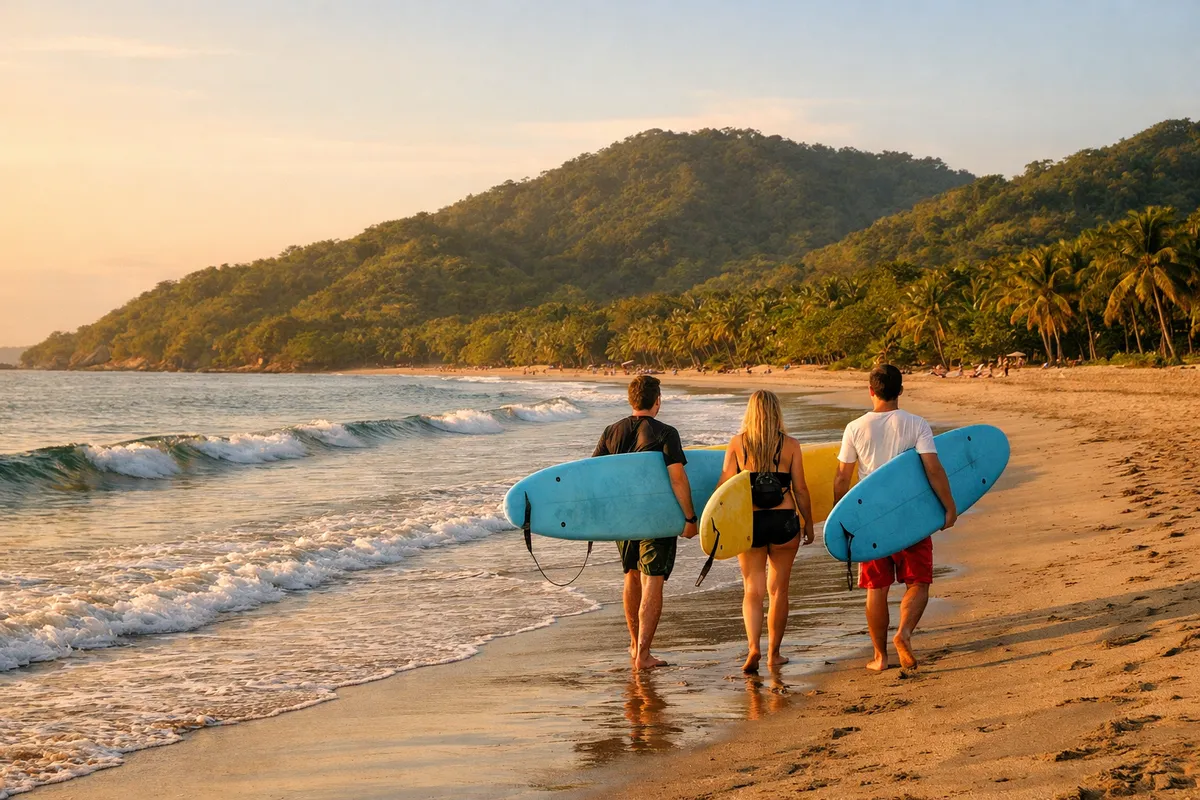
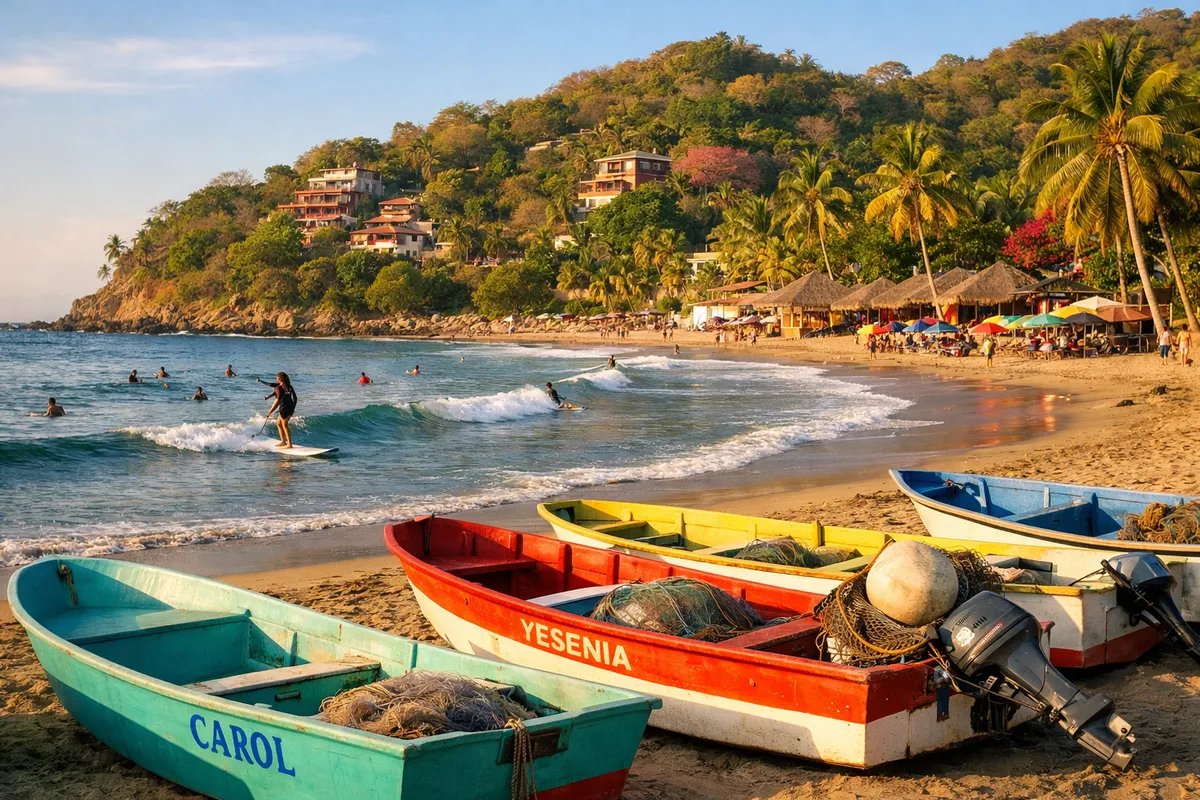
Mexico has more Pacific coastline than any country in the Americas except Chile. It has warm water, consistent swell, cheap food, and a surf culture that ranges from the mellow longboard scene of Sayulita to the terrifying barrels of Puerto Escondido. For beginners, the accessible Pacific coast towns — Sayulita, Punta de Mita, and parts of Baja — offer some of the easiest warm-water learning in the Western Hemisphere.
Why Mexico works for beginners
- Warm water year-round. 24–30°C on the Pacific coast. No wetsuit south of Baja.
- Affordable. Lessons $25–50, meals $3–8, accommodation from $20/night.
- Direct flights from the US and Canada. Puerto Vallarta is a 3-hour flight from LA, 5 hours from New York.
- Excellent beginner beaches. Sayulita, Punta de Mita, La Lancha — gentle, sandy, and school-lined.
- Food. Mexico. Tacos. Need we say more.
When to go
Dry season (November–April)
The best time for most visitors. Sunshine, offshore winds on the Pacific coast, consistent north swells. Tourist crowds peak December–January and during Semana Santa (Easter week).
Best beginner months: November, February, March.
Rainy season (May–October)
Afternoon rain showers, bigger south swells, fewer tourists, lower prices. The beginner beaches stay manageable. Hurricane season (August–October) can bring unpredictable conditions.
Best beginner months in rainy season: May, June.
Where to go
Sayulita
The quintessential Mexican surf town. A small, colorful village 45 minutes north of Puerto Vallarta with a gentle right-hander breaking right in the center of town. The wave is perfect for beginners — sandy bottom, waist-high on most days, and slow enough to practice the pop-up without being rushed.
Sayulita has more surf schools per capita than anywhere in Mexico. The town itself is walkable, charming, and has an excellent restaurant scene. It can feel touristy in peak season — for good reason.
Punta de Mita
A more upscale alternative, 30 minutes from Puerto Vallarta. Several sheltered breaks around the point work for beginners on small days. The luxury resorts here offer private surf instruction. More expensive, less crowded, equally beautiful.
San Pancho (San Francisco)
A quieter village between Sayulita and Punta de Mita. The beach break is slightly punchier than Sayulita, better for confident beginners. Fewer schools, more local vibe, less tourist infrastructure.
Puerto Escondido (intermediate+)
Famous for the "Mexican Pipeline" — one of the heaviest beach breaks in the world. The main break (Zicatela) is expert-only. But nearby beaches — La Punta, Carrizalillo, and Playa Manzanillo — have mellow beginner waves. Puerto Escondido is a great surf town with an affordable backpacker scene, but the flagship wave is not for beginners.
Baja California — Todos Santos, Cerritos
Baja's Pacific coast has excellent surf. Cerritos Beach near Todos Santos is the main beginner spot — a wide sandy beach with consistent small waves and several schools. Water is cooler than mainland Mexico (18–24°C) — a spring suit may be needed in winter. The drive from Cabo San Lucas is about an hour.
Costs (2026 estimates)
| Item | Approximate cost |
|---|---|
| Hostel per night | $15–35 |
| Mid-range hotel per night | $50–120 |
| Group surf lesson | $30–50 |
| Private surf lesson | $60–100 |
| Board rental per day | $10–20 |
| Street tacos (3–4) | $2–4 |
| Restaurant meal | $8–18 |
Typical week:
- Budget: $400–650
- Mid-range: $650–1200
- Comfortable: $1200–2000
Food
Mexican food is a strong argument for choosing Mexico over any other surf destination:
- Tacos — al pastor, carnitas, fish, shrimp. $1–2 each from street vendors. The best food you'll eat on any surf trip.
- Ceviche — fresh fish in lime and chili. Perfect post-surf lunch.
- Chilaquiles — tortilla chips in salsa with cream and cheese. The ultimate surf breakfast.
- Fresh fruit — mango, papaya, coconut, jicama with chili and lime.
- Mezcal — for the evening. Sipped, not shot.
Safety
- Rip currents. Present at most Pacific beaches. Stay in the designated zone and ask your instructor about conditions.
- Sun. Tropical UV. SPF 50+ reef-safe sunscreen, rash guard, reapply constantly.
- Petty theft. Don't leave valuables on the beach. Use a dry bag or leave things at your accommodation.
- Water quality. Don't drink tap water. Stick to bottled or purified ("agua purificada"). Most restaurants use purified water and ice.
- Road safety. If renting a car, drive carefully — livestock, speed bumps (topes), and unpaved roads are common outside towns.
Getting there
Fly into Puerto Vallarta (PVR) for Sayulita / Punta de Mita (45 min–1 hr by car), Huatulco (HUX) or Puerto Escondido (PXM) for Oaxaca coast, or San José del Cabo (SJD) for Baja.
Puerto Vallarta has the most direct flights from the US and Canada. From the airport, a taxi or shuttle to Sayulita costs $30–50.
Language
Spanish is the primary language. English is spoken at most surf schools and tourist businesses in Sayulita and Punta de Mita. In smaller towns, basic Spanish helps enormously. Key phrases: "¿Hay olas hoy?" (are there waves today?), "¿Cuánto cuesta?" (how much?), "Gracias" (thank you).
Where to find schools
On Surfyx, find Sayulita, Puerto Escondido, and more on the spot map with live conditions. Every listed surf school includes verified reviews and upfront pricing.