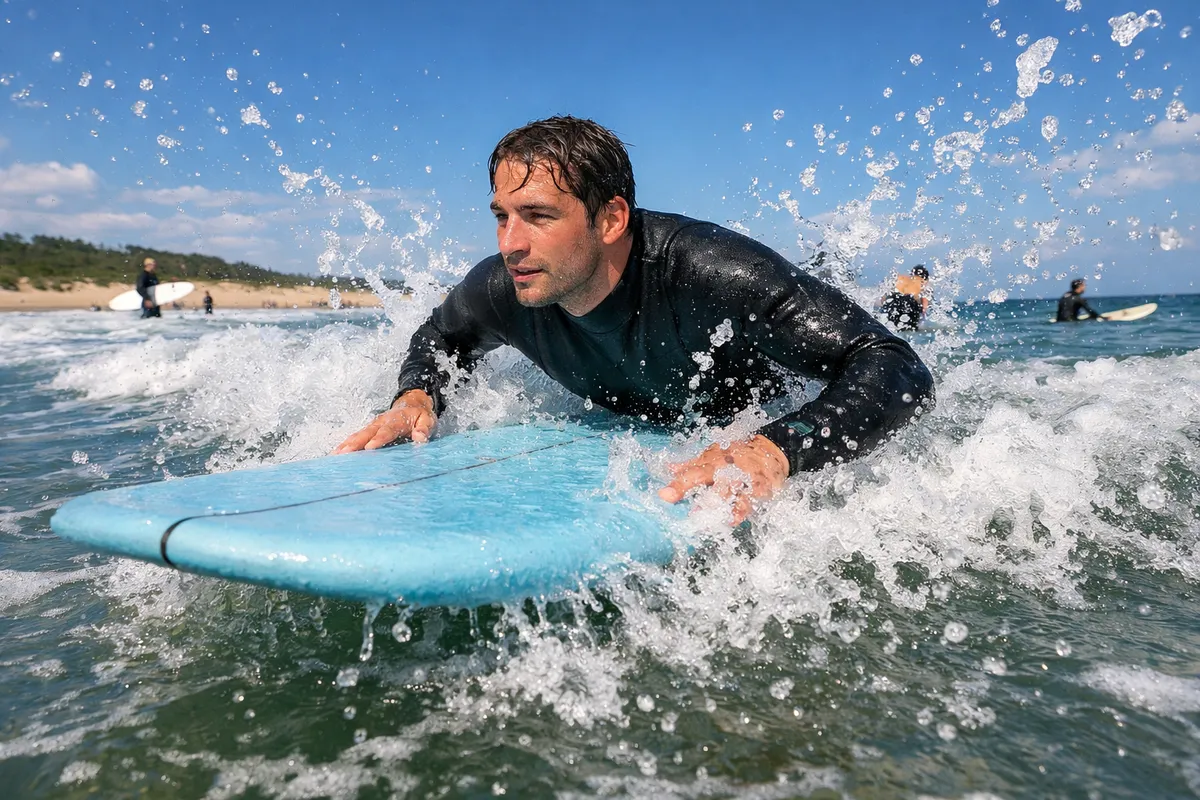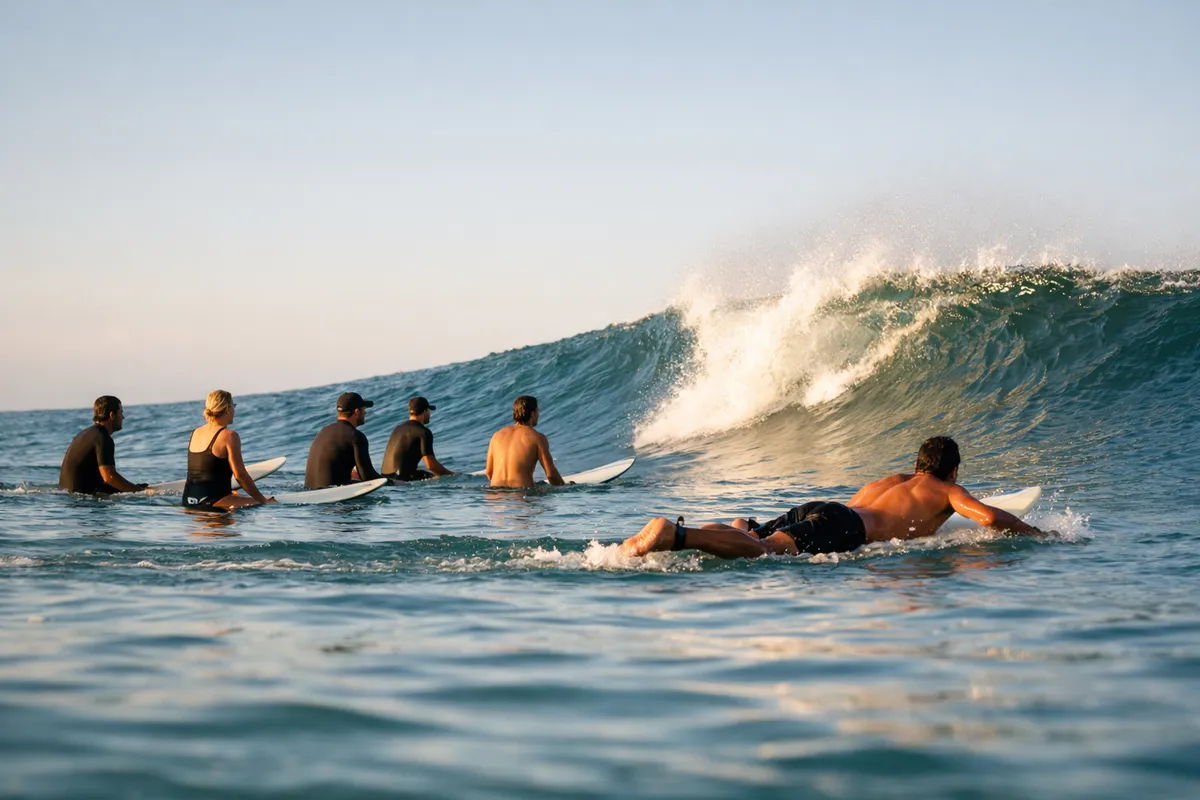

Surfing is not a pool sport. The ocean is a dynamic, powerful environment that changes every hour. Rip currents shift, tides move, swells arrive, and what was a gentle beach at 8 AM can be a dangerous shore break by noon.
None of this should scare you away from surfing — millions of people surf safely every day. But the ones who stay safe are the ones who understand what the ocean is doing. Here's what every beginner needs to know.
Rip currents
Rip currents are the number one ocean hazard for swimmers and surfers. A rip is a narrow channel of water flowing from shore out to sea, created when waves push water onto the beach and it needs a path back out.
How to spot them
- Darker water — rips are deeper channels, so they look darker than the surrounding whitewater.
- Calmer surface — the rip channel has less breaking whitewater than the areas on either side.
- Foam or debris moving seaward — if you see foam, seaweed, or sand moving away from the beach, that's a rip.
- A gap in the breaking waves — waves break on the sandbars on either side of the rip but not in the channel itself.
What to do if caught in one
- Don't panic. A rip won't pull you underwater. It pulls you out, not down.
- Don't fight it. Swimming directly against a rip exhausts even strong swimmers. You can't out-swim it.
- Swim parallel to the beach. Rips are narrow (10–30 meters wide). Swim sideways until you're out of the current, then swim back to shore.
- If you can't escape, float. Rips lose their power past the breaking zone. Let it carry you out, conserve energy, then swim back in at an angle.
- Signal for help if you're in trouble. Raise one arm. Lifeguards are trained to see this.
Using rips intentionally
Experienced surfers use rips as a free ride to the lineup — the current carries you out without paddling. Only do this if your instructor has shown you the rip, you know where it exits, and you're confident escaping it laterally.
Shore break
Shore break is when waves break directly on the sand in very shallow water. It can be surprisingly powerful — even a 2-foot shore break can slam you into the sand hard enough to injure your neck or back.
- Avoid diving headfirst into shore break. Always enter feet-first in shallow water.
- Protect your head. When you fall in shallow water, cover your head with your arms. Your board can bounce off the bottom and hit you.
- Wade through it carefully. Walk out past the shore break zone before lying on your board and paddling.
Hold-downs and wipeouts
When a wave breaks on you, it can push you underwater and hold you there. At beginner beaches, these hold-downs rarely last more than 5–10 seconds. But they feel much longer when you're underwater.
- Stay calm. The turbulence passes quickly. Don't burn oxygen by fighting.
- Protect your head. Wrap your arms over your head as you surface — your board may be bouncing around above you.
- Orient yourself. After a wipeout, figure out which way is up (follow the bubbles), surface, take a breath, and look for the next wave.
- Get your board. Your leash keeps it nearby. Pull it toward you before the next wave arrives.
Marine life
Most ocean creatures are harmless and want nothing to do with you. But a few are worth knowing about:
Jellyfish
Common in warm water and some temperate zones (bluebottles in Australia, Portuguese man-o'-war in the Atlantic). Stings range from mildly painful to serious.
- Ask locals about jellyfish before entering the water.
- If stung: rinse with seawater (not freshwater), remove tentacles with tweezers, and apply heat or vinegar depending on species. Seek medical help for severe reactions.
Sea urchins
Found on rocky bottoms and reef. Step on one and the spines embed in your foot. Wear booties if surfing near reef.
Stingrays
Lie on sandy bottoms in warm, shallow water. Shuffle your feet when walking in (the "stingray shuffle") to scare them away before you step on one.
Sharks
Shark attacks on surfers are extremely rare — you're statistically more likely to be struck by lightning. Reduce risk by:
- Not surfing near river mouths or murky water
- Not surfing at dawn or dusk (feeding times)
- Staying in groups
- Surfing at patrolled beaches
Sun exposure
UV radiation on the water is intense — the surface reflects sunlight back at you, effectively doubling your exposure. Sunburn is the most common surf-related injury.
- SPF 50+ reef-safe sunscreen on all exposed skin, applied 20 minutes before paddling out.
- Rash guard or UV shirt — more reliable than sunscreen for torso and arms.
- Reapply after every session, even if it claims to be waterproof.
- Zinc for face and nose — the thicker white mineral blocks are more effective in the water than clear chemical sunscreens.
Fatigue
More surfers get into trouble from exhaustion than from any single hazard. Paddling is tiring, especially for beginners whose technique is inefficient. Signs of fatigue:
- Breathing hard, can't catch your breath between waves
- Arms feel heavy, paddling stroke becomes weak
- Difficulty holding onto your board
If you're fatigued: stop surfing. Ride a wave in, or paddle to the side and let the whitewater push you to shore. Don't wait until you can't paddle at all — by then it's an emergency.
To prevent fatigue: take breaks, don't stay out longer than your fitness allows, and end the session before you're exhausted.
Before every session
Build these habits:
- Watch the ocean for 5 minutes before entering. Look for rip currents, note where waves are breaking, identify any hazards.
- Check with lifeguards. Ask about conditions, hazards, and where the safe zone is.
- Tell someone you're going in. Even if it's just a text to a friend: "Surfing at Baleal, back by noon."
- Know your limits. If the waves look bigger than what you can handle, don't go. There's always tomorrow.