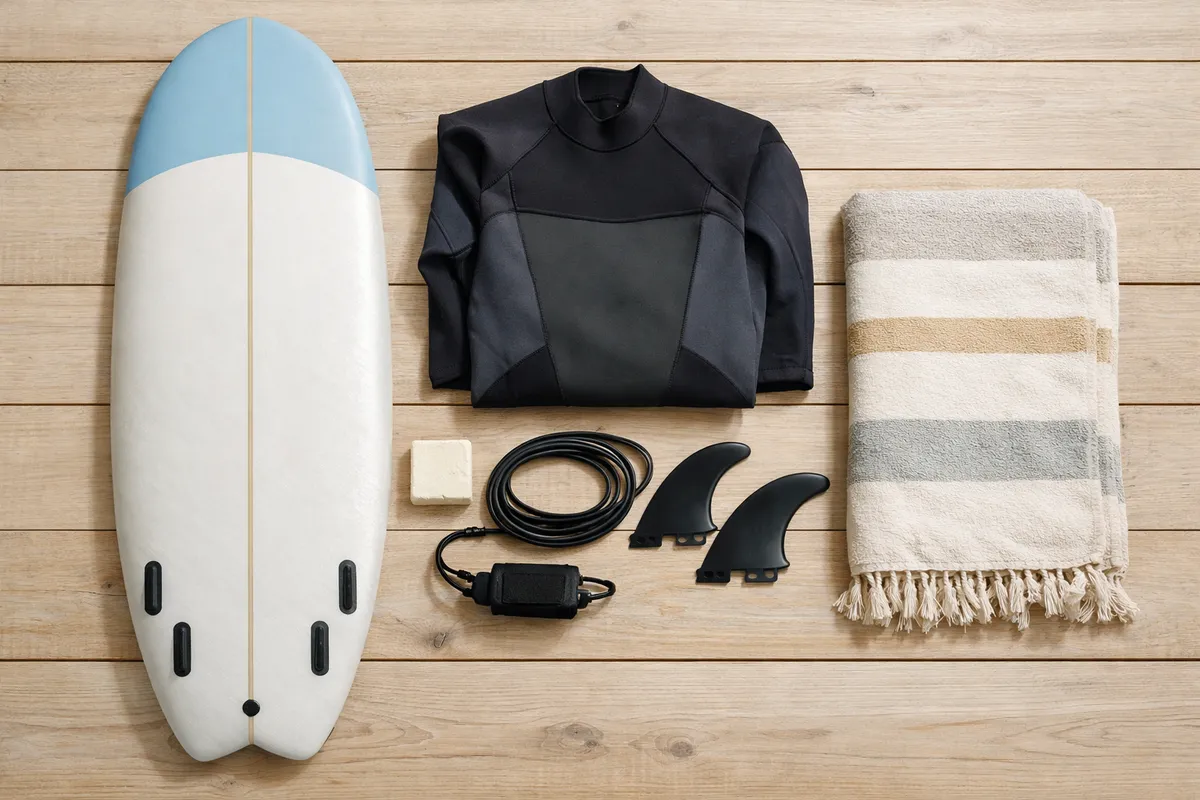
Your surfboard is the most expensive piece of equipment you'll own as a surfer. A decent beginner board costs $300–600. A shaped shortboard or mid-length can cost $700–1200. With basic care, that board lasts 3–10 years. Without care, it yellows, absorbs water, and dies within a season.
The good news: board care is simple. Five habits, each taking less than a minute.
Habit 1: Rinse after every session
Salt water is corrosive. Left on the board, it degrades the fiberglass, rusts metal components (fin screws, leash plugs), and dries into a gritty film that wears down the surface.
After every session: rinse the board with fresh water. A quick shower or a bucket is enough. Pay attention to the fin boxes, leash plug, and any existing dings where salt can penetrate.
If you're at a beach with no rinse station, at least wipe the board down with a wet towel when you get home.
Habit 2: Store out of direct sun
UV radiation is a surfboard's worst enemy (after impact). Extended sun exposure causes:
- Yellowing — the resin turns yellow/brown. Cosmetic, but ugly.
- Delamination — the fiberglass separates from the foam core. The board develops bubbles and soft spots. This is structural damage.
- Wax melting — all your carefully applied wax turns into a flat, smooth mess.
Never leave your board in the sun longer than the session. In the car, in the shade, in a board bag, under a towel — anything is better than baking on the sand.
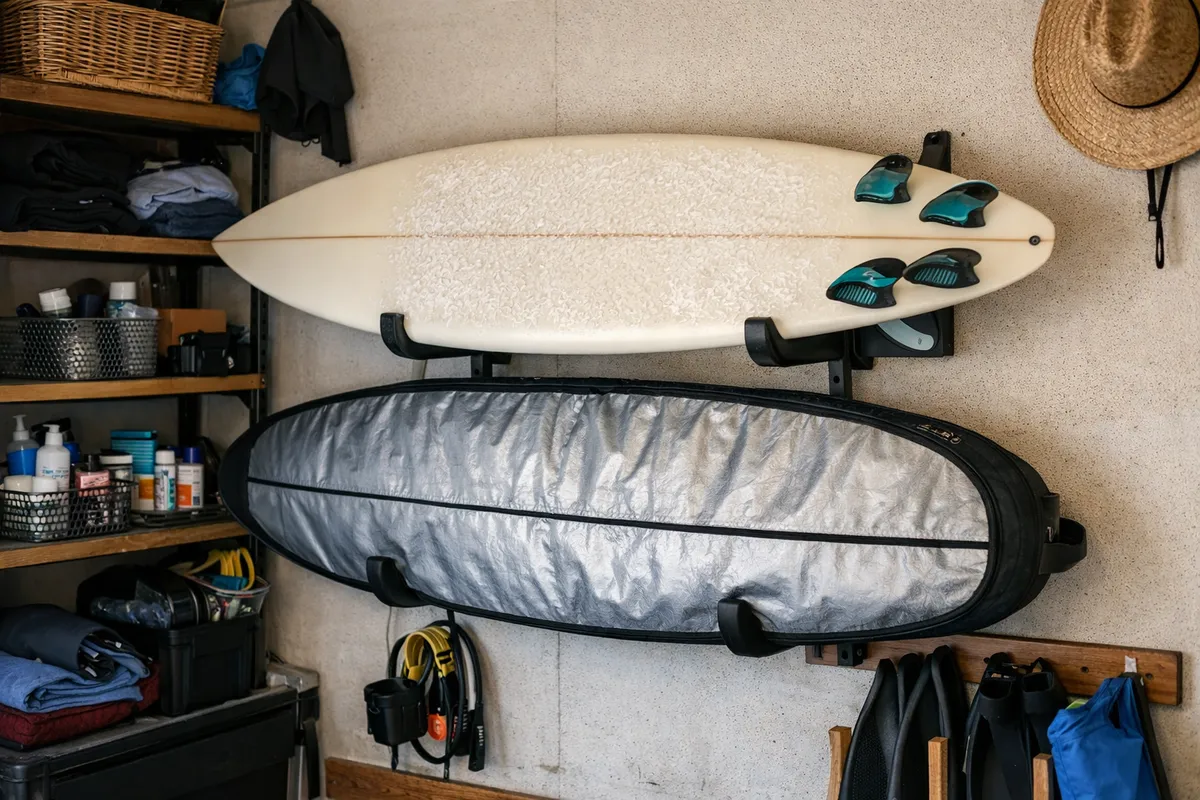
At home, store boards indoors or in a shaded area. A garage, a board rack in a covered space, or a board bag in a closet all work. Never store a board leaning against a hot exterior wall.
Habit 3: Use a board bag for transport
The most common dings happen in transit — dropping the board in the parking lot, bumping it against the car door, stacking it against another board in the car.
- Day bag ($40–80): A thin padded sleeve for daily transport. Protects against bumps and sun during the drive.
- Travel bag ($120–200): Thick padding for air travel and road trips. Essential for flying.
If you don't have a bag, use a towel between boards when stacking in the car, and be mindful of the tail and nose hitting hard surfaces.
Habit 4: Fix dings immediately
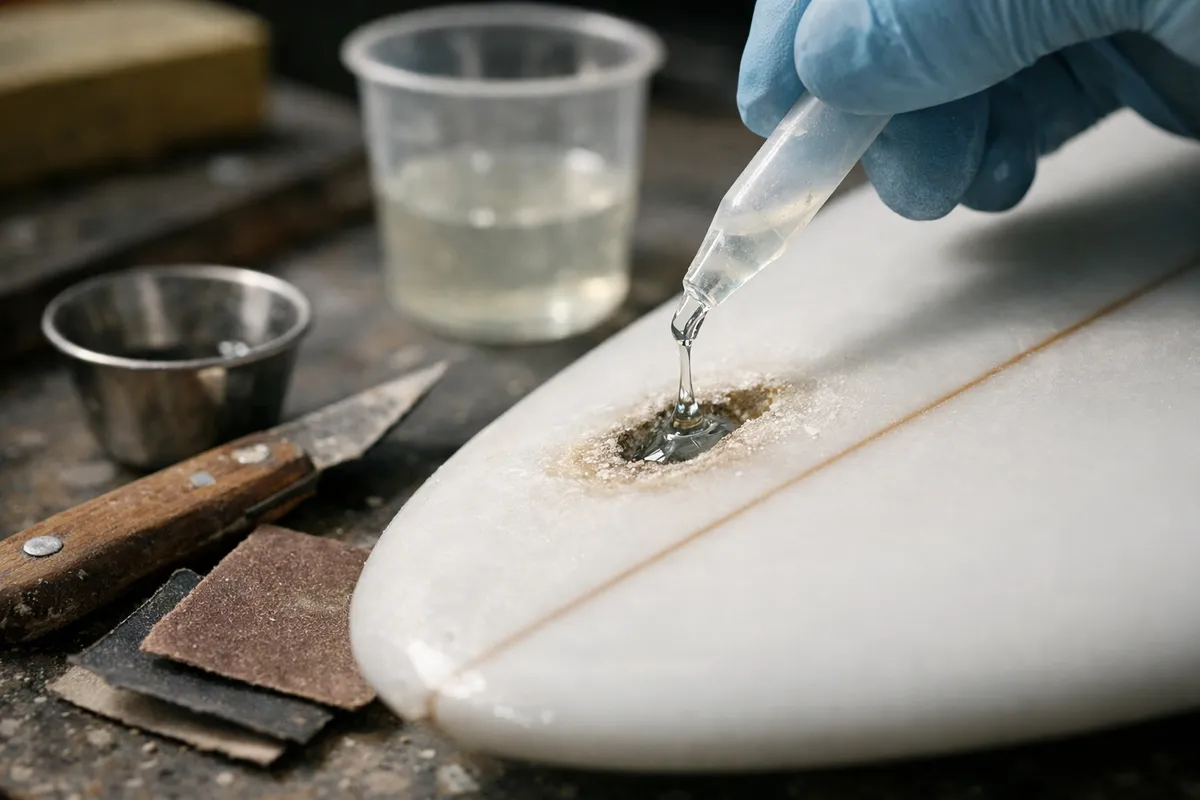
Every open ding — no matter how small — is a path for water into the foam core. Water-logged foam makes the board heavy, weakens the structure, and eventually causes delamination.
Keep a tube of Solarez (UV-cure resin, $8–12) in your car. If you notice a ding after a session, dry the area and seal it within the hour. The permanent repair can happen later — the priority is preventing water entry.
Read our full ding repair guide for step-by-step instructions.
Habit 5: Maintain the wax
Wax maintenance is quick:
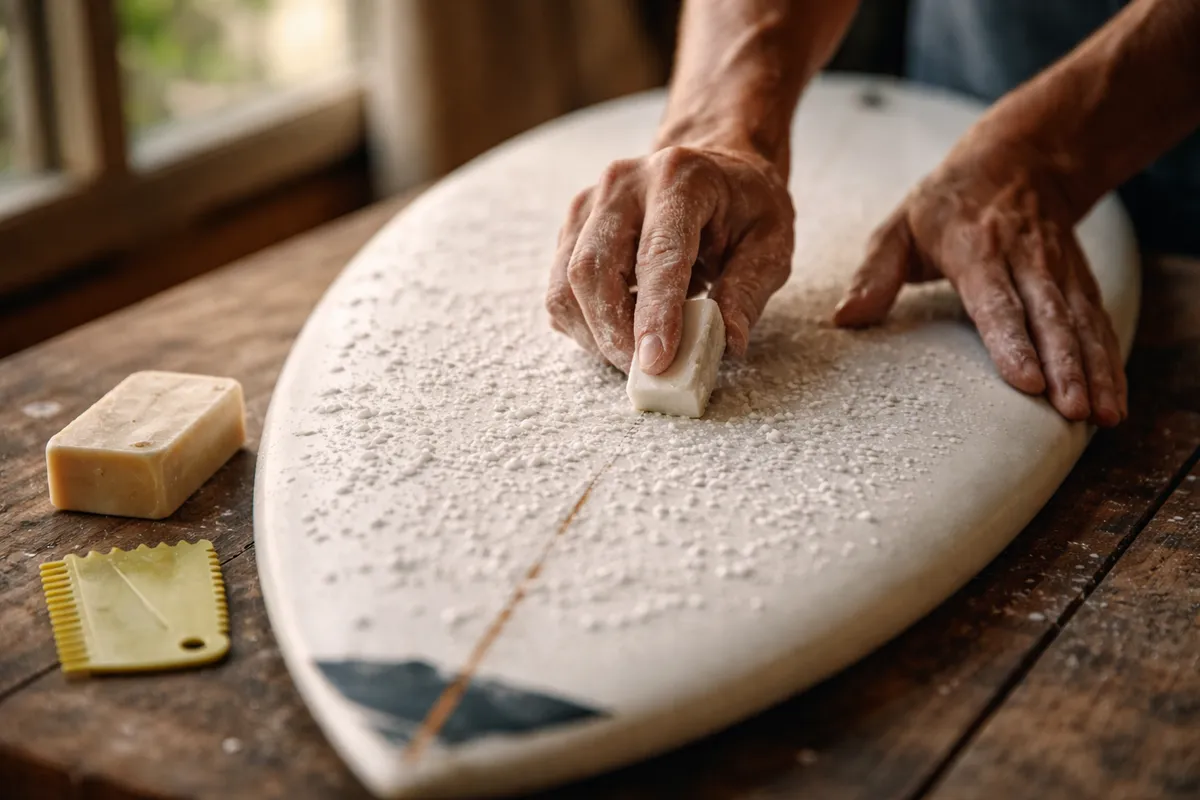
- Before each session: Run a wax comb over the deck to restore texture. Add a few strokes of fresh top coat if needed.
- Every 2–3 months: Strip all wax, clean the deck, and reapply from scratch. Old wax becomes smooth and dirty.
- When changing water temperature: Strip and re-wax with the correct temperature grade.
Read our full waxing guide.
Fin care
- Remove fins for storage and transport. Fins sticking out are fin boxes waiting to break. Pop them out, store them in a small bag.
- Check fin screws regularly. Loose screws mean loose fins — they'll wobble or fall out mid-session. Tighten with a fin key before every session.
- Rinse fin boxes. Sand and salt build up inside. A quick rinse after each session prevents corrosion and stuck screws.
Leash care
- Rinse after every session. The velcro, swivel, and cord all degrade with salt buildup.
- Check for wear. Look for fraying near the rail saver and the ankle strap connection. A leash that snaps in big surf is a safety hazard.
- Replace every 1–2 years with regular use, or immediately if you notice any damage.
- Don't store the leash wrapped tightly around the tail. This creates a permanent curl in the cord. Instead, loosely coil it or hang it straight.
Wetsuit care (bonus)
Since you're rinsing the board anyway:
- Rinse your wetsuit with fresh water after every session
- Hang it inside-out in the shade to dry (not direct sun — UV degrades neoprene)
- Use wetsuit shampoo once a month to remove salt and bacteria
- Never hang a wetsuit by the shoulders on a thin hanger — it stretches. Use a wide hanger or drape over a rail
The 60-second post-session routine
- Rinse board with fresh water (15 seconds)
- Check for new dings (10 seconds)
- Seal any open dings with Solarez (if needed)
- Put board in bag or shade (10 seconds)
- Rinse wetsuit and leash (15 seconds)
One minute. That's what separates a board that lasts 5 years from one that dies in 6 months.