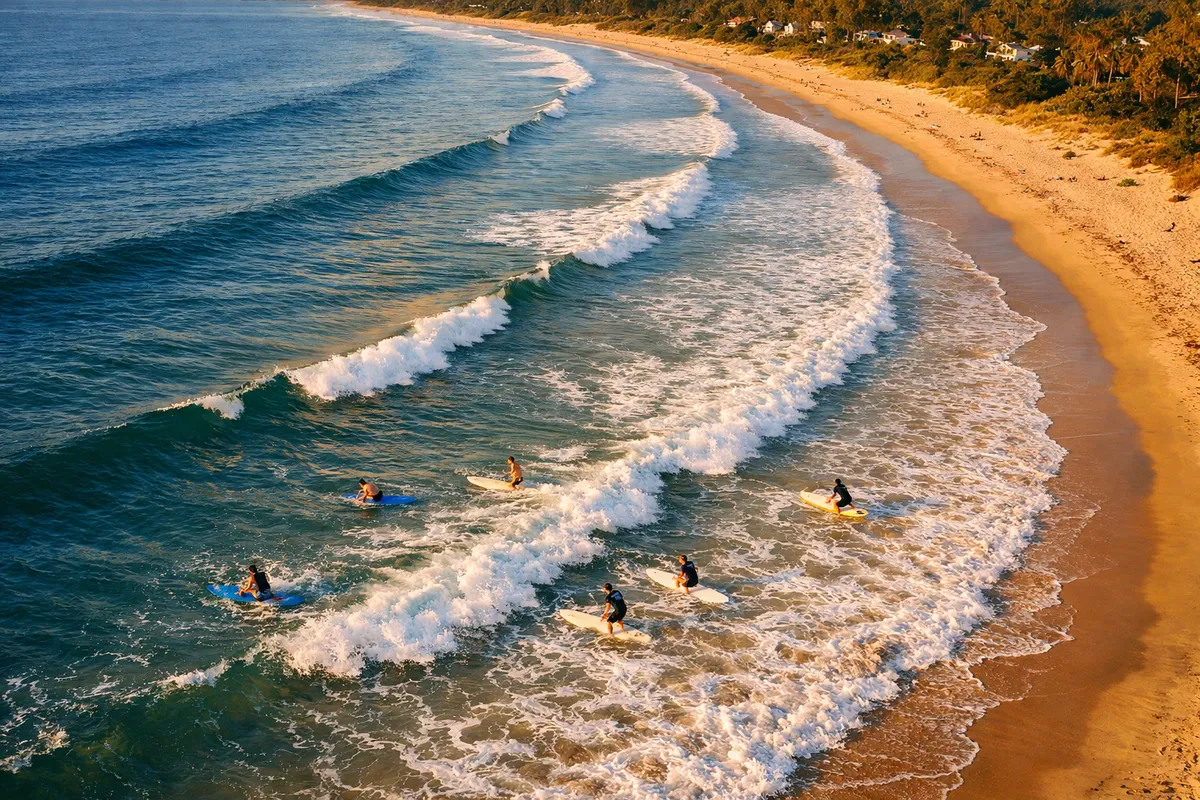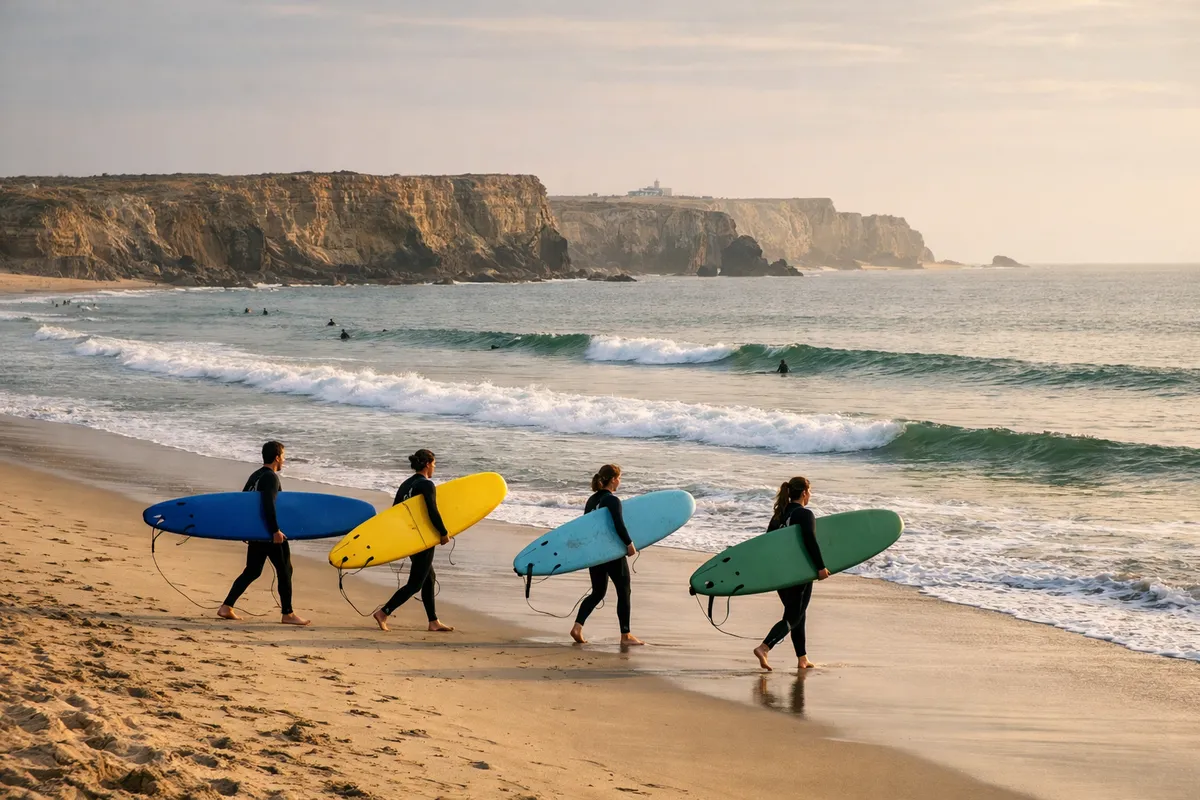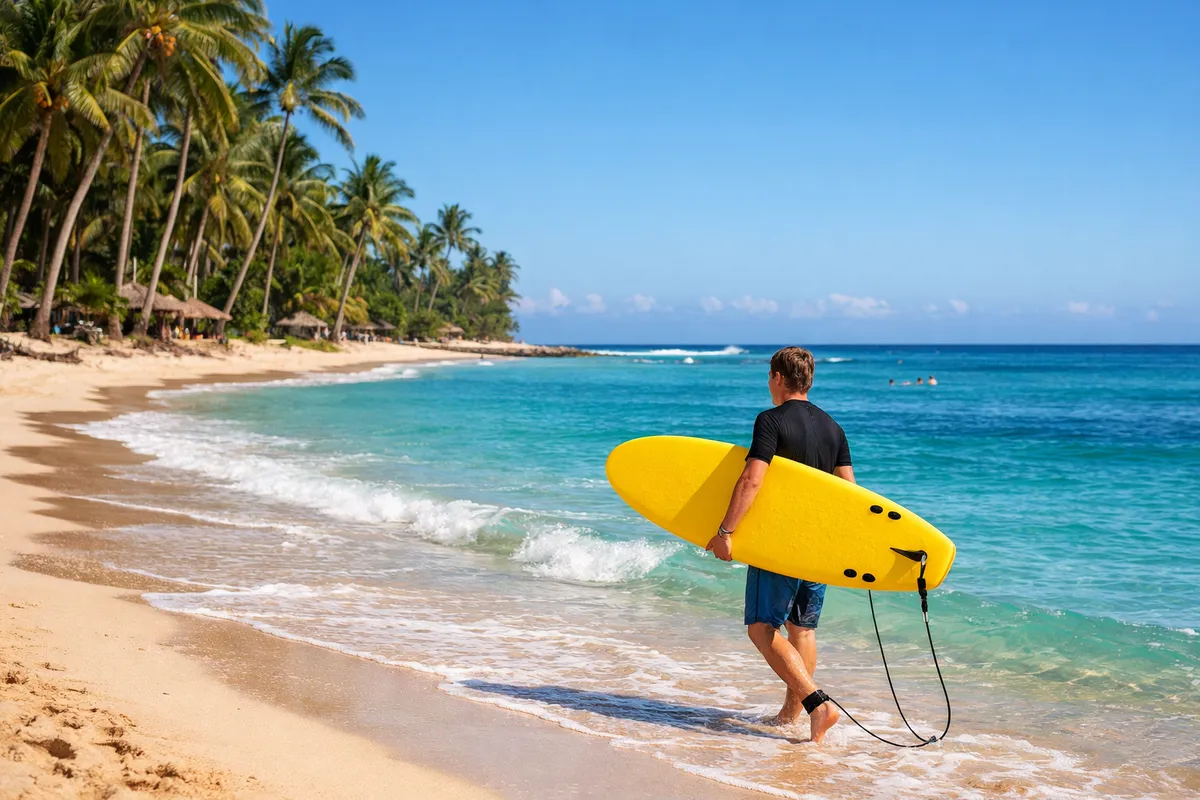
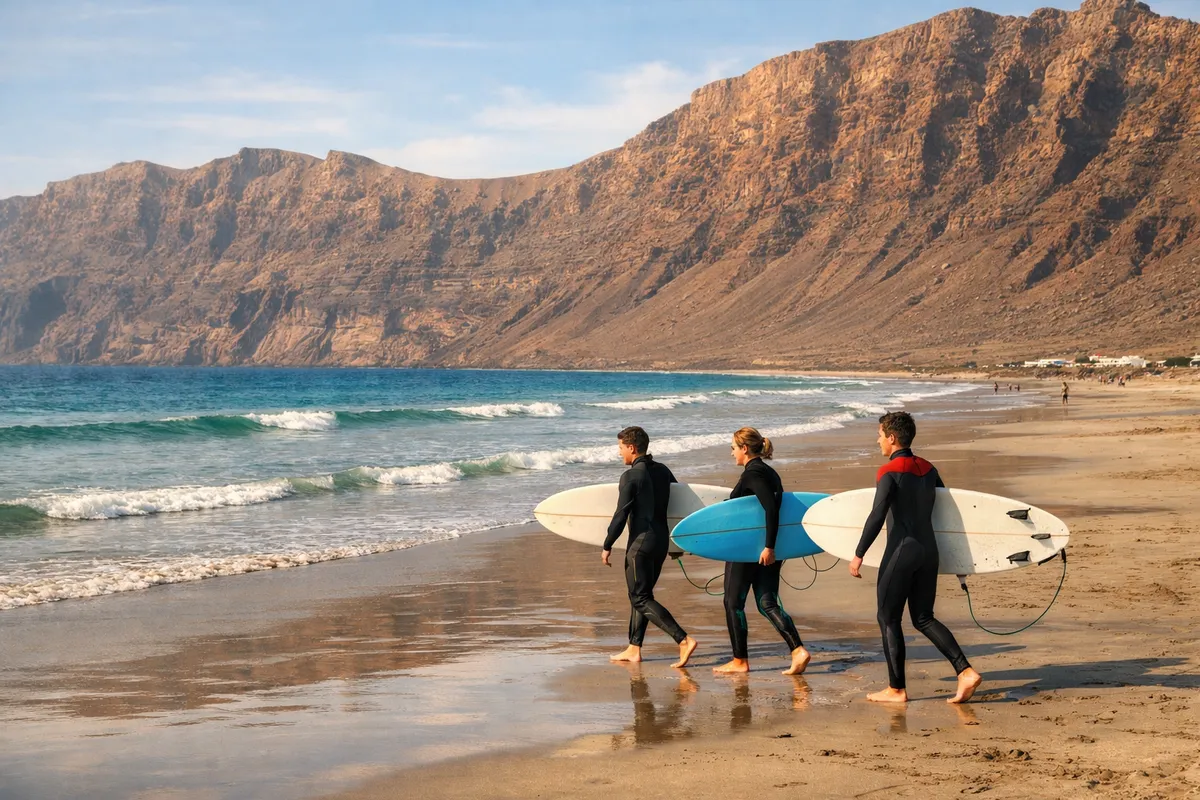
The Canary Islands sit off the northwest coast of Africa — technically part of Spain, geographically closer to Morocco. They catch every Atlantic swell that heads for Europe, bask in year-round sunshine, and have water temperatures that never drop below 18°C. For European surfers looking for consistent waves without a long-haul flight, the Canaries are the answer.
Why the Canaries work for beginners
- Year-round surf. The islands catch North Atlantic swell in winter and trade-wind swell in summer. Flat days are rare.
- Warm climate. Air temperatures 20–28°C year-round. Water 18–23°C. A 3/2 mm wetsuit in winter, boardshorts or a spring suit in summer.
- Short flights from Europe. 4 hours from London, 3 from Madrid, 2.5 from Lisbon. Budget airlines serve all islands.
- EU infrastructure. Spanish healthcare, European standards, no visa issues for EU citizens.
- Volcanic landscapes. The islands are dramatic — black sand beaches, lunar landscapes, and dramatic cliffs make the off-water experience unique.
When to go
Winter (October–March)
The main surf season. North Atlantic storms send consistent swell to the north-facing coasts. Bigger, more powerful waves — but the beginner beaches stay manageable because they're sheltered. This is when most surf camps operate at full capacity.
Summer (April–September)
Smaller, cleaner waves from trade-wind swells. Warmer water, warmer air, fewer surfers. Many spots that are too big in winter become perfect for beginners in summer. The tradeoff: some exposed beaches can be flat.
Best beginner months: October, November, April, May. Shoulder seasons with moderate swell, warm weather, and fewer tourists than peak winter.
Which island?
Fuerteventura (best for beginners)
The most surf-focused Canary Island. Fuerteventura has the most consistent waves, the most surf schools, and the widest variety of breaks.
- Corralejo (north): The main surf hub. Sandy beaches with multiple breaks. Flag Beach and the Grandes Playas are the beginner zones — wide, sandy, and exposed to north swell that arrives broken and manageable.
- Cotillo (northwest): A quieter village with a sheltered lagoon (perfect for absolute beginners) and a beach break that works on moderate swell.
- Costa Calma (south): Warmer, drier, more sheltered. Works when the north coast is too big.
Lanzarote
Fewer breaks than Fuerteventura but one standout beginner beach: Famara. A 6 km crescent of sand at the base of dramatic volcanic cliffs. Consistent whitewater, multiple schools, and one of the most visually striking surf beaches in Europe.
Famara works on almost any swell direction and has a large tidal range — check the tide before going out. Mid tide is usually best.
Tenerife
The biggest and most populated island. Tenerife has good surf on the north coast (Las Americas, Playa de las Canteras in nearby Gran Canaria) but it's more of an all-round holiday destination than a pure surf island. Fewer schools than Fuerteventura or Lanzarote.
Gran Canaria
Las Palmas de Gran Canaria has Playa de las Canteras — a city beach with a consistent reef-protected break. La Cicer section is the beginner zone. Urban surfing at its best — surf in the morning, explore the city in the afternoon.
Costs (2026 estimates)
| Item | Approximate cost |
|---|---|
| Surf camp per week (mid-range) | €400–800 |
| Group surf lesson | €35–55 |
| Private surf lesson | €60–100 |
| Board + wetsuit rental per day | €15–25 |
| Apartment per night | €40–100 |
| Meal at a local restaurant | €8–15 |
| Café con leche | €1.50–2.50 |
Typical week:
- Budget: €400–650
- Mid-range: €650–1100
- Comfortable: €1100–1800
Slightly more expensive than Morocco, slightly cheaper than mainland Portugal.
Getting there
Fly into Fuerteventura (FUE), Lanzarote (ACE), Tenerife South (TFS), or Gran Canaria (LPA). Budget airlines (Ryanair, easyJet, Vueling, Jet2) serve all islands from most European cities.
On-island transport: rent a car (€25–40/day). The islands are small — Fuerteventura end to end is 2 hours. Most surf spots are within 30 minutes of the main towns.
Food
- Papas arrugadas con mojo — wrinkled potatoes with red and green sauce. The iconic Canarian dish.
- Fresh fish — grilled or fried, served at beachside restaurants. Vieja (parrotfish) is the local specialty.
- Gofio — toasted grain flour, a Canarian staple mixed into soups, desserts, and milk.
- Spanish standards — tortilla española, jamón, café con leche. All excellent and affordable.
What to pack
- 3/2 mm wetsuit (winter) or spring suit / boardshorts (summer)
- Reef-safe sunscreen SPF 50+
- Windbreaker — the trade winds are persistent, especially on Fuerteventura and Lanzarote
- Walking shoes for volcanic hikes
Where to find schools
On Surfyx, find Fuerteventura, Lanzarote, and Gran Canaria on the spot map with live conditions. Every listed surf school includes verified reviews and upfront pricing.