Surfers have a closer relationship with the ocean than almost anyone who doesn't make their living from it. You're in the water multiple times a week, you notice when the water quality changes, you see the plastic washing up on the sand, you feel the temperature shifting year over year. The ocean isn't abstract to you — it's where you spend your best hours.
That relationship comes with responsibility. Here's how to reduce your impact and protect the thing you love.
Sunscreen
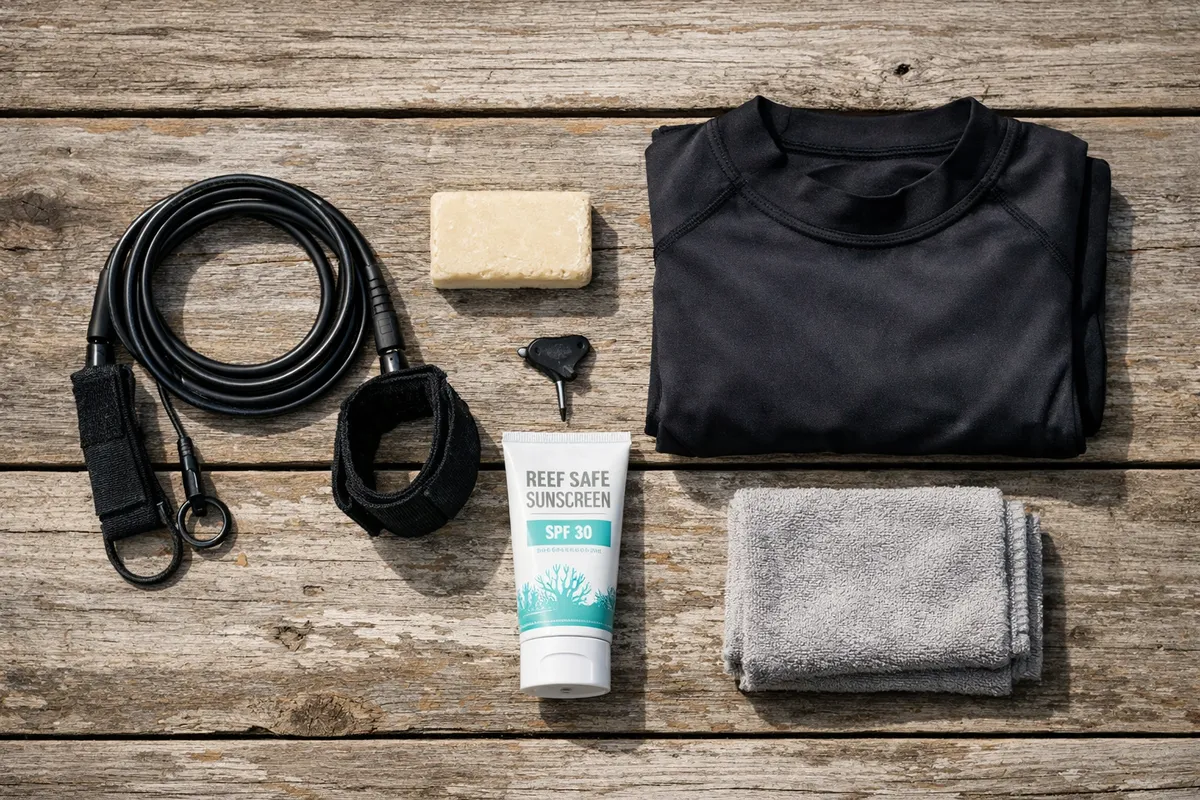
This is the single biggest environmental choice most surfers make, and most get it wrong.
Chemical sunscreens containing oxybenzone and octinoxate damage coral reefs, disrupt marine ecosystems, and persist in the water long after you've left. They're banned in Hawaii, Palau, and parts of the US Virgin Islands for a reason.
- Use mineral (zinc oxide) sunscreen. It sits on the skin's surface instead of being absorbed, and it doesn't harm marine life.
- Look for "reef-safe" or "reef-friendly" labels — but check ingredients. Some brands use the label misleadingly.
- No oxybenzone, no octinoxate, no octocrylene. These are the three worst offenders.
- Good brands: Sun Bum (mineral line), Vertra, Manda, Stream2Sea, Thinksport, All Good.
Mineral sunscreen is slightly thicker and leaves a white cast. That's the tradeoff. Your vanity or the reef — choose.
Wetsuits
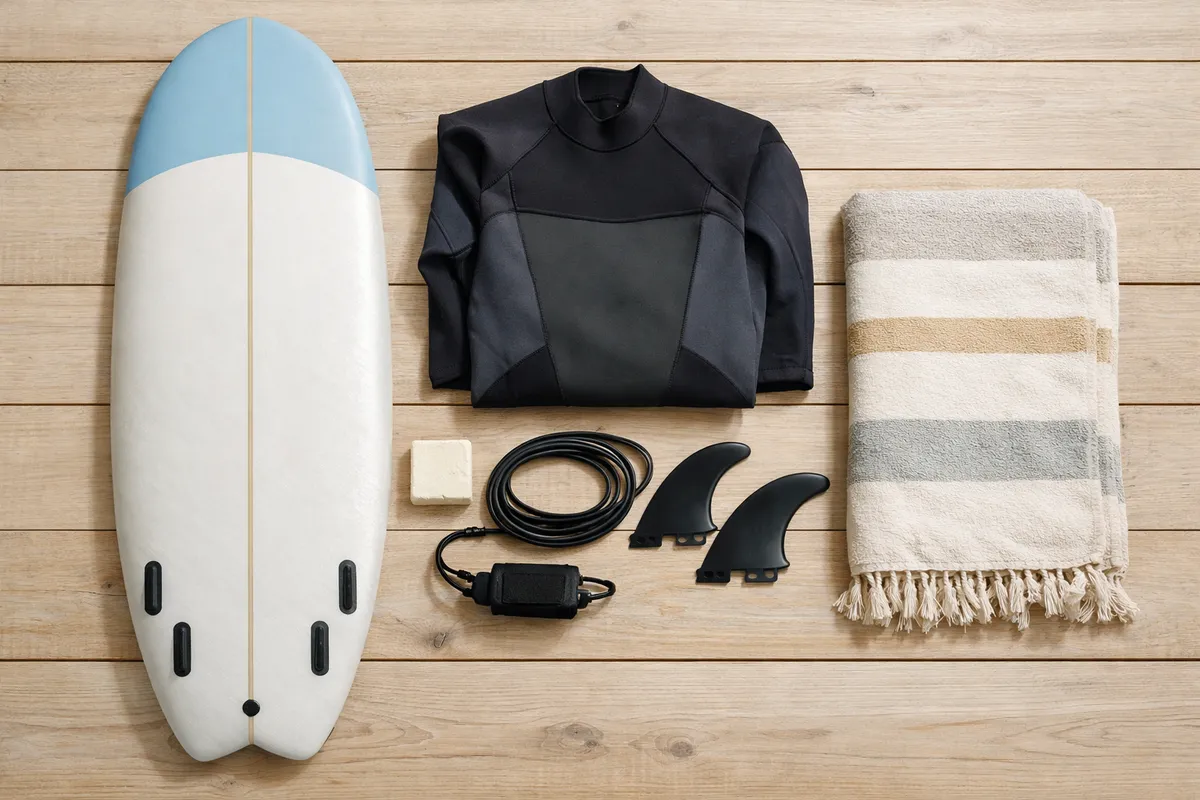
Traditional wetsuits are made from neoprene — a petroleum-based synthetic rubber. The production process is energy-intensive and the material doesn't biodegrade.
Better options exist:
- Limestone neoprene — made from calcium carbonate instead of petroleum. Lower carbon footprint. Used by Patagonia, Vissla, and others.
- Yulex (natural rubber) — Patagonia's plant-based alternative to neoprene. The most sustainable option currently available. More expensive.
- Recycled neoprene — some brands use recycled material. Better than virgin neoprene.
When your wetsuit wears out, don't throw it away. Some brands (Patagonia, O'Neill) have recycling programs. Local charities and surf schools often accept used wetsuits. At minimum, repurpose the neoprene — it makes excellent koozies, laptop sleeves, and dog toys.
Surfboards
Standard polyurethane (PU) surfboards use polyurethane foam, polyester resin, and fiberglass — all petroleum-derived, all non-recyclable, all toxic to manufacture.
Alternatives:
- EPS/epoxy construction — lower VOC emissions during manufacturing. Not perfect, but better.
- Bio-resin boards — resin made partially from plant-based materials. Several shapers offer this.
- Wooden boards — the most sustainable option. Expensive and heavy, but some shapers create beautiful, functional hollow wooden boards.
- Buy used. The most environmentally friendly board is one that already exists. The used surfboard market is excellent.
When a board reaches end of life, don't landfill it. Some recycling programs exist (check Sustainable Surf's ECOBOARD program). At minimum, remove the fins and leash plug for reuse.
Wax
Standard surf wax is paraffin-based — a petroleum product. Eco-alternatives:
- Matunas — organic, beeswax-based
- Greenfix — natural ingredients, no petrochemicals
- Bubble Gum — some lines are eco-formulated
The wax you scrape off your board shouldn't go in the ocean. Scrape it into a container, let it harden, and bin it.
Beach behavior
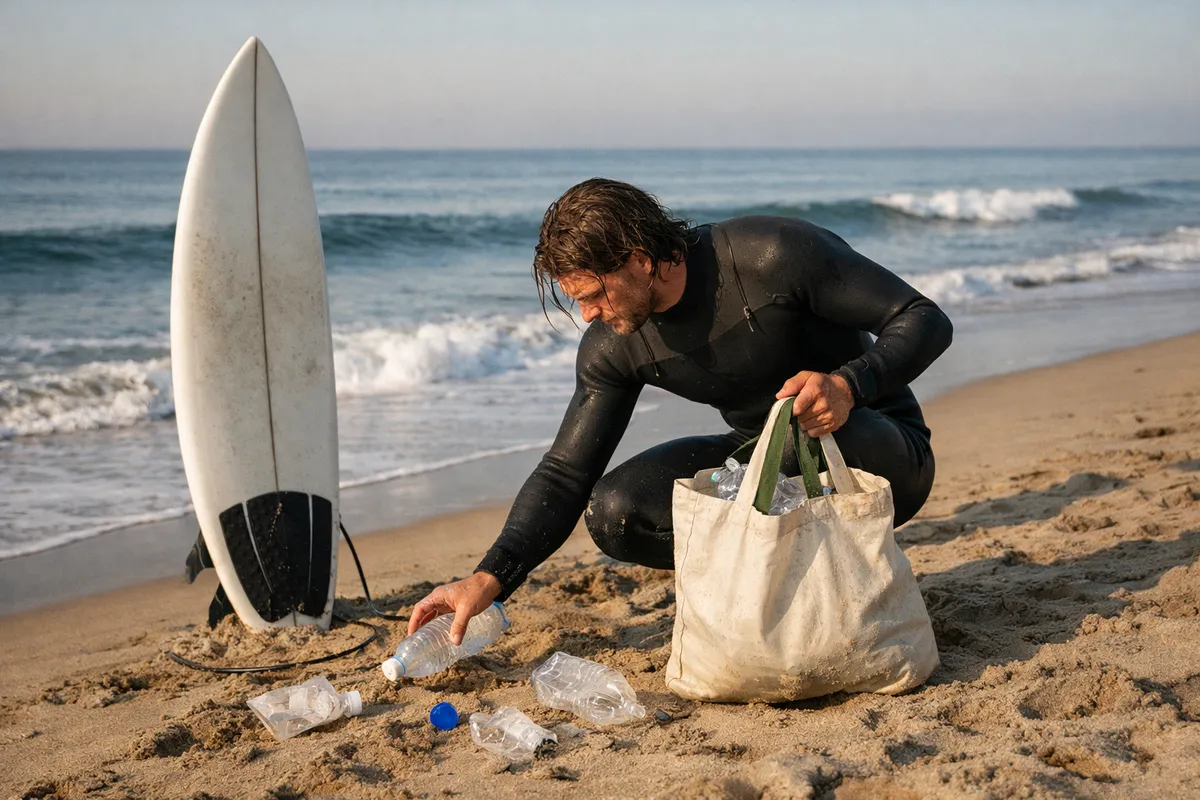
- Pick up trash. Not just yours — any trash you see. Carry a small bag to the beach. The "one piece of trash per session" rule is a good minimum.
- Join beach cleanups. Surfrider Foundation, Surfers Against Sewage, and local groups organize regular cleanups. Find one at your beach.
- Don't litter. This seems obvious. It's not universal. Wax wrappers, broken leash strings, and single-use plastic water bottles are common surf litter.
- Respect dunes and vegetation. Dune systems protect coastlines from erosion. Stay on paths and boardwalks where they exist.
Travel
Surf travel has a carbon footprint. You can't eliminate it (you need to fly to Bali), but you can reduce it:
- Fly direct. Layovers increase emissions significantly.
- Stay longer. One two-week trip is better than two one-week trips.
- Offset. Carbon offset programs aren't perfect, but they're better than nothing. Some airlines offer it at checkout.
- Support local. Eat at local restaurants, book local instructors, buy from local shops. Your tourism dollars should benefit the community, not international chains.
Organizations to support
- Surfrider Foundation — ocean protection, water quality testing, policy advocacy. Chapters worldwide.
- Surfers Against Sewage — UK-based, expanding globally. Beach cleanups, water quality campaigns, plastic reduction.
- Sustainable Surf — ECOBOARD program certifying sustainable surfboard manufacturing.
- Save The Waves Coalition — protecting surf ecosystems through World Surfing Reserves.
- 5 Gyres — research and advocacy on ocean plastic pollution.
The surfer's responsibility
Surfers are the ocean's constituency. We're the people who notice when the water quality drops, when the reef bleaches, when the beach erodes. That proximity creates a responsibility — not to be perfect environmentalists (nobody is), but to be conscious ones.
Every reef-safe sunscreen choice, every beach cleanup session, every used board purchase adds up. The ocean has given you something valuable. Give some of it back.