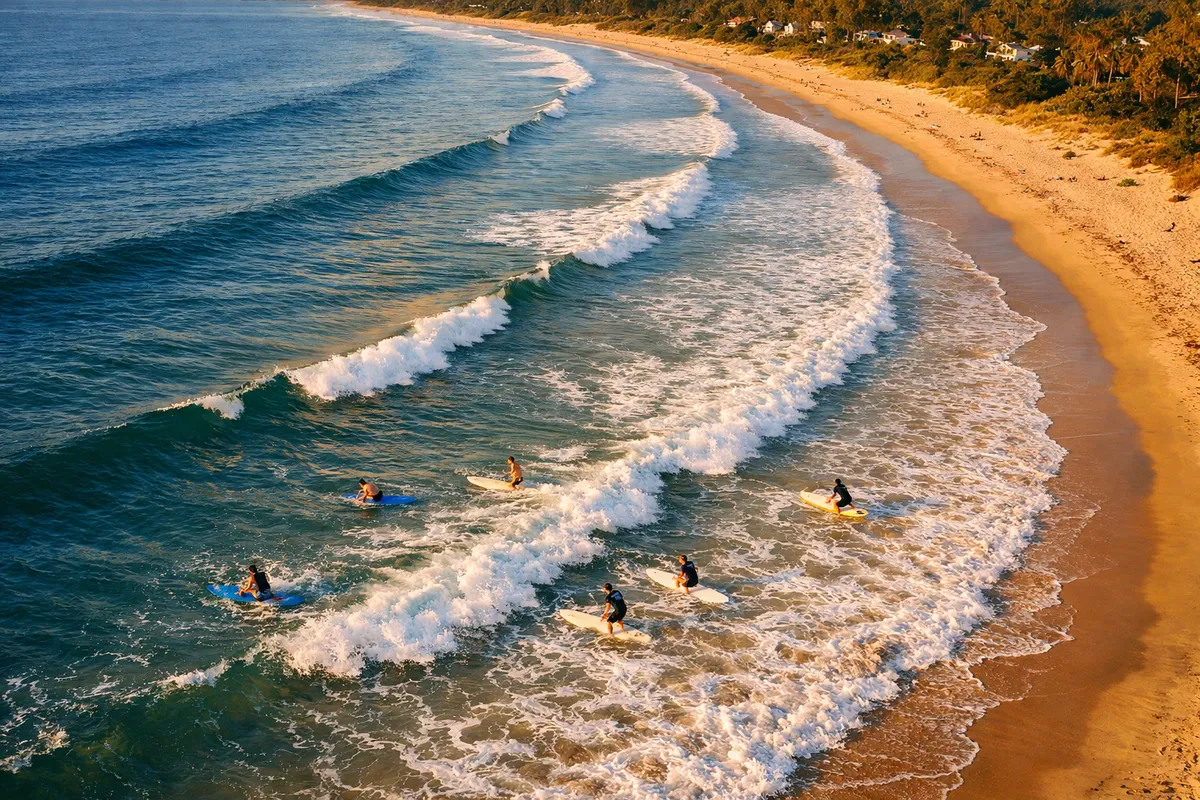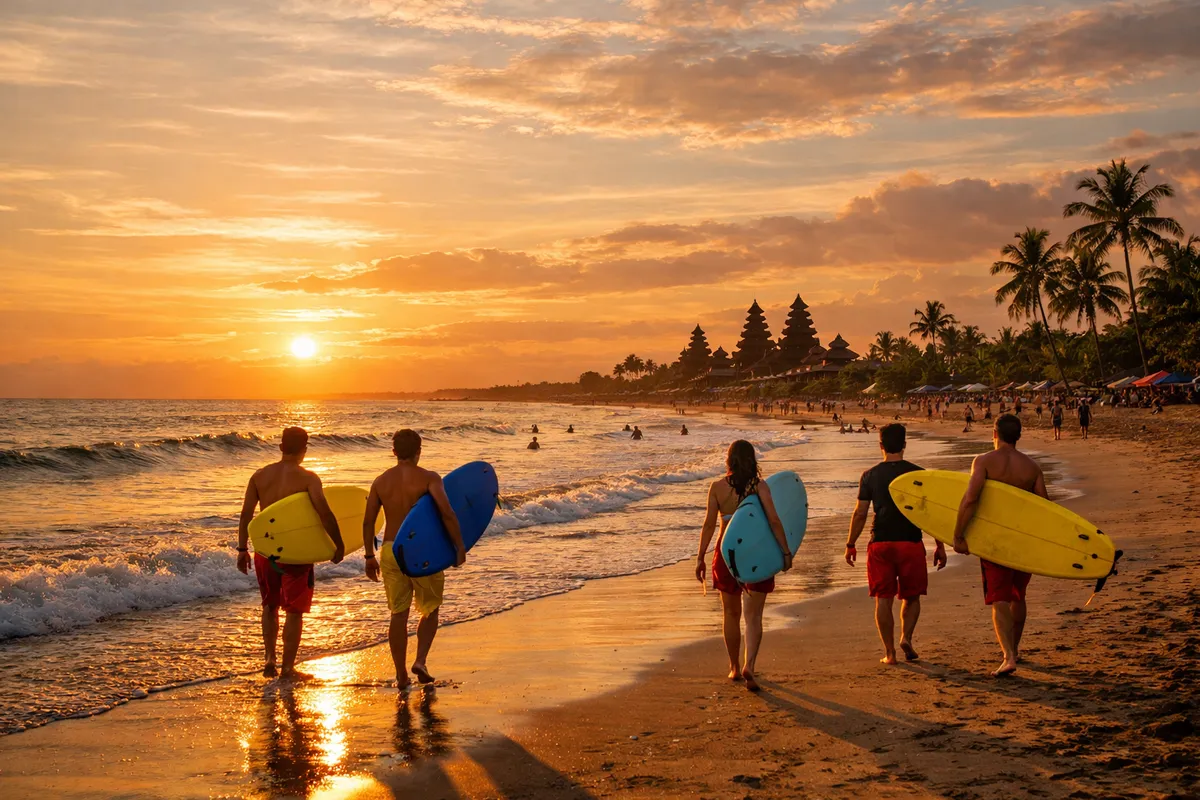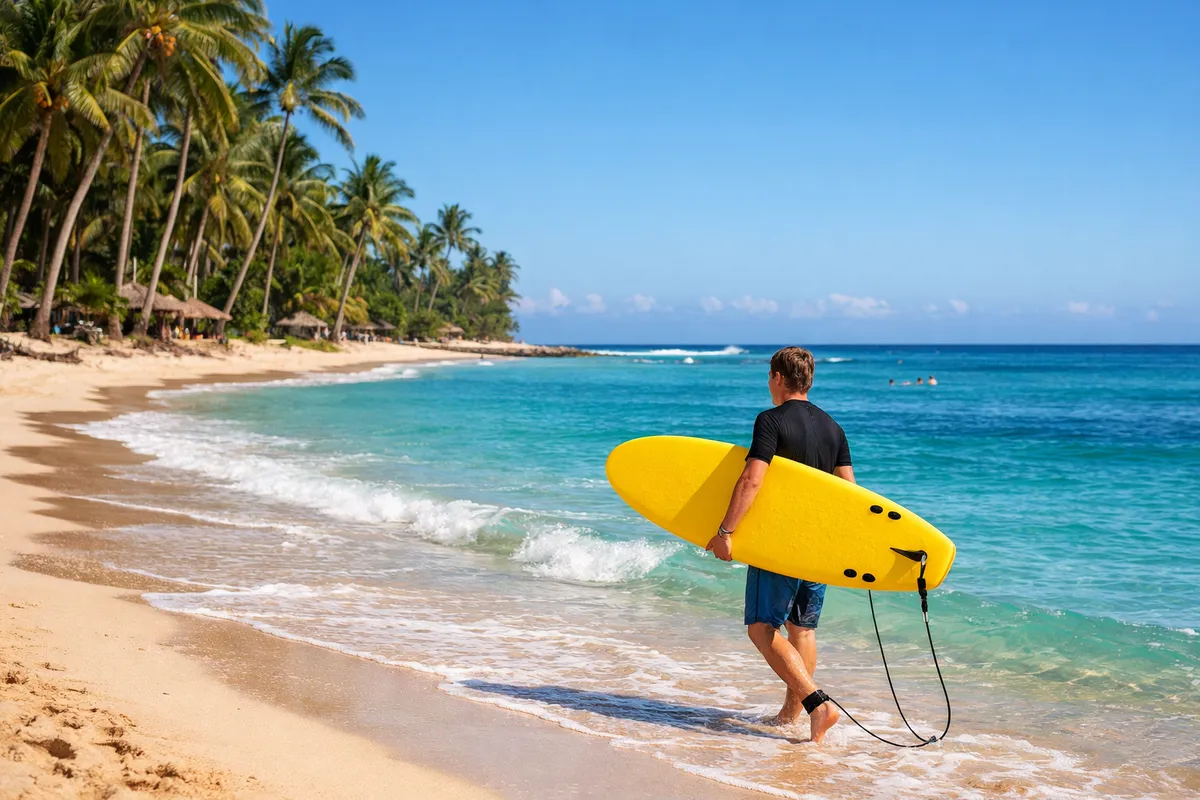
Surfing was invented in Hawaii. Not as a sport — as a way of life. Ancient Hawaiians called it he'e nalu (wave sliding), and it was practiced by royalty and commoners alike for centuries before the rest of the world caught on.
Today Hawaii remains the spiritual center of surfing, home to some of the most famous waves on earth. And buried inside that reputation is one of the best beginner surf experiences anywhere: Waikiki.
Why Hawaii works for beginners
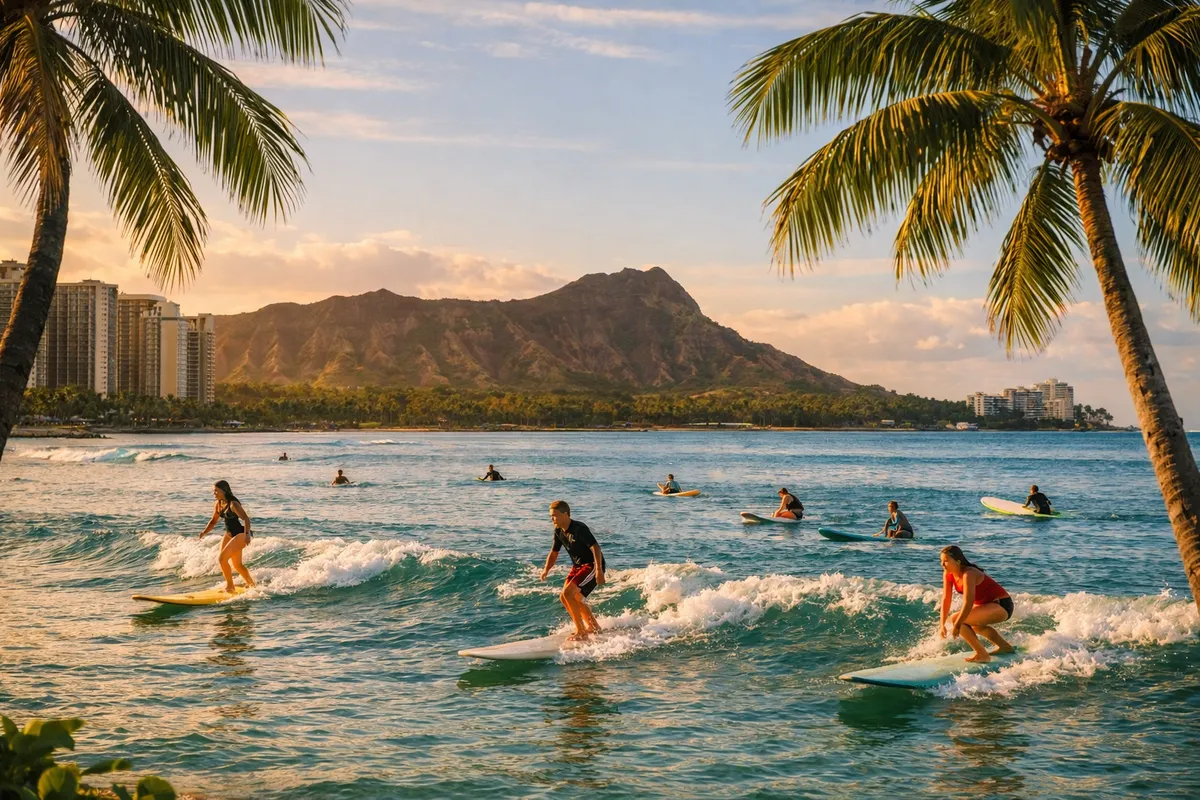
- Waikiki. The most famous beginner wave in the world. Long, slow, knee-to-waist-high peelers rolling over a reef bottom deep enough to be safe. You can ride a wave for 100+ meters here.
- Warm water year-round. 24–27°C. No wetsuit.
- Professional surf school scene. Hawaii has been teaching tourists to surf since Duke Kahanamoku popularized it in the early 1900s. The industry is mature and regulated.
- Culture. Learning to surf where surfing was born adds a dimension no other destination can match.
When to go
Summer (May–September)
The best time for beginners on all islands. South shore swells produce small, clean waves at Waikiki and other south-facing beaches. North shores are calm. Weather is warm and dry.
Winter (October–April)
North shores light up with massive swells — Pipeline, Sunset, Jaws. This is not for beginners. But south-facing beaches (Waikiki included) remain mellow. Winter does bring more rain and occasional south swells that make Waikiki bigger than usual.
Best beginner months: May, June, September. Past peak tourist season (July–August), warm, consistent small south swells.
Where to go
Oahu — Waikiki (the obvious choice)
If you're a first-time surfer going to Hawaii, go to Waikiki. No other beginner wave in the world is this consistent, this gentle, and this well-served by schools and rentals.
- The wave: Long, slow right-handers breaking over a reef bottom that's 4–6 feet deep. Deep enough to be safe, shallow enough to shape the wave. Rides last 30+ seconds.
- The setup: Dozens of surf schools on the sand. Board rental for $15–30/hour. Group lessons for $60–100.
- The catch: Crowded. Very crowded. Especially in the middle of the day during summer. Go early morning for thinner crowds.
Oahu — North Shore (not for beginners)
Pipeline, Sunset Beach, Haleiwa — the most famous waves in surfing. In winter, these waves are 10–30+ feet and lethal for inexperienced surfers. In summer, some North Shore beaches are gentle enough for beginners (Puaena Point, the inside at Haleiwa), but the default recommendation is still Waikiki unless you have a guide.
Maui — Lahaina / Kihei
Maui has excellent beginner waves on the west and south shores. Lahaina breakwall is a popular learning spot — a gentle left-hander in a protected harbor. Cove Park in Kihei has a sandy beach with small waves and schools.
Maui is less crowded than Oahu and slightly more expensive. A good choice if you want the Hawaiian experience without Waikiki's tourist density.
Big Island — Kahaluu Bay
A protected bay on the Kona coast with small waves and a sandy/rocky bottom. Good for absolute beginners. The Big Island is the least touristy of the main islands — expect fewer schools and more independent exploration.
Kauai — Hanalei Bay (intermediate)
Hanalei is beautiful and has gentle summer waves, but it's more appropriate for confident beginners. The North Shore of Kauai in winter is massive and dangerous. Kauai is the "adventure" island — less infrastructure, more nature.
Costs (2026 estimates, USD)
| Item | Approximate cost |
|---|---|
| Group surf lesson (2 hours) | $80–120 |
| Private surf lesson | $150–250 |
| Board rental per hour | $15–30 |
| Hostel per night | $40–80 |
| Hotel per night (Waikiki) | $150–350 |
| Plate lunch | $12–18 |
| Restaurant dinner | $25–50 |
Typical week including lessons, accommodation, and food:
- Budget: $1000–1500
- Mid-range: $1500–2500
- Comfortable: $2500–4000+
Hawaii is expensive. Flights from the mainland US are $300–600 round trip. From Europe or Asia, $800–1500. It's not a budget surf destination — the value is in the experience, not the price.
Cultural respect
This matters more in Hawaii than anywhere else you'll surf. Surfing is not just a sport here — it's a cultural practice with deep roots.
- Respect locals. Local surfers have priority in the lineup. Don't paddle to the peak and compete for waves at spots where locals surf. At Waikiki (a tourist spot), this is less of an issue. At neighborhood breaks, it's critical.
- Learn some Hawaiian. "Mahalo" (thank you), "aloha" (hello/goodbye/love), "mauka" (toward the mountain), "makai" (toward the sea).
- Don't touch cultural sites. Heiau (temples), burial grounds, and sacred places are off-limits. If you see signs, respect them.
- Tip your instructor. 15–20% is standard in Hawaii.
- Leave the beach cleaner than you found it.
Food
- Plate lunch — rice, macaroni salad, and a protein (kalua pork, teriyaki chicken, loco moco). The Hawaiian lunch staple. $10–15 at a local spot.
- Poke — raw fish (usually ahi tuna) marinated in soy, sesame, and chili. Available at supermarkets and dedicated poke shops. The freshest you'll ever have.
- Shave ice — finely shaved ice with fruit syrup. The post-surf treat. Matsumoto's on the North Shore is iconic.
- Acai bowls — everywhere in the surf towns. Good recovery food.
Getting there and around
Fly into Honolulu (HNL) for Oahu, Kahului (OGG) for Maui, Kona (KOA) for Big Island, or Lihue (LIH) for Kauai.
On Oahu, you can use buses and rideshare to get to Waikiki without a car. On all other islands, rent a car ($60–100/day). Inter-island flights (Hawaiian Airlines, Southwest) are $60–120 one way.
Where to find schools
On Surfyx, find Waikiki, Maui, and more on the spot map with live conditions. Every listed surf school includes verified reviews, upfront pricing, and instructor credentials.