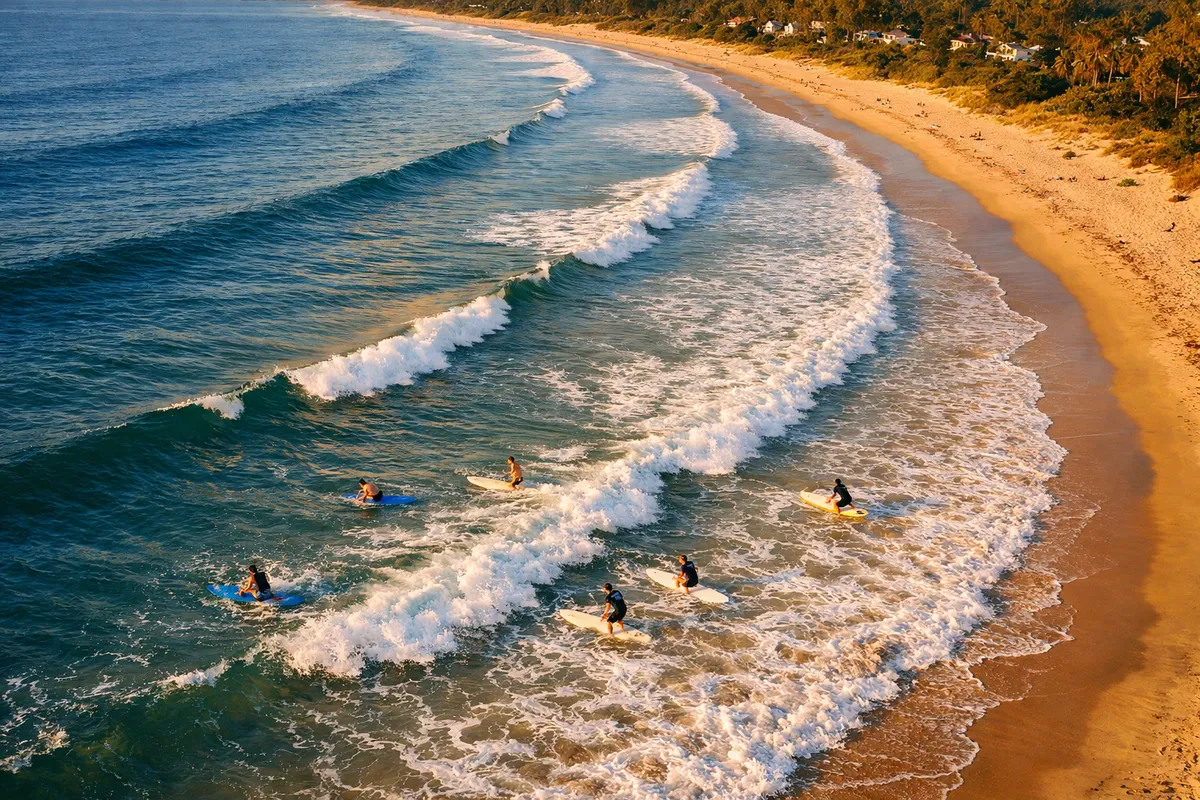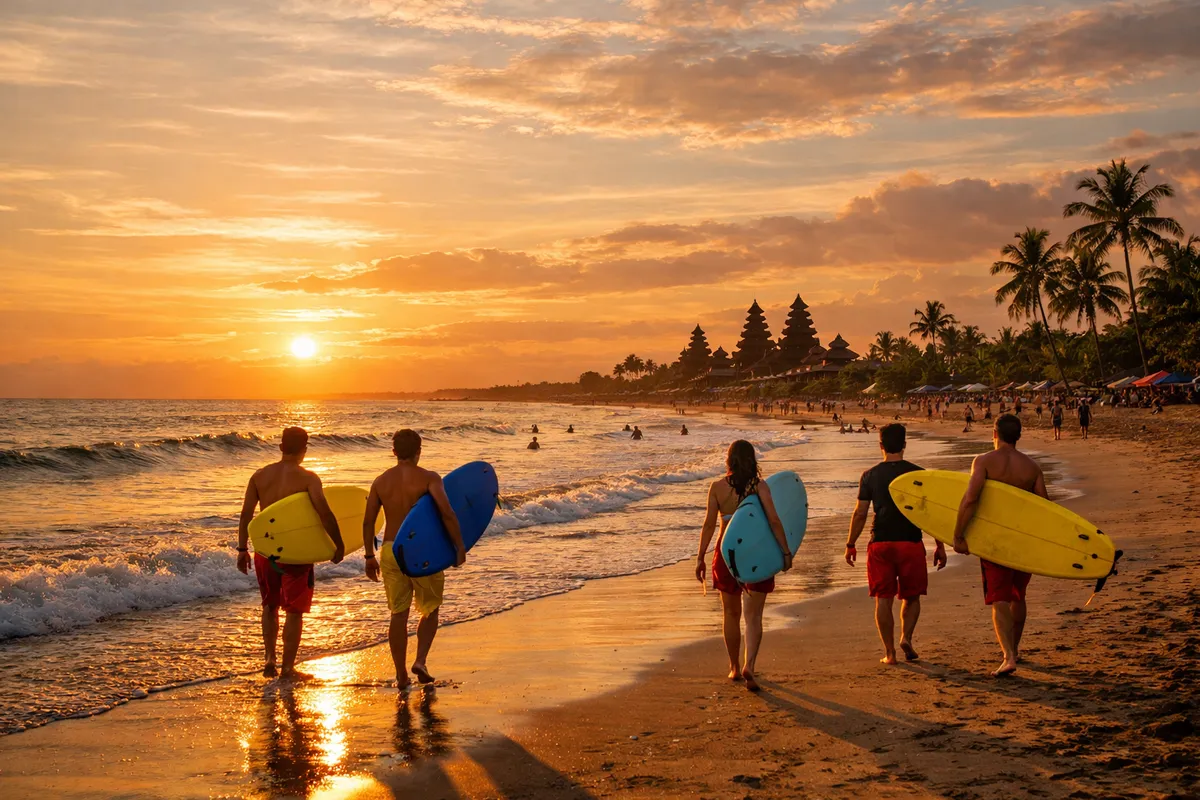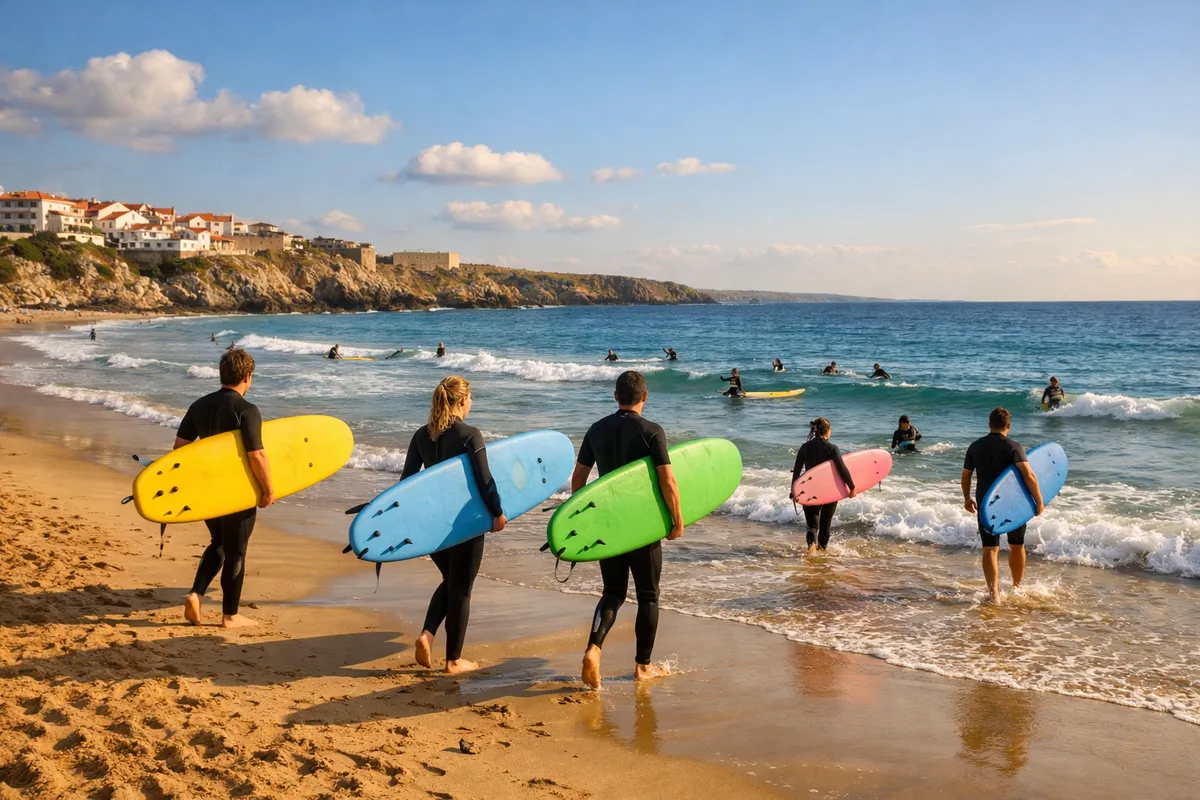
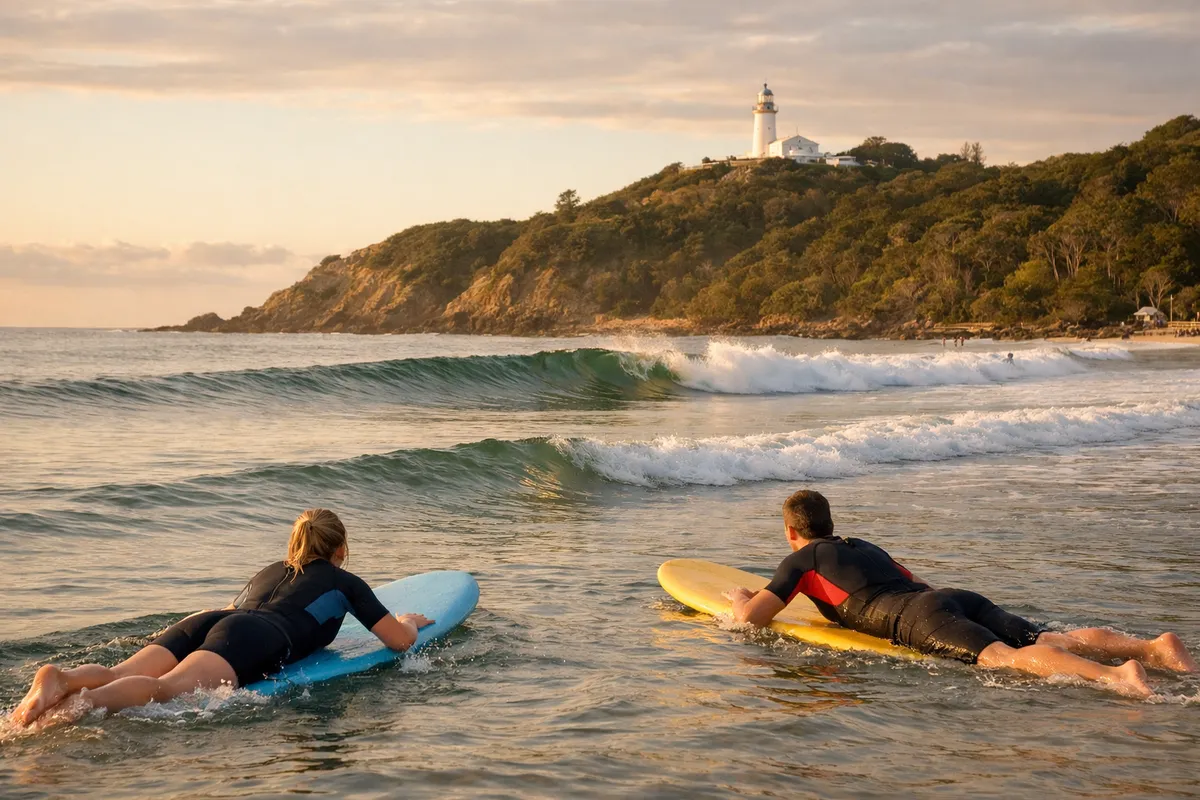
Australia has more coastline than almost any country on earth, and surfing is woven into the national identity. Every major coastal city has beginner beaches within reach, lifeguards on duty, and surf schools ready to take you out. The water is cleaner, the beaches wider, and the surf culture more established than almost anywhere else you could learn.
It's also a country that takes ocean safety seriously. Lifeguards, flagged swimming zones, shark nets, and public education about rip currents are standard. For a beginner, that infrastructure matters.
Why Australia works for beginners
- Year-round surf. Every coast catches swell from a different direction. There's always somewhere surfable.
- Warm water in the right spots. Queensland and northern NSW: 20–27°C. No wetsuit needed in summer.
- World-class surf schools. Decades of learn-to-surf industry. Instructors are certified, insured, and experienced.
- Beach safety. Lifeguards, flagged zones, and rip current education make it one of the safest places to learn in the ocean.
- Culture. Surfing is a way of life, not a tourist activity. You'll be learning alongside locals who started at age five.
When to go
East Coast (Byron Bay, Gold Coast, Sydney)
- Best beginner months: March–May (autumn) and September–November (spring). Warm water, smaller swells, thinner crowds.
- Summer (Dec–Feb): Warmest water (24–27°C in QLD, 20–23°C in Sydney), but holiday crowds and occasional bigger cyclone swells.
- Winter (Jun–Aug): Cooler water (18–21°C in Sydney, 20–22°C in QLD), but consistent groundswells from the south. Byron and Gold Coast still warm enough for a spring suit.
West Coast (Margaret River, Perth)
- Best beginner months: November–March (summer). Smaller swells, warm weather, manageable conditions at protected beaches.
- Winter (Jun–Aug): Big, powerful Indian Ocean swells. Not beginner territory on exposed breaks.
South Coast (Torquay, Great Ocean Road, Adelaide)
- Best beginner months: December–March. Water is still cool (16–19°C) but the swells are smaller and the weather is warm.
Where to go — the five main regions
Byron Bay, NSW
The spiritual home of Australian surf culture — or at least the laid-back, yoga-and-smoothie version of it. Byron has some of the friendliest beginner waves on the east coast.
- The Pass: A long, gentle right-hand point break. The inside section is perfect for beginners — shallow, sandy, and slow. One of Australia's best learning waves.
- Main Beach: Wide sandy beach with whitewater rollers. Schools set up here every morning.
- Tallows: Longer beach south of the cape. Less crowded, slightly more exposed.
Byron is walkable, has great food, and the surf culture is welcoming to learners.
Gold Coast, QLD
The Gold Coast has more surf schools per kilometer than anywhere else in Australia. The string of beaches from The Spit to Coolangatta offers something for every level.
- The Spit / Main Beach: Wide, sandy, gentle. The go-to beginner zone.
- Currumbin: A protected bay with small, clean waves. Excellent for first-timers.
- Greenmount: Slightly more advanced but incredibly scenic. Good once you're comfortable catching whitewater.
The Gold Coast is also close to the airport (OOL) — you can be in the water within 2 hours of landing.
Sydney, NSW
Sydney's Northern Beaches — Manly, Dee Why, Curl Curl — have been producing surfers for generations. Manly Beach is the most famous and has multiple schools.
- Manly Beach: South end is the beginner zone. Wide, sandy, lifeguard-patrolled. A 30-minute ferry from Circular Quay — one of the most scenic commutes to a surf lesson anywhere.
- Bondi: Famous but not the best for beginners. South end works on small days, but it gets crowded and can be powerful.
- Maroubra: South of Bondi. Less touristy, reliable beach break with schools.
Torquay / Bells Beach, VIC
Torquay is the birthplace of Rip Curl and Quiksilver — the corporate heart of Australian surf. The Great Ocean Road starts here. Bells Beach is advanced, but nearby beaches work for beginners.
- Torquay front beach: Protected, gentle, with schools on the sand.
- Jan Juc: Slightly more exposed, good for confident beginners.
- Anglesea: 15 minutes down the Great Ocean Road. Wide beach, mellow whitewater, fewer people.
Water is cool year-round (12–18°C). You'll need a 3/2 or 4/3 wetsuit.
Margaret River, WA
Western Australia's premier surf region. The main breaks (Margaret River proper, The Box) are world-class and advanced, but there are protected beginner beaches nearby.
- Surfers Point (inside section): Sheltered from the main swell, sandy, manageable.
- Yallingup: A protected bay north of Margaret River. Clean, small, and one of WA's best beginner spots.
- Prevelly: Rivermouth area with gentler conditions when the swell is small.
Margaret River is more remote — you'll need a car. But the wine, food, and scenery make it a destination in its own right.
Costs (2026 estimates, AUD)
| Item | Approximate cost |
|---|---|
| Hostel, per night | AUD 30–60 |
| Mid-range hotel/Airbnb, per night | AUD 100–200 |
| Group surf lesson (2 hours) | AUD 70–100 |
| Private surf lesson | AUD 120–200 |
| Board + wetsuit rental per day | AUD 40–70 |
| Café meal | AUD 15–25 |
| Restaurant dinner | AUD 25–50 |
Typical week including lessons, accommodation, and food:
- Budget backpacker: AUD 700–1000
- Mid-range: AUD 1000–1800
- Comfortable: AUD 1800–3000
Australia is not a budget destination. Lessons and accommodation cost 2–3x what they cost in Bali or Morocco. The tradeoff: world-class infrastructure, safety, and quality.
Getting around
Domestic flights connect all major cities (Jetstar, Virgin Australia, Qantas). East coast: fly into Gold Coast (OOL), Brisbane (BNE), Sydney (SYD), or Melbourne (MEL). West coast: Perth (PER).
Renting a car is recommended for anything outside Sydney or the Gold Coast. Expect AUD 50–100/day. The Great Ocean Road and Margaret River both reward driving.
Ocean safety
Australia takes this seriously, and so should you:
- Swim and surf between the flags. Red and yellow flags mark the lifeguard-patrolled zone. Always stay between them.
- Rip currents. Every beach has them. If caught in a rip, don't fight it — swim parallel to the beach until you're out, then swim in. Every surf school teaches this on day one.
- Marine life. Bluebottle jellyfish are common on east coast beaches — painful sting but not dangerous. Sharks exist but attacks are extremely rare, especially at patrolled beaches. Shark nets and drum lines are in place at popular beaches.
- Sun. Australian UV is intense. SPF 50+ reef-safe sunscreen, reapply every hour, wear a rash guard.
What to pack
- 3/2 mm wetsuit for Sydney, Torquay, Margaret River (or rent)
- Spring suit or rash guard for Gold Coast, Byron (summer)
- Reef-safe sunscreen SPF 50+
- Sun hat, sunglasses
- Board shorts / swimsuit
Don't bring a surfboard. Rental boards are available at every beach, and domestic luggage fees for boards are steep.
Where to find schools and instructors
On Surfyx, find Byron Bay, Gold Coast, Sydney, and more on the spot map with live conditions and community session data. Every listed surf school and lesson includes verified reviews, upfront pricing, and instructor credentials.