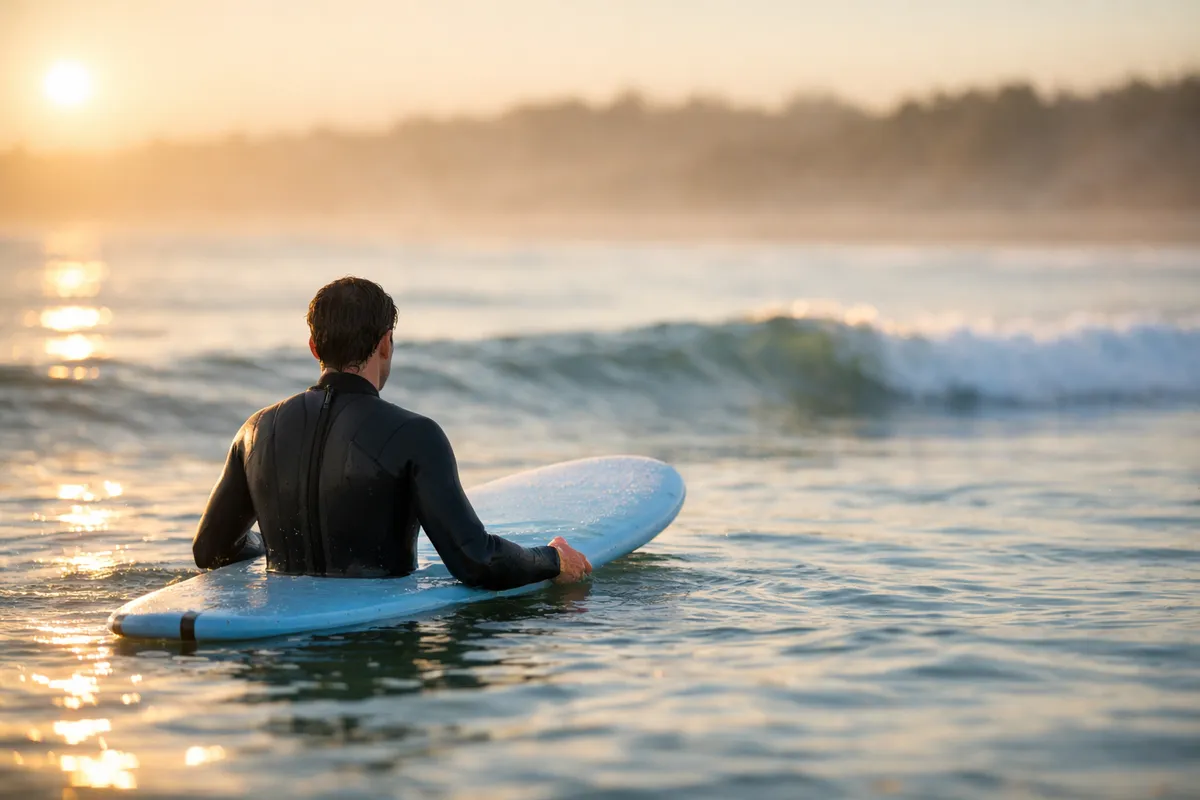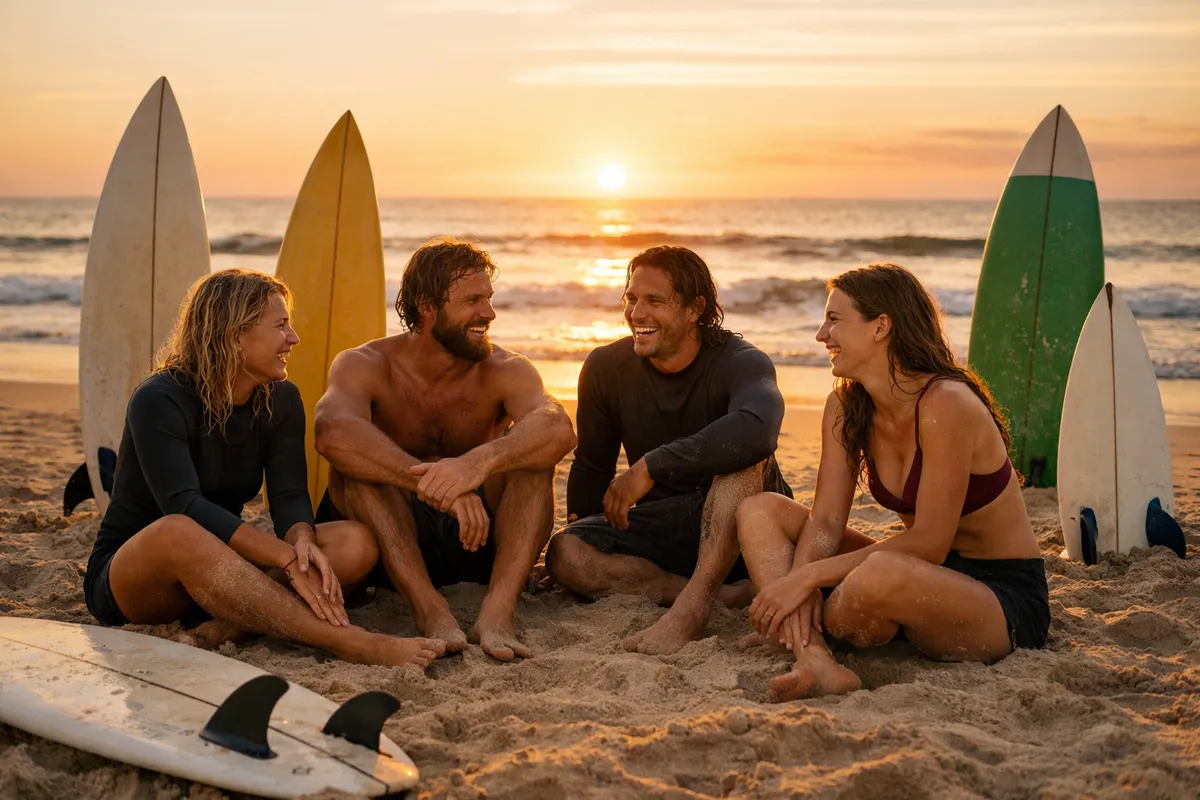
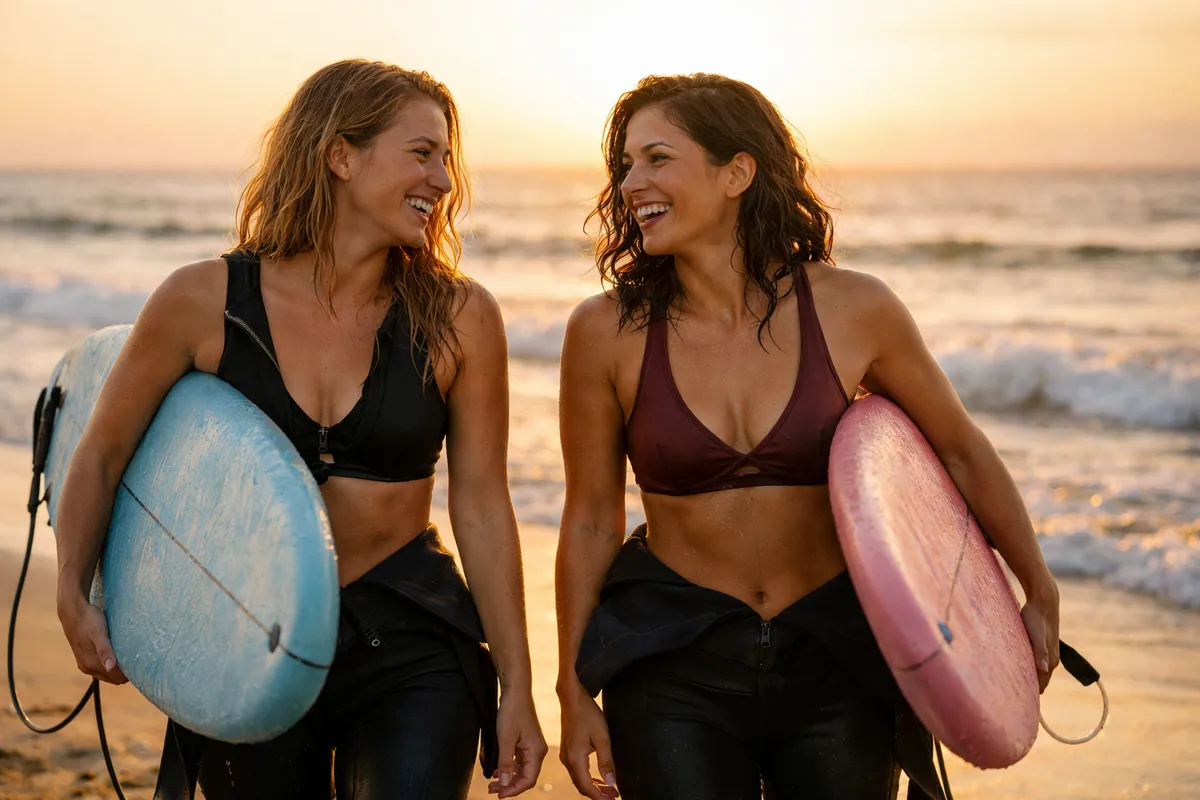
Women are the fastest-growing segment of the surf population. In many surf schools, women now make up more than half of all beginner students. The WSL achieved equal prize money in 2019. Women's surf camps, women-only lineups, and women's surf communities are thriving worldwide.
And yet: most surf content is still written by and for men. The gear advice assumes male body proportions. The "best spots" lists don't mention safety considerations that matter more for solo female travelers. The culture can still feel unwelcoming in certain lineups.
This guide fills the gaps.
Gear considerations
Wetsuits
Women's wetsuits are shaped differently than men's — narrower shoulders, wider hips, shorter torso. Wearing a men's wetsuit creates pressure points, restricts movement, and lets water flush in at the wrong places.
- Fit matters more than brand. Try on multiple brands. O'Neill, Rip Curl, Billabong, Patagonia, and Sisstr all make women-specific suits.
- Back-zip vs chest-zip: Back-zip is easier to get in and out of. Chest-zip is warmer and more flexible. Either works for beginners.
- Thickness: Same rules as men — 3/2mm for 16–20°C, 4/3mm for 10–16°C.
Rash guards and swimwear
A rash guard is essential in warm water — it prevents board rash on the chest and protects from UV. For swimwear underneath:
- Secure fit. Bikini tops that tie behind the neck can come undone in wipeouts. A sporty, pull-on crop-top style is more secure.
- High-waisted bottoms or board shorts that stay put when waves hit. Anything you'd worry about losing in a wipeout is the wrong choice.
Board
Same principles as anyone: start on a large (8–9 ft) soft-top foam board. Body weight matters more than gender for board selection. A lighter person (under 60 kg) may do well on a 7'6"; a heavier person benefits from 8–9 feet. Ask the school to size the board to your weight, not your gender.
Finding the right instructor
A good instructor makes any student feel safe and respected. A great instructor for women specifically:
- Maintains professional boundaries. Physical adjustments should be minimal, explained before they happen, and focused on technique. "Can I adjust your hand position?" — not assumed.
- Doesn't condescend. "You're doing great for a girl" is not a compliment. Good instructors teach to ability, not gender.
- Creates a safe learning environment. In mixed groups, they ensure everyone gets equal attention and waves.
Women-specific options
Women-only surf camps and lessons exist in most major surf destinations:
- Portugal: Several camps in Ericeira and Peniche offer women-only weeks
- Morocco: Women's surf camps in Taghazout with female instructors
- Bali: Women's surf retreats in Canggu combining surf + yoga
- Costa Rica: Women's wellness surf camps in Nosara
- Australia: Women's surf programs in Byron Bay and Sydney
These aren't just marketing repackaging — many provide female instructors, women-focused coaching (which can differ in approach), and a social environment where you're surrounded by other women learning together.
Body confidence in the lineup
Surfing puts your body on display in ways that many women find uncomfortable at first. You're in a wetsuit or swimwear, falling repeatedly, and surrounded by strangers. Some honest reassurance:
- Nobody is watching you. Seriously. Other surfers are focused on the waves, not on you. The lineup is one of the least judgmental environments you'll encounter.
- Every body surfs. There is no "surfer body." Professional female surfers range from muscular to lean to curvy. Recreational surfers come in every shape imaginable. The ocean doesn't discriminate.
- The wetsuit is your friend. A well-fitting wetsuit is actually quite flattering and covers everything. Most women find that body anxiety disappears after the first 10 minutes in the water — the waves take over.
Safety considerations
In the water
The same ocean safety rules apply to everyone (see our ocean safety guide). No gender-specific risks in the water itself.
On land
Solo female travelers should consider:
- Accommodation: Surf camps with other guests are safer and more social than isolated Airbnbs. Many women-specific camps exist for this reason.
- Beach safety: Avoid surfing alone at remote, empty beaches. Populated breaks with lifeguards are always the better choice.
- Transportation: In some destinations, use established taxi services or ride-share apps rather than accepting rides from strangers at the beach.
- Trust your instincts. If an instructor, a fellow traveler, or a situation makes you uncomfortable, leave. You don't owe anyone an explanation.
The women's surf community
The women's surf community is one of the most supportive spaces in sport:
- Social media groups: Women's surf groups on Facebook and Instagram connect thousands of women worldwide. They share spot advice, travel tips, gear reviews, and encouragement.
- Local meet-ups: Many beaches have regular women's surf sessions — informal gatherings where women paddle out together. Ask at your local surf shop or search online.
- Mentorship: Experienced female surfers often actively mentor beginners. The "I remember being where you are" culture is strong.
Periods and surfing
The question nobody addresses in most surf guides: yes, you can surf on your period. Menstrual cups and tampons work fine in the water. Many female surfers prefer menstrual cups for comfort and security during long sessions. Wear dark-colored boardshorts or wetsuit bottoms for peace of mind.
The cold water can help with cramps for some women. Others find the physical exertion makes cramps worse. Listen to your body — if you need a rest day, take it.
Role models
Women's surfing has never been stronger:
- Carissa Moore — Olympic gold medalist (2021), 5x world champion, and one of the most dominant surfers of any gender
- Stephanie Gilmore — 8x world champion, known for flowing, graceful style
- Tyler Wright — 2x world champion, vocal advocate for mental health and LGBTQ+ inclusion in surfing
- Maya Gabeira — big wave surfer who holds the women's world record at Nazaré (73.5 feet)
These athletes aren't just competing — they're changing the culture of surfing to be more inclusive, more diverse, and more welcoming to women at every level.
Get started
On Surfyx, find surf schools and lessons with verified reviews from other women. Filter by women-friendly or women-specific offerings to find the right fit for your first session.